
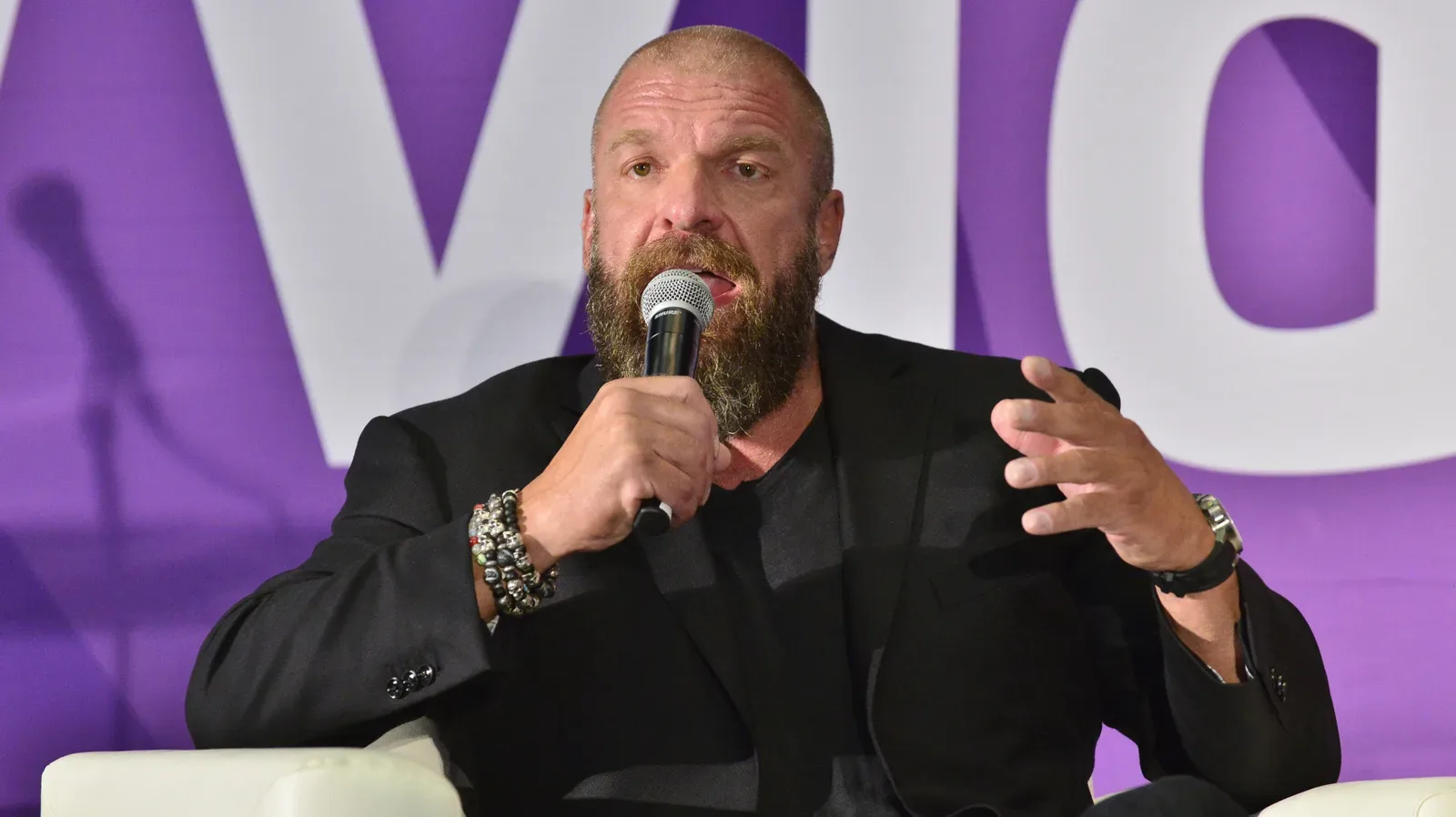
Paul “Triple H” Levesque has spent much of his WWE career in positions built around competition, whether he was standing across the ring from a rival or representing the rebellious spirit of D-Generation X. In 2026, his perspective is centered on something very different: the opportunity to work with friends and contemporaries who have moved from defining WWE eras in the ring to helping guide the company’s future behind the scenes.
During a WWE YouTube vlog documenting his travels around the company’s recent events in Mexico, Levesque discussed the personal meaning he finds in seeing longtime peers assume major leadership responsibilities. His comments connected the work being done across WWE’s main roster, WWE NXT, and AAA with the careers of people who once shared locker rooms, storylines, and some of the most prominent moments of their generation.
“Seeing the guys that are my generation, my contemporaries, my friends, be able to step into these roles, be able to continue as our bodies won’t allow us to do it anymore, but continue to take all the knowledge that they have in their minds and be able to give it back to this next generation, to me that’s what this business is all about,” Levesque said. “It’s emotional for me to see that and to be a part of it and to do it with those guys, nothing makes me happier.”
Levesque’s remarks, made in the WWE on YouTube vlog, speak to a notable change in the makeup of WWE’s decision-making structure. A number of performers who became synonymous with the company during the Attitude Era and the years that followed are now positioned to influence performers whose careers are only beginning. The transition is not simply about former stars remaining connected to wrestling after active competition. It is about experienced figures using decades of knowledge in creative and developmental environments.
For more background on this topic, read Danny McBride Reportedly Joining MLW as Recurring On-Screen Character.
A New Role for a Familiar Generation
Levesque is WWE’s Chief Operating Officer and has held creative control of the company’s main roster since October 2023. That position places him at the center of WWE’s presentation on its biggest stages, from the direction of major stories to the broader process of shaping talent for the top level.
His own move away from in-ring competition was influenced by health issues, which led to a significant change in WWE’s developmental leadership structure. Levesque had previously overseen NXT, the brand that became a crucial environment for developing and showcasing future WWE talent. In September 2021, he passed control of NXT to Shawn Michaels.
Michaels’ presence in that role carries particular weight in the context of Levesque’s comments. The two men have a lengthy history together, most famously as the key figures in D-Generation X, a group whose impact on WWE’s identity during the Attitude Era remains substantial. Their careers also included high-profile rivalry and partnership, making their current collaboration on the leadership side a striking evolution from the personas and conflicts that defined much of their time as active performers.
Now, rather than being primarily remembered for their own rivalries and championships, Levesque and Michaels are part of a structure designed to help cultivate the next wave of WWE performers. Levesque’s description of giving knowledge back to a younger generation reflects the basic responsibility attached to those positions. The lessons passed along are not limited to what happens in a match. They also include understanding character, television presentation, audience connection, pressure, and the demands that come with performing at the highest level.
The Undertaker’s AAA Creative Responsibility
Levesque’s comments also arrived while WWE’s activity in Mexico provided a visible setting for the company’s expanding leadership footprint. The Undertaker took charge of weekly AAA creative after WWE acquired the promotion in April 2025. The role places another of WWE’s most recognizable figures in a position of direct creative influence, this time within a promotion with its own identity and history.
For fans who remember The Undertaker principally as one of WWE’s most enduring in-ring attractions, the shift into a weekly creative role represents another major example of the transition Levesque described. The Undertaker’s career made him a singular presence on WWE programming for decades, but his current assignment calls for a different form of contribution. Instead of being the central character in a story, he is part of the process of shaping stories and helping direct the presentation of a roster.
That reality helps explain why Levesque framed the situation in emotional terms. WWE’s leadership group includes performers who once built their reputations through physical endurance, charisma, and the ability to hold an audience’s attention under the lights. As Levesque noted, there comes a point where the body no longer permits the same work. For veteran performers, a leadership role can create a path to remain involved while placing their experience in service of others.
The combination of Levesque on the main roster side, Michaels in NXT, and The Undertaker in AAA creative also illustrates the breadth of their current responsibilities. These are distinct assignments with different settings, but each is connected by the same broader idea: former performers with deep WWE experience helping shape the company’s present and future.
From Performance to Mentorship
Wrestling has always depended on the transfer of knowledge from one generation to the next. That transfer can happen in training sessions, at live events, during television production, or in conversations away from the cameras. What stands out in this case is the level of visibility attached to the people now filling these leadership positions.
Levesque, Michaels, and The Undertaker were not simply successful wrestlers from the same period. Each became associated with major chapters in WWE history. Their current roles bring that accumulated experience into an environment where younger talent is working to create its own identity. The veterans do not have to replicate their past characters or career paths for the knowledge to remain valuable. The useful element is their understanding of how major moments are built and how performers can grow within a national and international wrestling organization.
For Levesque, that process appears to be inseparable from friendship. His words did not present leadership solely as an executive responsibility or a professional achievement. Instead, he emphasized the experience of seeing people from his own generation continue contributing after their in-ring careers reached their limits. That shared history gives the moment a personal dimension that goes beyond job titles.
It also speaks to the longevity of relationships formed in wrestling. The D-Generation X connection between Levesque and Michaels began in a vastly different WWE landscape. The Undertaker’s career, meanwhile, spanned generations of WWE programming and performers. Their paths have now converged in a new capacity, with all three contributing to systems intended to develop, direct, and support talent rather than solely headline events themselves.
WWE’s Expanding Creative Picture
The main roster, NXT, and AAA represent separate parts of WWE’s wider wrestling landscape, and the presence of established veterans across those areas offers continuity. Levesque’s role has been tied to the main roster’s creative direction since October 2023. Michaels has led NXT since September 2021. The Undertaker assumed weekly AAA creative responsibilities following WWE’s April 2025 acquisition of AAA.
Those dates underscore that this leadership picture has developed over time rather than appearing overnight. Michaels’ NXT role began after Levesque’s health issues required him to step away from overseeing the brand. Levesque later took creative control of the main roster. The Undertaker’s role followed a major business development involving AAA. Together, those developments created a scenario in which several figures strongly associated with WWE’s past now hold influential roles within its active creative ecosystem.
Levesque’s reaction suggests he sees that development as one of the most rewarding parts of his current work. The competitive instincts that powered his in-ring career may remain part of his approach, but his comments focused on continuation rather than nostalgia. The goal, in his view, is for veterans to keep contributing through the knowledge they have earned and to help the next generation carry the business forward.
That is why the image of longtime friends serving in leadership roles has resonated so strongly with him. For Levesque, Michaels, and The Undertaker, the setting may have changed from the ring to creative and developmental work. Their connection to wrestling, however, has not. It has simply entered a new chapter—one defined by the responsibility of helping others find the moments that will shape the next era.
In pictures

Darryl Polo
Darryl Polo is a passionate wrestling fan covering WWE, AEW, TNA and beyond. He loves great rivalries, breakout stars and the moments that keep fans talking long after the bell. How we work.