
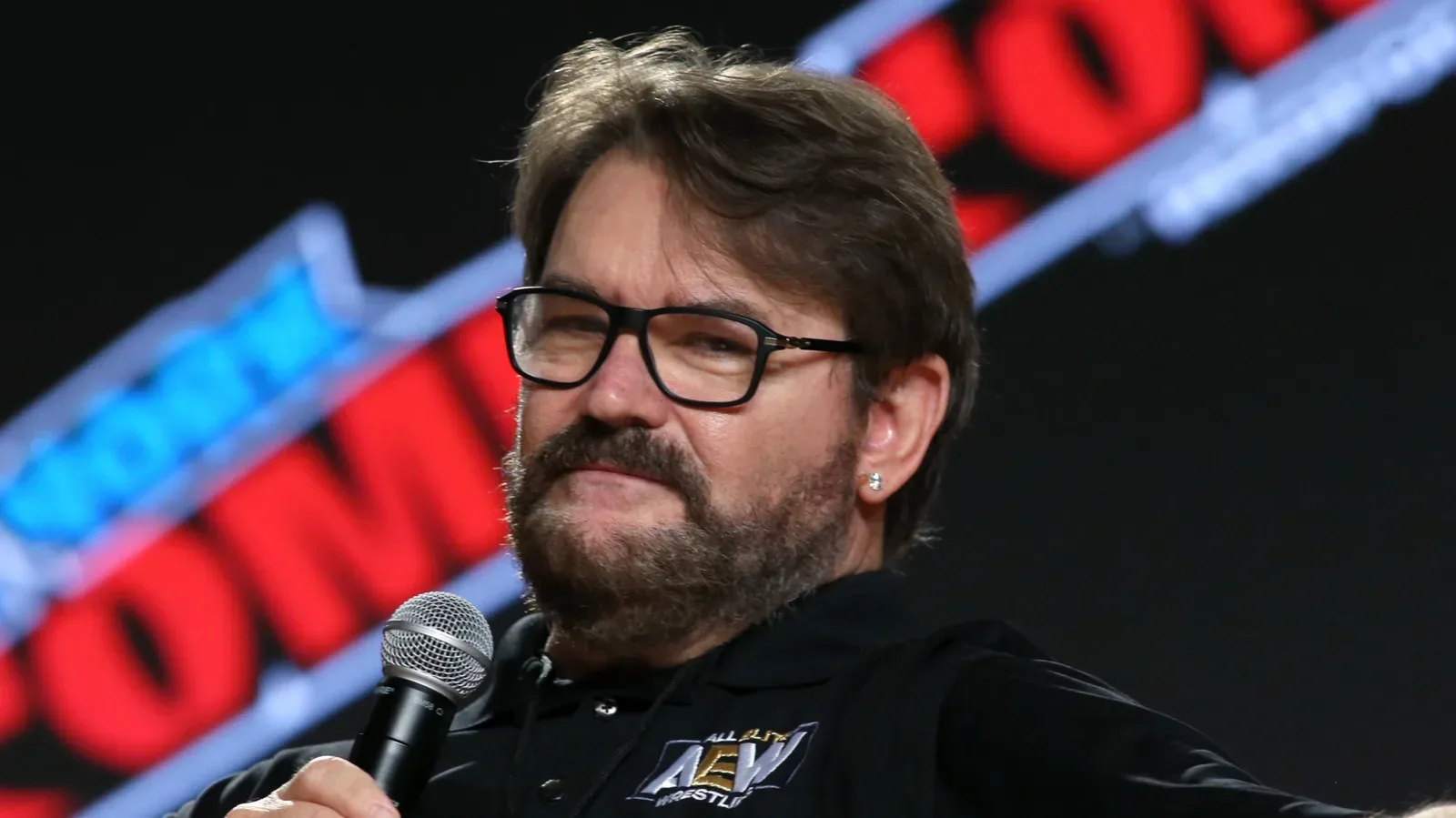
AEW announcer Tony Schiavone has paid tribute to Bill Dundee, remembering the late territory star and former booker as one of professional wrestling’s sharpest creative minds.
Dundee died at the age of 82, with his passing arriving one day after the death of former AEW wrestler “The Butcher” Andy Williams. Ten days after Dundee’s death, tributes to his influence on the business continued, including Schiavone’s extended reflection on What Happened When.
For Schiavone, Dundee’s place in the history of Memphis wrestling is inseparable from that of Jerry “The King” Lawler. Lawler is naturally one of the defining names associated with the territory, but Schiavone stressed that Dundee belongs in that same discussion because of both his on-screen contributions and his work behind the scenes.
“He knew so much about wrestling,” Schiavone said on What Happened When. “And he knew what worked and what didn’t. And when I think about the Memphis territory, you obviously think about Jerry Lawler, but you think about Bill Dundee in the same breath, at least I did.”
For more background on this topic, read AEW Turns Adam Copeland’s ‘Aw Dude’ Meme Into New ShopAEW T-Shirt.
That assessment speaks to the breadth of Dundee’s legacy. A major wrestling territory was built not only through its marquee talent, but through the people capable of understanding how rivalries, personalities, matchups, and changing alliances could hold an audience’s attention from week to week. Schiavone remembered Dundee as someone with that instinct, crediting him with devising angles that became part of the identity of Memphis wrestling.
“The Superstar” was a fitting reputation for a figure who had such a visible and creative connection to one of wrestling’s most memorable regional eras. Dundee’s work stood alongside a Memphis environment that produced dramatic stories and enduring rivalries, with Lawler and Dundee representing a central image from that period. Schiavone pointed to an image of the two wrestlers together while discussing what their connection represented.
“Look at that picture [of Lawler and Dundee],” Schiavone said. “That’s Memphis. That’s Memphis right there buddy. That’s what it’s all about.”
While Dundee’s profile was built through his own work as a performer, Schiavone focused especially on the intelligence Dundee brought to booking. His remembrance credited Dundee with helping develop two of the best-known tag teams of their generation: The Midnight Express, alongside Jim Cornette, and The Rock ’N’ Roll Express.
The mention of those teams underlined the importance of creative construction in wrestling. Tag teams do not become lasting attractions simply because two wrestlers are paired together. Their presentation, opponents, personality clashes, and the situations placed around them all matter. Schiavone’s comments positioned Dundee as a vital creative force in helping establish acts that would go on to hold a prominent place in wrestling history.
“Bill brought his intelligence, like you said, developing the Midnight Express with Jim Cornette, developing the Rock N’ Roll Express,” Schiavone said. “And he came up with a lot of the great angles that Jerry ‘The King’ Lawler was in.”
Schiavone also raised the possibility that Dundee was involved in one of the most famous angles connected to Lawler: the program involving Andy Kaufman and Lawler. He did not state it as a certainty, but noted that Dundee worked closely behind the scenes and may have had a role in that celebrated story.
“I may be wrong, but he may have had something to do with the famous angle between Andy Kaufman and Jerry Lawler, because Bill Dundee worked very close behind the scenes,” Schiavone said.
The careful wording is important. Schiavone was not presenting a definitive account of Dundee’s involvement in the Kaufman-Lawler angle. Instead, he was emphasizing Dundee’s proximity to the creative process and the degree to which he was trusted in an environment that generated many of wrestling’s most recognizable moments.
In Schiavone’s view, Dundee’s influence also extended beyond Memphis. He connected Dundee’s creative ideas to the work seen in Jim Crockett Promotions during the early and middle portions of the 1980s, another period frequently remembered for its major characters, tag teams, and storyline-driven wrestling presentation.
“So a lot of the very legendary things that you saw with Jim Crockett Promotions in the early 80s, mid-80s, came from Bill Dundee,” Schiavone said. “So it’s one of those guys that, obviously, is going to be missed.”
That is a considerable tribute from Schiavone, whose own career has placed him at ringside for multiple important chapters of modern wrestling. His comments did not reduce Dundee’s impact to a single role or a single promotion. Instead, he described a wrestling figure whose value came from an ability to recognize what would connect with an audience and then help turn that understanding into compelling television and memorable programs.
Schiavone and Dundee also shared a brief professional connection in WCW during the 1990s. Dundee appeared in the company as Sir William, serving as the manager of Steven Regal, who would later become known to WWE audiences as William Regal. Schiavone was working in WCW at the time, giving him firsthand proximity to Dundee during that later stage of Dundee’s wrestling career.
There was another personal connection between the two men through Bobby Eaton. The late Eaton, a longtime veteran of both WCW and Jim Crockett Promotions from the 1980s through 2000, was Dundee’s son-in-law. Eaton’s own association with The Midnight Express further illustrates how closely intertwined many of the wrestlers, managers, announcers, and bookers from those eras remained over the course of their careers.
Dundee’s death has prompted reflection not merely on the loss of a veteran wrestler, but on the disappearance of someone whose fingerprints were present in the construction of key acts and angles. Wrestling history often remembers the faces at the center of a rivalry, the catchphrases repeated by fans, or the finishes that conclude a major match. Schiavone’s remembrance was a reminder that people operating behind the scenes can be equally essential to the stories audiences carry with them.
For fans who associate Memphis with Lawler, Dundee’s name remains an equally significant part of the conversation. For those who look to the development of The Midnight Express and The Rock ’N’ Roll Express, Schiavone’s comments further spotlight Dundee’s creative importance. And for the people who worked with him, including Schiavone during their time in WCW, the loss is clearly personal as well as professional.
Bill Dundee leaves behind a legacy defined by wrestling intelligence, influential booking, and an understanding of how to make a territory’s biggest personalities and storylines resonate. As Schiavone made clear, Dundee was one of those foundational figures whose contributions reached far beyond a single appearance or a single angle. His work helped shape a lasting vision of what Memphis wrestling could be, and why so much of it remains memorable.
In pictures
Darryl Polo
Darryl Polo is a passionate wrestling fan covering WWE, AEW, TNA and beyond. He loves great rivalries, breakout stars and the moments that keep fans talking long after the bell. How we work.