
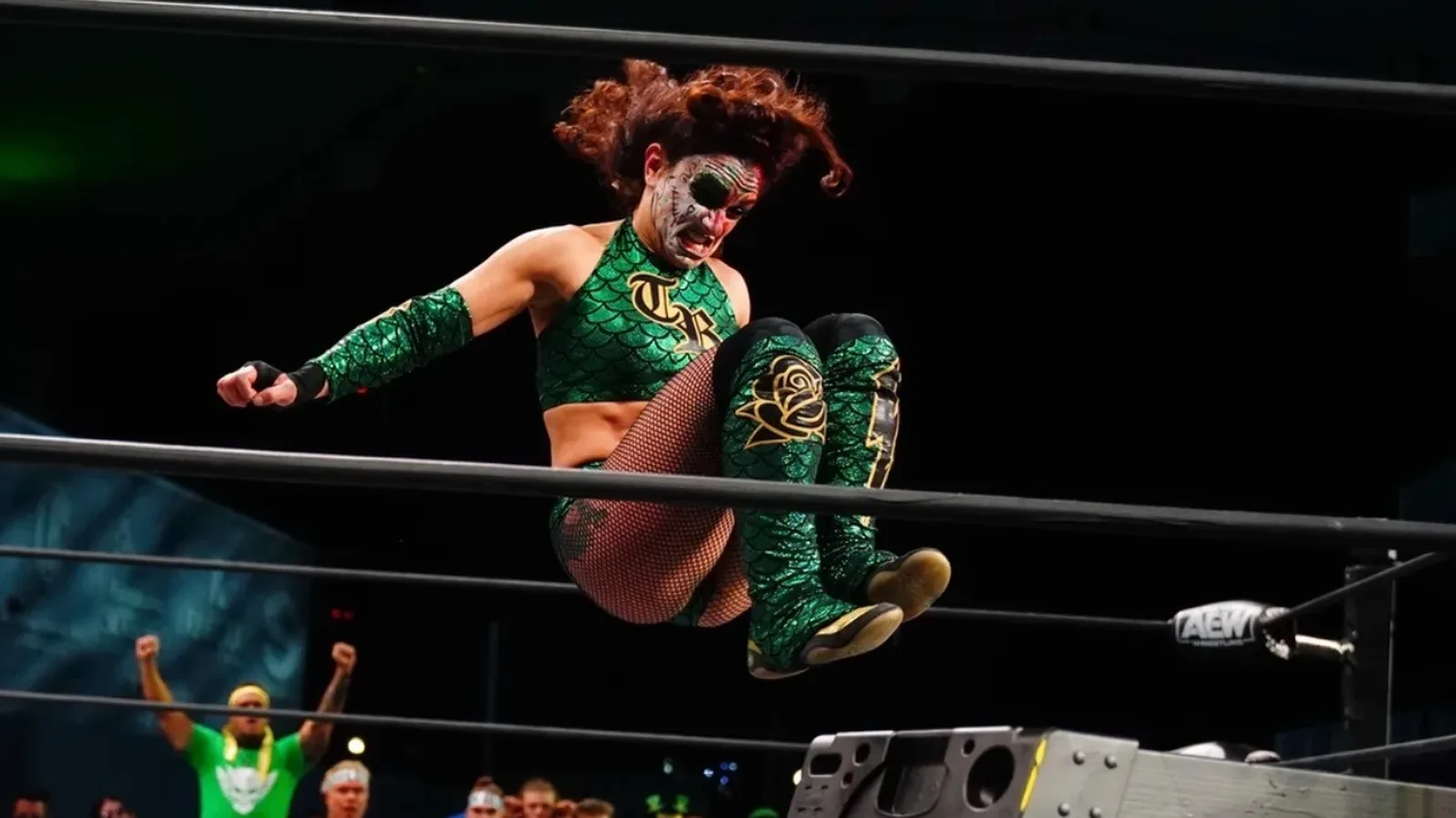
Thunder Rosa has described her participation in the CMLL Grand Prix as one of the most emotional experiences of her career, emphasizing the significance of competing in the event for the first time while representing Team CMLL.
The women’s edition of the CMLL Grand Prix concluded on October 23, bringing together competitors in a high-profile international showcase. Thunder Rosa was among the names representing Team CMLL, while Skadi ultimately secured the deciding victory by pinning former AEW Women’s World Tag Team Champion Megan Bayne.
For Thunder Rosa, however, the lasting memory was not limited to the match itself or the final result. It was the atmosphere surrounding the Grand Prix, especially hearing the national anthem before competing, that made the occasion resonate on a different level.
“Yes, it was. It was very emotional for me, to hear the national anthem. I was actually crying,” Thunder Rosa said. “I said, they actually took a couple of pictures and put me in there. I was really moved because, it was my first time doing the Grand Prix, it just feels so nice to represent my country, and it was weird because I was representing CMLL. But at the same time, I have to remember that I am a champion in CMLL, so it only makes sense. So, yeah, it was very special for me.”
For more background on this topic, read Xelhua Captures 2026 CMLL Rey del Inframundo Championship.
A First Grand Prix Experience With Personal Meaning
The Grand Prix format carries an added sense of occasion in CMLL because it frames competition around team identity, national representation and the contrasting styles of wrestlers assembled for the event. That setting gave Thunder Rosa an opportunity to take part in a different kind of major-match environment from the singles title bouts, tag matches and crossover appearances that have defined other portions of her career.
Her comments underline how much the presentation mattered. Hearing a national anthem in an arena before a match can turn a sporting contest into a moment of reflection, particularly for a wrestler whose career has involved working across borders and in front of audiences with different expectations. Thunder Rosa said she was crying during that portion of the evening and was moved by photographs that captured her reaction.
That response also speaks to the distinction between simply appearing on a major card and feeling connected to what the event represents. The Grand Prix placed Thunder Rosa in a CMLL setting and on a team identified with the promotion, while also invoking the national pride built into the concept. As she noted, that combination initially felt unusual to her, but she also recognized why it fit her place in CMLL.
“I have to remember that I am a champion in CMLL, so it only makes sense,” she said.
That realization appears to have made the experience even more meaningful. Thunder Rosa was not merely a guest brought into the Grand Prix lineup. In her own view, her championship status in CMLL made representing the promotion a natural extension of her role there.
Skadi Earns the Decisive Win
While Thunder Rosa’s reflection focused on the emotions attached to the night, the women’s Grand Prix still produced a definitive in-ring conclusion. Skadi scored the fall that settled the contest, pinning Megan Bayne to give her side the victory.
Bayne entered the outcome as a prominent opponent, and the final pinfall provided Skadi with an important result within a match designed to spotlight a broad collection of talent. Grand Prix matches can create a unique challenge because participants must balance individual momentum with the demands of a team contest. A wrestler who gets the finishing fall leaves with a particularly visible accomplishment, while everyone involved gains the exposure that comes with taking part in an event centered on international competition.
Thunder Rosa’s presence on Team CMLL added another layer to that lineup. Her experience in major environments made her a recognizable figure within the match, but her remarks afterward made clear that she approached this appearance with the perspective of someone still embracing a new first in her career.
Representing CMLL and a Broader Wrestling Identity
Thunder Rosa’s career has made her a familiar figure to fans in multiple wrestling scenes, and that background helps explain why the Grand Prix carried a complicated but rewarding emotional weight. Representation in professional wrestling is not always a straightforward matter of a wrestler’s birthplace, nationality or current home promotion. Wrestlers frequently build their identities through the promotions they work for, the audiences that support them and the championships they hold.
In this case, Thunder Rosa described feeling the importance of representing her country while also wearing the banner of CMLL. Rather than treating those ideas as opposites, she ultimately viewed them as connected. Her standing as a CMLL champion gave her a direct association with the promotion, while the ceremony and atmosphere of the Grand Prix brought out the personal meaning she attached to the occasion.
That dual identity is part of what makes international events compelling. A Grand Prix is not simply a way to assemble wrestlers from different backgrounds. It asks performers to stand for something beyond their own record or rivalries. For some, that means a country. For others, it means a promotion, a style of wrestling or a personal journey that has taken them across different regions of the industry.
Thunder Rosa’s reaction suggests that all of those elements were present for her on October 23. She was competing as part of Team CMLL, but the sound of the anthem and the symbolism of the event brought a powerful sense of pride and gratitude to the surface.
The Value of Meaningful Firsts
Even established wrestlers can encounter career milestones for the first time. Thunder Rosa’s Grand Prix debut is an example of how a new opportunity can stand apart from the usual measure of success in wrestling, whether that measure is a title victory, a main-event spot or a marquee opponent.
The result of the match will remain part of the record: Skadi pinned Megan Bayne to win the women’s CMLL Grand Prix. But for Thunder Rosa, her first involvement in the event appears likely to be remembered for the feeling of being included in a tradition and for the personal response it drew from her before the action was underway.
Her willingness to speak openly about crying during the anthem also gives the moment a human dimension. Professional wrestling often demands intensity, confidence and toughness from its performers, especially in a competitive showcase. Yet Thunder Rosa did not frame emotion as something to hide. Instead, she identified it as evidence of how much the opportunity meant to her.
That honesty can make a moment like this more memorable for fans as well. The pageantry of a Grand Prix match is designed to feel big, but the reaction of someone inside the ring can explain why the spectacle matters. Thunder Rosa’s comments illustrate that the significance of the event extended far beyond a single fall or a single evening.
Thunder Rosa Leaves With a Lasting Memory
The October 23 Grand Prix delivered a competitive finish for Skadi and a significant platform for the women involved. For Thunder Rosa, it also delivered a personal milestone that she described as very special.
Her first CMLL Grand Prix appearance allowed her to represent Team CMLL while taking in the national symbolism and arena atmosphere attached to the event. The experience moved her to tears, and her comments show that she sees her role as a CMLL champion as an important part of why the opportunity felt right.
Skadi may have claimed the final pinfall over Megan Bayne, but Thunder Rosa’s reflections reveal another enduring takeaway from the night: the Grand Prix gave her a chance to feel the pride, responsibility and emotion of representation in a way that will stay with her well after the final bell.

Darryl Polo
Darryl Polo is a passionate wrestling fan covering WWE, AEW, TNA and beyond. He loves great rivalries, breakout stars and the moments that keep fans talking long after the bell. How we work.