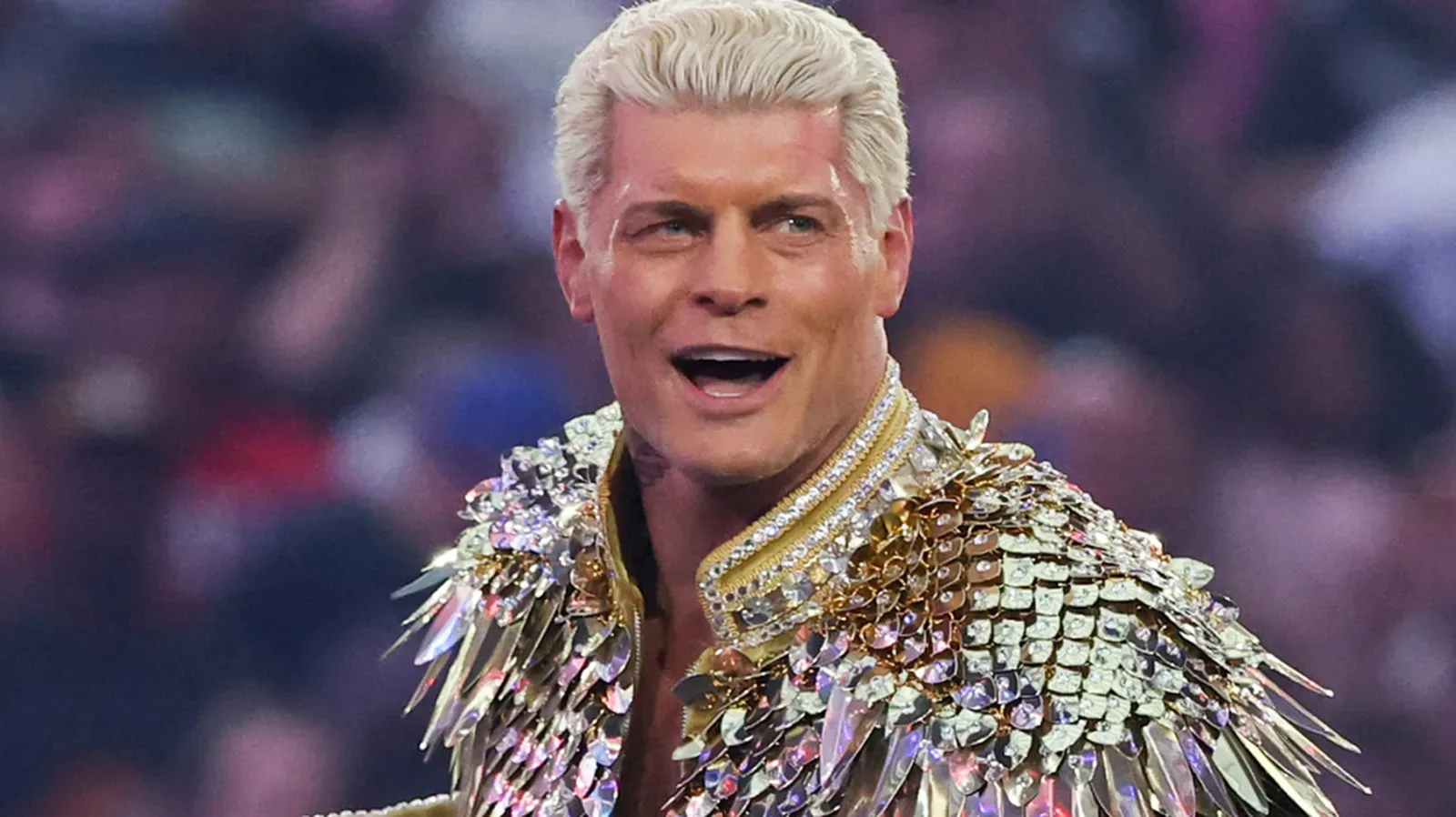
The possibility of Cody Rhodes turning heel has returned to the center of WWE conversation, and his sister, Teil Rhodes, is not ruling anything out. At the same time, she does not believe a move to the dark side is necessarily the natural answer for a performer whose identity has been built around doing what he believes is right.
Speaking on Busted Open Radio, Teil addressed the appetite among portions of the audience to see Rhodes take a more ruthless direction. Her comments arrived as the former Undisputed WWE Champion continues an especially heated and personal rivalry with Randy Orton, a feud that has presented Rhodes with opportunities to show anger, aggression, and a willingness to go further than usual.
“Cody, the people want to turn him heel,” Teil Rhodes said on Busted Open Radio. “A lot of people do, but I don't think it would change him being polarizing for a certain group of fans. So never say never on the heel for Cody, but I don't think that's who he is, not to me, not to a lot of fans. I don't know. He does the right thing. Some people don't like that about him, but he's a do-the-right-thing kind of guy, you know?”
That is an important distinction in the debate around Rhodes. A heel turn is often discussed as a cure-all when a top babyface begins drawing a more divided response. But Teil’s point is that changing Rhodes’ alignment would not automatically change the fact that some viewers have strong opinions about him. It may simply create a different version of the same reaction.
For more background on this topic, read Omos Declares Himself Wrestling’s Greatest Working Living Giant.
The Randy Orton feud has created a different Cody Rhodes
Rhodes’ ongoing issues with Orton have given the heel-turn discussion fresh momentum. The two men share a layered history, with Orton having been framed as a former mentor to Rhodes. That background has given their conflict a personal weight beyond an ordinary WWE rivalry, particularly as the feud has become violent and bloody.
At WWE Sunday Night’s Main Event, Rhodes appeared close to crossing a significant line. Orton was bloodied and down in the ring when Rhodes lined up for a punt, a move long associated with Orton’s most vicious side. Rhodes had the opening to deliver the kick against the man who helped shape his career. Instead, he chose not to connect and showed Orton mercy.
The moment did not end speculation. If anything, it illustrated why the conversation has become more complicated. Rhodes was visibly pushed toward an act of cruelty, and the temptation to retaliate was clearly present. Yet he pulled back before committing to it. For supporters of a turn, that could be viewed as another tease that WWE may revisit later. For those who see Rhodes as fundamentally heroic, it reinforced exactly why he remains a babyface.
“I think the edge is there, but I don't think it's what some people want it to be sometimes,” Teil Rhodes said. “But you never know what's going to happen. I certainly don't know, but we're enjoying the ride of his amazing success.”
The phrase “the edge is there” may be the most revealing part of her assessment. Rhodes does not need to become an outright villain to show a harder side. In a rivalry as emotional as the one with Orton, frustration and vengeance can be credible elements of a heroic character. The challenge is determining where intensity ends and a genuine moral shift begins.
Why fans continue to debate the idea
Rhodes has occupied a rare spot in modern WWE as a major star whose presentation is openly rooted in traditional babyface values. He is positioned as someone who perseveres, honors the importance of major moments, and aims to meet conflict directly. That approach has been central to his connection with many fans, but it has also made him a polarizing figure among viewers who prefer a more unpredictable or abrasive top star.
Teil acknowledged that divide without dismissing either side of it. There are fans who want a more dangerous, less forgiving version of Rhodes. There are also fans who see his commitment to doing the right thing as the exact quality that defines him. The disagreement is not simply about whether a heel Cody Rhodes would be entertaining. It is about whether that version would feel authentic.
A heel turn can be effective when it exposes a part of a character that has always existed below the surface. In Rhodes’ case, the current Orton program has already shown flashes of rage and darkness without fully discarding his core principles. His hesitation before the punt at Sunday Night’s Main Event left open the possibility that he could be pushed further, while also preserving the idea that he has lines he is reluctant to cross.
That tension gives WWE options. Rhodes can remain a heroic figure while becoming more forceful in how he responds to Orton. He can continue resisting the impulse to become like his rival. Or, should the story call for it, the restraint shown in one moment could eventually make a later decision to abandon it feel more consequential. Teil did not present any of those directions as confirmed, but she made clear that she would not completely eliminate the possibility of a turn.
Rhodes has become more open to creative change
For years, Rhodes was vehemently against the idea of making a dramatic character change and turning heel. That resistance made the subject seem less like a looming WWE storyline and more like a recurring fan fantasy. Rhodes’ connection with supporters has been tied closely to his role as a standard-bearer for resilience and ambition, and a sudden betrayal of those values would represent a major departure.
However, Rhodes changed his stance in the lead-up to WrestleMania 42. Rather than rejecting the notion outright, he said he was open to all creative paths. That does not mean a heel turn is planned or imminent. It does mean the concept is no longer automatically dismissed by Rhodes himself, which naturally invites more interest whenever he displays a harsher edge on WWE programming.
Being open to creative possibilities is very different from confirming a creative decision. Rhodes’ current story with Orton is enough to explain his more severe behavior. A personal feud should create emotional reactions, and the threat of the punt showed that Rhodes can be driven to a place where his normal restraint is under pressure. The story has not required a full alignment change to make that point.
Still, WWE has made sure that the audience can see the possibility. The visual of Rhodes preparing to use one of Orton’s most infamous attacks against Orton himself was designed to be unsettling. It placed Rhodes at a crossroads, asking whether he would embrace the same brutality that has defined some of Orton’s darkest actions. His choice to stop matters, but so does the fact that he was prepared to consider it.
Mercy may be the point of the story
In wrestling, a character does not always prove their heroic nature by refusing to fight. Often, they prove it by having the power to do something cruel and making a conscious choice not to. Rhodes’ decision not to punt Orton could be interpreted through that lens. He was not portrayed as incapable of violence. He was portrayed as someone who had to decide how far he was willing to go.
That makes Teil’s description of her brother as a “do-the-right-thing kind of guy” particularly relevant. The Orton feud may be testing that identity rather than replacing it. Rhodes can carry resentment, show anger, and seek retribution without becoming a villain. In fact, the struggle to hold onto his values while confronting a bloodied former mentor may be more compelling than a simple switch from fan favorite to antagonist.
Of course, wrestling stories can change quickly, and Teil stressed that she does not know what will happen. Her “never say never” response leaves the door open without suggesting that a turn is inevitable. WWE has a major star with a deeply established persona, a rivalry capable of bringing out his ugliest impulses, and an audience ready to analyze every sign of change. That combination will keep the speculation alive.
The question is not going away
For now, Rhodes remains a former Undisputed WWE Champion navigating a conflict with Orton that has revealed a sharper side of him. The edge Teil Rhodes described is evident. What remains unclear is whether that edge is a temporary response to an intensely personal rivalry or the foundation for a more permanent transformation.
Teil’s comments suggest that a heel turn should not be treated as an obvious destination simply because it is popular in online discussion. Rhodes’ appeal to many fans rests in his ability to stand by a moral center even when circumstances make that difficult. A move away from that identity would be enormous, and it would need to serve more than the novelty of seeing him do something unexpected.
At the same time, the refusal to rule it out is notable. Rhodes has become more open to every possible creative route, and his confrontation with Orton has demonstrated that even WWE’s most principled figures can be tempted by revenge. Whether he ultimately gives in or continues to show restraint, the road ahead has made one thing clear: the question of a heel Cody Rhodes is likely to follow every major decision he makes in the Orton feud.
In pictures
Darryl Polo
Darryl Polo is a passionate wrestling fan covering WWE, AEW, TNA and beyond. He loves great rivalries, breakout stars and the moments that keep fans talking long after the bell. How we work.