
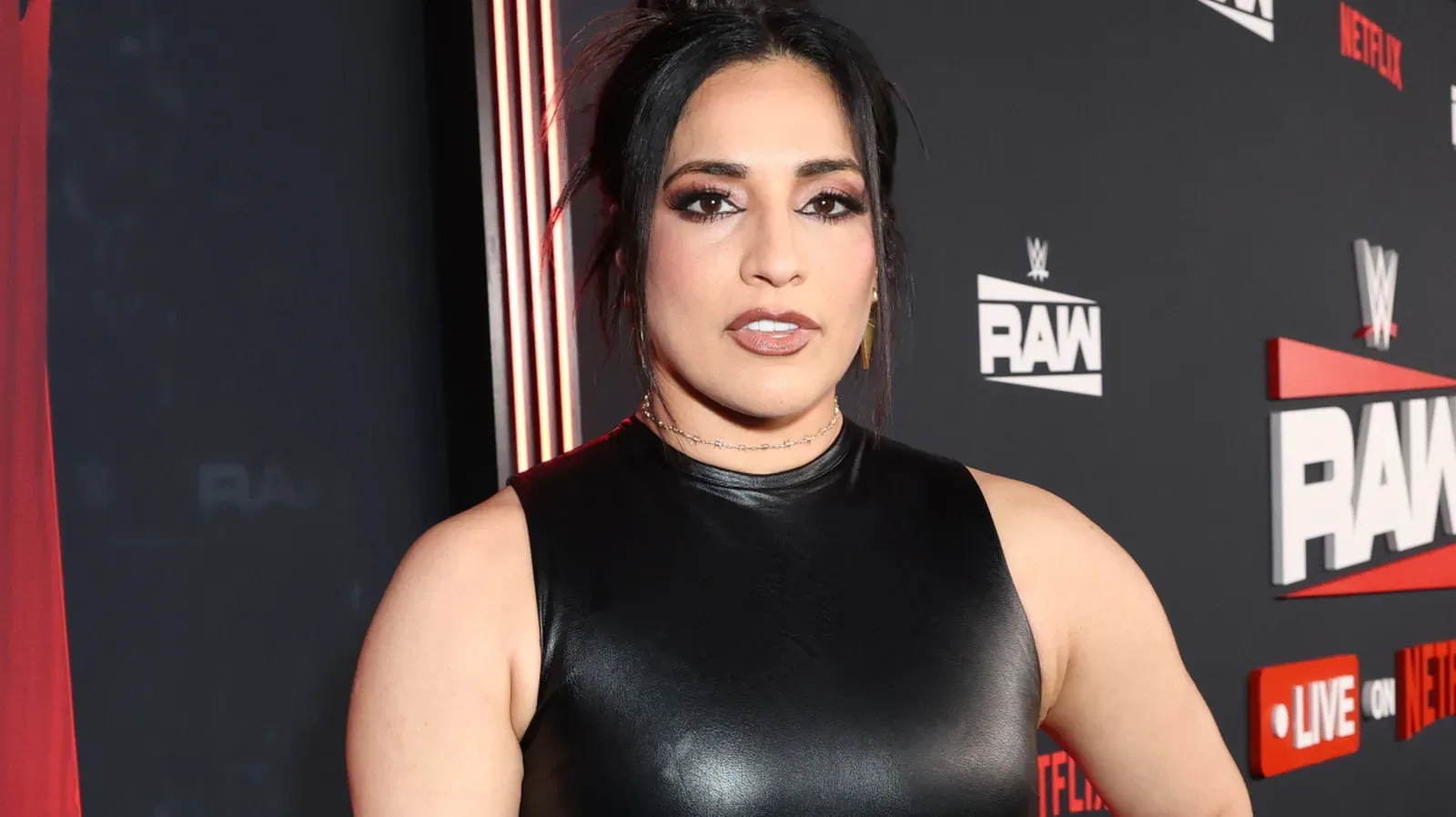
Raquel Rodriguez’s WWE Women’s Intercontinental Championship victory was more than a title change. For Rodriguez, it was validation of a long, difficult journey and a statement that she can be trusted with a major singles championship.
Rodriguez defeated Sol Ruca to win the title on the July 27, 2026 edition of WWE Raw, ending a period in which much of her main-roster identity had been tied to tag team competition. The win gave Rodriguez a significant singles accolade, but it also came under particularly grueling circumstances. She was visibly bloodied during the match, yet she endured and left with the championship.
Speaking on Insight with Chris Van Vliet, Rodriguez reflected on what the moment meant after years of navigating changing opportunities in WWE.
“It meant so much,” Rodriguez said. “I think all of you guys know I’ve had a very long journey with WWE. I’ve had so many ups and downs, so many nos, so many yeses. Then for a moment there, I thought I was just getting pigeonholed into just being a tag wrestler. But to know that they have faith in me to carry a title, to know that they have faith in me to stand here as your Intercontinental Champion, that means so much to me and so much to my journey with WWE and just my journey in general in life. So it’s so cool.”
For more background on this topic, read Drew McIntyre Says WWE Remains Home as Hollywood Career Continues to Grow.
That perspective is key to understanding the importance of Rodriguez’s reign. In WWE, holding a championship is not merely a reflection of winning one match. It also places a performer in a prominent position on television and establishes them as someone expected to represent a division. Rodriguez sees that confidence from WWE as a defining part of the accomplishment.
The Intercontinental Championship win was also a clear shift in her on-screen path. Rodriguez had spent the majority of her main-roster run operating in the tag team scene. Tag wrestling can provide major moments and valuable exposure, but it can also leave a wrestler fighting to establish an individual identity. Rodriguez’s comments made clear that she had felt the concern of being viewed primarily through that lens.
A painful championship night on Raw
Rodriguez’s crowning moment did not come without a physical cost. During the match with Ruca, the Judgment Day member was busted open only minutes into the contest. Blood ran down Rodriguez’s face as the title bout continued, giving the match an even more dramatic visual as the challenger pushed through the damage to secure the victory.
Rodriguez did not minimize the impact afterward. She acknowledged that it was “very painful,” but made it clear that the discomfort was worth enduring for the opportunity to become Women’s Intercontinental Champion.
“Every little bit” of it was worth it if it meant officially holding the Intercontinental Championship, Rodriguez said.
The visual of Rodriguez raising the championship while bloodied naturally added to the intensity of the moment. More importantly, it reinforced the toughness she showed in overcoming Ruca. Rodriguez did not simply win a title in a routine match; she fought through an unexpected setback in a high-stakes situation and completed the night with the championship in her hands.
That detail matters because Rodriguez’s reflections were centered on perseverance. Her WWE career, in her own words, has involved plenty of “ups and downs” as well as many “nos” and “yeses.” The injury-like adversity within the match became a compact illustration of the larger story she was describing: obstacles arrived, but she kept going.
From tag-team perception to singles champion
Rodriguez did not frame her time in tag team wrestling as unimportant. Instead, her comments focused on the concern that her role could become too narrowly defined. The difference is significant. Being successful in tag team matches does not erase a wrestler’s ambition to carry a singles title, particularly one that is positioned as a major championship within WWE’s women’s division.
Her July 27 victory placed Rodriguez in that singles-title role. It provided a chance to build her reign around challenges that test her as an individual champion rather than as one half of a team. It also gave her the opportunity to show the kind of consistency that comes with defending a championship against a range of opponents.
Rodriguez has already begun doing exactly that. Her first televised successful defense came on the August 28 edition of Raw. The defense established that the July title win was not simply a one-night breakthrough. She retained the championship and continued to occupy the role she had described as so meaningful.
Between televised appearances, Rodriguez has also defended the Women’s Intercontinental Title at WWE live events. Nia Jax, Bayley, IYO SKY and former champion Sol Ruca have all stepped up to challenge her. The list reflects the variety of opposition available to Rodriguez as champion, from familiar competition in Ruca to accomplished and formidable challengers such as Jax, Bayley and SKY.
The responsibility of carrying the championship
Rodriguez repeatedly returned to the idea of WWE having faith in her. That language goes beyond the celebration of a career milestone. It points to the responsibility she associates with the championship. A titleholder is expected to perform at a high level, handle pressure and meet challengers who are determined to take the title away.
For Rodriguez, carrying the Women’s Intercontinental Championship appears to represent an opportunity to prove that her value is not restricted to any one division or format. She wanted to move beyond the fear of being “pigeonholed” as a tag wrestler, and becoming champion has supplied a prominent platform to do that.
There is also a personal dimension to her reaction. Rodriguez said the accomplishment mattered not only to her WWE journey, but to “my journey in general in life.” That distinction underlines why the moment resonated so strongly. Wrestling careers are built through public results, but performers experience those results through the private work, disappointments and uncertainty that happen before a championship is ever won.
In Rodriguez’s case, the road to the Women’s Intercontinental Title involved enough twists that the win carried special emotional weight. She openly acknowledged the periods in which she received opportunities as well as the times she did not. Her answer did not suggest she had forgotten those setbacks after becoming champion. Rather, the setbacks made the title feel more meaningful.
Ruca remains part of the championship story
Sol Ruca’s place in the story should not be overlooked. Ruca was the opponent Rodriguez defeated to capture the title, and she later returned as one of the challengers Rodriguez faced at a WWE live event. That continued presence keeps the connection between the former champion and the current titleholder alive even after the July 27 result.
Rodriguez’s victory over Ruca will remain the foundational match of her reign. It was the contest that delivered her first major singles championship on the WWE main roster, and it was the contest in which she absorbed the painful cut that left blood on her face. Every subsequent defense adds another chapter, but the title reign began with a fight Rodriguez will clearly remember for more than just the final bell.
The Women’s Intercontinental Championship has now given Rodriguez an opportunity she had been seeking: the chance to stand alone as champion and demonstrate that WWE sees her as capable of carrying a title. The defenses against Ruca, Jax, Bayley and SKY show that there will be no shortage of threats to that position.
For now, Rodriguez is embracing the role and the trust that comes with it. Her championship win was hard-earned, physically painful and emotionally significant. After a long run in which she feared being viewed only as a tag team wrestler, Rodriguez has a direct answer to that concern. She is the WWE Women’s Intercontinental Champion, and she believes the title is proof of how far she has come.
In pictures

Darryl Polo
Darryl Polo is a passionate wrestling fan covering WWE, AEW, TNA and beyond. He loves great rivalries, breakout stars and the moments that keep fans talking long after the bell. How we work.