
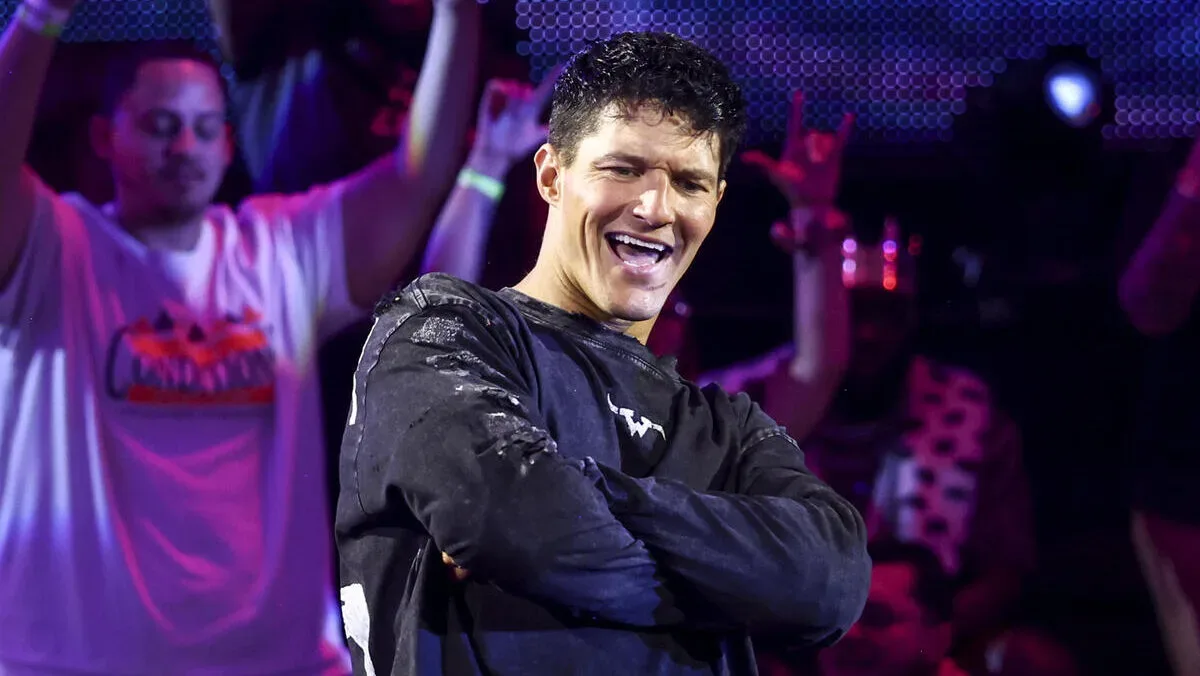
Tate Wilder says his decision to pursue WWE came into focus at a complicated crossroads in his football career. After his time with the New York Jets ended, Wilder was still attempting to keep the door open for another NFL opportunity. But when WWE unexpectedly called with an invitation to an NIL tryout in Orlando, the former football player chose to take the chance.
That choice, Wilder explained, became decisive the moment he was able to experience the physical environment of a wrestling ring for himself. What began as a quick invitation to attend a WWE NIL event turned into the moment he determined that professional wrestling, rather than a continued football search, was the direction he wanted to follow.
Wilder had not always viewed WWE as part of his future. During his college football years, he regarded the sport as something interesting, but not something that would pull him away from his primary goal. His focus at that point was entirely on football and on reaching the NFL.
“In college I was like, ‘Yeah, you know, WWE is cool but that’s not my direction. My direction is completely football and that’s it,’” Wilder said.
For more background on this topic, read AJ Lee Explains Why She Stayed Away From Wrestling After Her 2015 Retirement.
WWE’s NIL program had nevertheless made contact with him during that earlier period. Wilder recalled being told that the company expected to remain in touch down the line. At the time, that possibility did not appear to change his plans. Football remained the priority, and the prospect of a wrestling career was not yet a serious consideration.
A Change in Wilder’s Relationship With Football
Wilder’s outlook began to shift after his NFL experience. He said that the end of his run with the Jets did not initially mean he had abandoned the ambition of continuing in football. He and his representatives were speaking with other teams and working to sustain that dream. However, he gradually recognized that his connection to the sport had changed from what it had been while growing up.
“When my career came to an end with the Jets, we were in communication with a bunch of other teams, keeping that dream alive,” Wilder said. “At a certain point, it kind of became like — it’s not that I fell out of love with the sport of football, but it was more of it wasn’t the same as it was when I was growing up. I kind of felt like a shift in my mindset of like, something’s changing.”
That distinction is important in Wilder’s account. He did not frame the move toward WWE as a rejection of football or an attempt to diminish the sport that had occupied so much of his life. Instead, he described a change in perspective. Football no longer felt exactly as it had before, even as he remained engaged in the process of trying to find another opening at the professional level.
That process was also complicated by physical and medical considerations. Wilder said he was still dealing with physical issues after leaving the Jets. He stated that an NFL flag on his medical record tied to previous college injuries created an obstacle as he and his team worked to clear physicals and create chances to train with other clubs.
“We get released by the Jets and I’m still dealing with some physical stuff,” Wilder said. “My medical record got flagged by the NFL through some past injuries in college. We’re dealing with trying to pass the physical and open up the windows for other opportunities to go train with teams.”
For athletes navigating a transition after football, those circumstances can create a period of uncertainty. Wilder described exactly that kind of moment: he was considering potential football options, managing the issues connected to his medical record, and trying to decide what would come next. WWE’s call arrived in the middle of that uncertainty.
An Unexpected Orlando Call
Wilder said the WWE invitation came shortly after his departure from the Jets. The timing was sudden. He recalled receiving a call from an unfamiliar Orlando number, choosing to answer it, and learning that WWE was holding a three-day NIL event beginning the next day.
“We get done with the Jets and then like two days later, I get a phone call from a random Orlando number,” Wilder said. “I’m like, ‘Alright, whatever, I’ll answer it.’ I answer this phone call and it is the WWE.”
WWE’s representatives told him the event would take place on Thursday, Friday, and Saturday, with travel set for the following morning. The speed of the offer left little time for extensive deliberation. Wilder’s response was to embrace the opportunity rather than wait for greater certainty in his football situation.
“They’re like, ‘Hey dude, it’s Wednesday. We’re doing a NIL deal Thursday, Friday, and Saturday, can we fly you out tomorrow morning?’” Wilder recalled. “I’m like, ‘You know what, screw it, let’s go.’”
Before heading to Orlando, Wilder told his agent to put the football conversations on pause. It was not presented as an impulsive declaration that football no longer mattered; rather, he wanted to see what WWE was offering before committing to the next stage of his career search.
“I tell my agent like, ‘Hey, push pause on all these teams right now, I’m gonna go check this WWE thing out and see what’s going on,’” Wilder said.
The willingness to stop and investigate a new route proved pivotal. Wilder had previously seen wrestling as outside his plan. Now, with his NFL future uncertain and WWE offering direct access to its NIL environment, he had an opportunity to test whether the industry could offer a different competitive outlet.
The Ring Experience Changed Everything
For Wilder, the answer arrived when he was allowed to get into the ring. He described the appeal in physical and expressive terms: feeling the ropes, moving around in the ring, taking a bump, and exploring what he called the “extreme side” of the WWE experience.
“As soon as they gave me an opportunity to get in the ring and roll around and feel the ropes and take a bump and express myself with the extreme side, it was kind of like, game over,” Wilder said.
That statement captures the immediacy of his reaction. The decision was not based only on the idea of entering WWE or on the broader visibility of professional wrestling. Wilder said the defining experience was the hands-on introduction to the ring itself. Once he felt the demands and possibilities of the environment, he believed he had found the next direction he wanted to pursue.
He then relayed that conclusion to his agent in unambiguous terms. “This is my direction and I do not want to go anywhere else,” Wilder said. “Here it is, let’s go.”
For WWE, NIL recruitment is designed to identify athletes with backgrounds that may translate to sports entertainment, including competitors from football and other collegiate sports. Wilder’s story illustrates the personal side of that pathway. His contact with WWE first came while football was still his entire focus, but the company’s earlier outreach meant there was already a connection when his situation changed after the Jets.
The call from Orlando did not arrive as part of a long-planned public transition. In Wilder’s telling, it came at a moment when he was working through injuries, medical questions, and the uncertain possibilities of continuing in the NFL. The tryout then provided something football discussions could not: a direct chance to experience a new discipline rather than merely consider it from a distance.
Choosing a New Competitive Path
Wilder’s account also underscores the differences between football and professional wrestling. He described the NFL as “a completely different game at that level,” reflecting on how his perspective changed once he reached that stage of the sport. At the same time, the WWE ring offered a form of athletic expression that immediately connected with him.
His comments do not establish a timetable for any future WWE role, nor do they detail what comes next in his wrestling development. What they do establish is the point at which his priorities changed. Wilder had been exploring continued football opportunities, but his experience at the NIL tryout convinced him to stop looking elsewhere and commit his energy to wrestling.
That makes the Orlando invitation more than a routine recruiting stop in his career story. It was the moment when an athlete who had once viewed WWE as separate from his ambitions discovered that it could become his primary ambition. Wilder’s football background remains central to how he arrived at this opportunity, particularly his time with the Jets and the physical challenges that followed. But he now identifies the WWE tryout as the place where his next chapter became clear.
“Something’s changing,” Wilder said of the mindset shift he felt after football. The unexpected WWE call, followed by his first chance to work inside the ring, appears to have answered what that change would be.
Darryl Polo
Darryl Polo is a passionate wrestling fan covering WWE, AEW, TNA and beyond. He loves great rivalries, breakout stars and the moments that keep fans talking long after the bell. How we work.