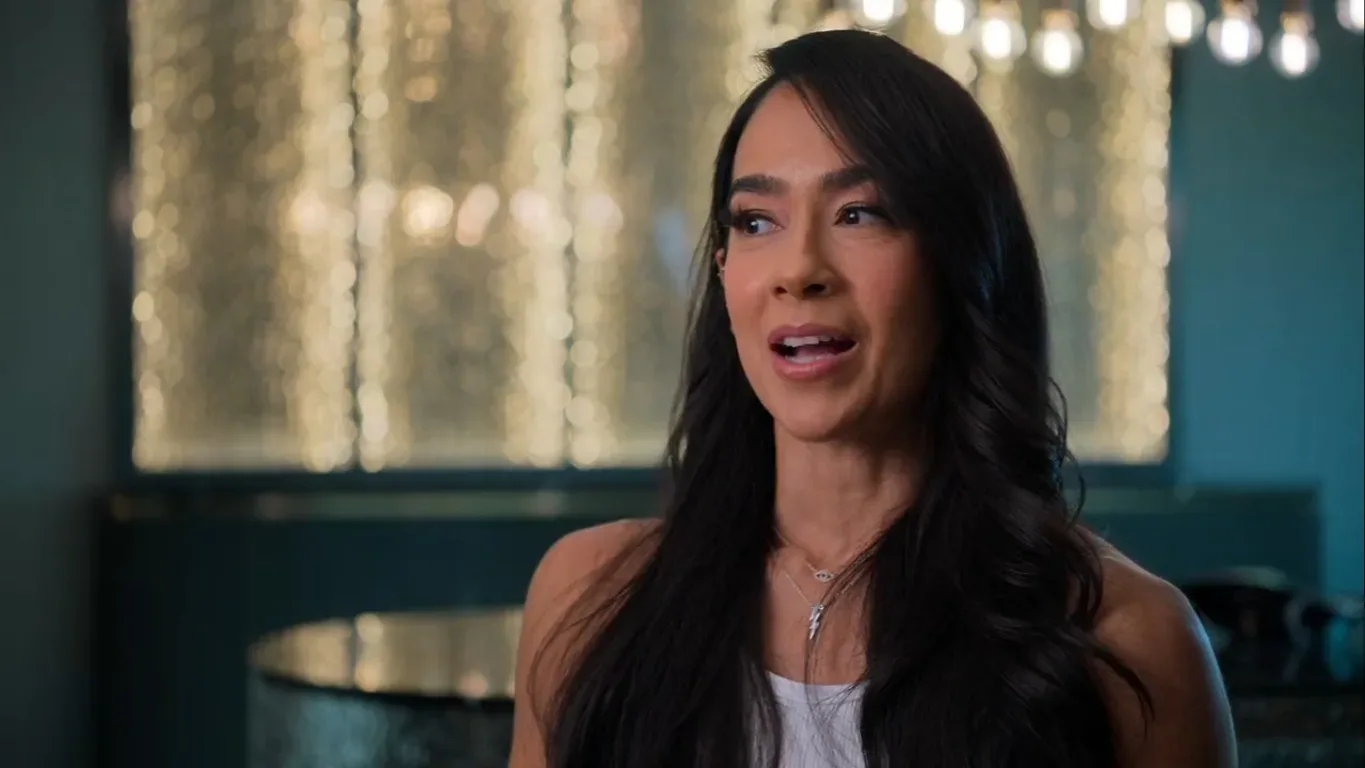
AJ Lee’s relationship with professional wrestling did not simply pause when she retired in 2015. For a long period afterward, she says she intentionally kept her distance from it entirely.
Speaking on Mind Over Mountain with Cheryl Strayed, Lee reflected on the years she spent away from the ring and explained why she did not remain a regular viewer while she was retired. Her comments offered a candid look at a separation that was rooted not only in a change of career, but also in the emotional weight she associated with wrestling at that point in her life.
Lee retired in 2015, stepping away from the industry to focus on her mental health and pursue other ventures. While former wrestlers frequently remain connected to the business as viewers, guests, trainers, producers, or occasional on-screen figures, Lee described taking a much more complete break. In her telling, watching wrestling again would have meant revisiting a part of her life she was not ready to revisit.
“It felt like a relationship,” Lee said. “I’m not the type of person that is going to stalk my ex on social media. I never watched any wrestler and I stood far away from it.”
For more background on this topic, read Cody Rhodes Reflects On Liam Neeson, The Naked Gun Cameo And His Growing Acting Ambitions.
That comparison framed the way Lee viewed her retirement. Rather than treating wrestling as a familiar form of entertainment she could casually return to, she saw it as something deeply personal. She had invested a major part of herself in the profession, and the distance gave her room to avoid difficult memories connected to that time.
Lee said a major reason for stepping back was the amount of emotional history she carried from her run in wrestling. She explained that she had loved the sport, but also associated that period with trauma and an environment she did not consider healthy for her at the time. The result was a feeling she compared to heartbreak.
“So much of heart was in it and I fell in love with it and there was a lot of trauma back then and it wasn’t a very healthy place,” Lee said. “A little bit of it was that I had a broken heart. Did I want to go there and think about it?”
A deliberate break from the product
Lee’s comments make clear that her absence as a viewer was not about indifference toward the performers who continued working after she left. It was instead a boundary she felt she needed. In an industry where personalities, storylines, and audiences often encourage a sense of uninterrupted connection, Lee chose separation.
That decision also meant she did not keep up with wrestlers simply because they were part of a world she once knew. Her comparison to not monitoring an ex on social media was a concise explanation of that mindset: she did not want to keep reopening something she had decided to leave behind.
For Lee, the emotional distinction matters. Retirement from wrestling is often discussed in terms of matches, championships, contracts, and whether a performer might someday return. Her account places the emphasis elsewhere. The key issue was not whether she could physically compete, or whether there was potential interest in a future appearance. It was whether re-engaging with wrestling was healthy for her.
That perspective gives additional context to the length of her time away. Lee did not merely stop wrestling; she avoided watching the product and avoided following the wrestlers within it. The separation allowed her to build a life outside the immediate cycle of weekly shows and industry conversation.
CM Punk’s return briefly changed that pattern
CM Punk’s return to wrestling created one of the few circumstances in which Lee did tune in. Lee said she watched one of her husband’s shows after he went back to the ring. Watching also gave her an opportunity to see the evolution of the women’s division from a distance.
Her initial reaction was positive. Lee said the women she watched were impressive and that the experience made her recognize how cool the wrestling on the show was.
“The women were so amazing and it was like, ‘this is really cool,’” Lee said.
It was a meaningful observation from someone whose own WWE career included major accomplishments in women’s wrestling. Lee became one of the defining performers of her era, and her work helped establish her as an important figure in the evolution of the division. Still, her remarks were not presented as an attempt to compare generations or claim credit for what came later. She was simply describing her reaction to seeing the work being done after she had spent years intentionally looking away.
That positive moment, however, was followed by an incident that made her retreat from viewing again. Punk was injured on the show Lee watched, and she said she immediately connected the experience with bad luck.
“He got hurt on that show and I was like, ‘I’m never fucking watching again,’” Lee said. “I thought it was bad juju.”
Lee acknowledged that she became “really weird” about watching after that happened. Whether stated jokingly or as a reflection of the anxiety she felt in that moment, the conclusion was the same: she no longer wanted to tune in. Her instinct was not to continue following along and hope for better news. It was to return to the distance that had already defined much of her post-retirement life.
The story also underscores the unusual emotional position of being close to someone who is an active wrestler. Even for a veteran performer who understands the risks of the profession, witnessing an injury involving a spouse can make the danger feel very different. Lee’s response was not framed as an analysis of wrestling’s physical demands, but as a personal reaction to seeing Punk get hurt after she had made the choice to watch.
Her return did not erase the years away
Lee ultimately returned to wrestling in 2025. Her comeback saw her team with Punk against Seth Rollins and Becky Lynch, bringing her back into a prominent WWE situation alongside the person whose wrestling return had earlier complicated her relationship with watching the product.
The return was notable precisely because of how fully Lee had separated herself from the business after 2015. Her recent comments show that the comeback should not be viewed as evidence that she had spent the intervening years quietly following every development. By her own account, she had done the opposite.
That distinction is important when considering the arc of Lee’s career. There is a difference between a performer who remains immersed in wrestling while not actively competing and one who needs years of real distance before finding a path back. Lee’s comments place her experience in the latter category.
Her story is also a reminder that a return does not necessarily rewrite the reasons a wrestler left. A performer can return with a new perspective while still recognizing the difficult parts of their earlier experience. Lee’s decision to come back in 2025 did not negate the heartbreak, trauma, and discomfort she said she felt when she first stepped away. Instead, it followed a lengthy period in which she had chosen not to engage with wrestling at all.
Another step away after WrestleMania 42
Lee has again stepped away from wrestling following WrestleMania 42. That development makes her comments about distance especially relevant. She has now experienced more than one period of separation from the ring, and her explanation of the first long absence illustrates why any discussion of a future return requires patience.
There is no need to assume that time away carries one fixed meaning. Lee’s experience shows that stepping back can be about health, emotional well-being, perspective, family, creative interests, or simply the need to reclaim space from a profession that once consumed so much of a person’s life. Her own words emphasize that the separation after 2015 was deeply personal.
For fans, Lee’s return in 2025 was a major moment, particularly given how long she had been away. But her latest reflections add another layer to that comeback. She was not someone who had been watching from the sidelines and waiting for the right call. She had deliberately avoided the world she left, only occasionally allowing herself back into it.
And when one of those occasions coincided with Punk getting injured, Lee’s instinct was to close the door again. It is a striking, human detail in the story of a wrestler whose career has always inspired intense fan interest. Behind the questions about appearances, matches, and possible future plans is a simpler reality: for AJ Lee, wrestling has been a passion, a profession, and at times a relationship that required real distance to heal from.
Darryl Polo
Darryl Polo is a passionate wrestling fan covering WWE, AEW, TNA and beyond. He loves great rivalries, breakout stars and the moments that keep fans talking long after the bell. How we work.