
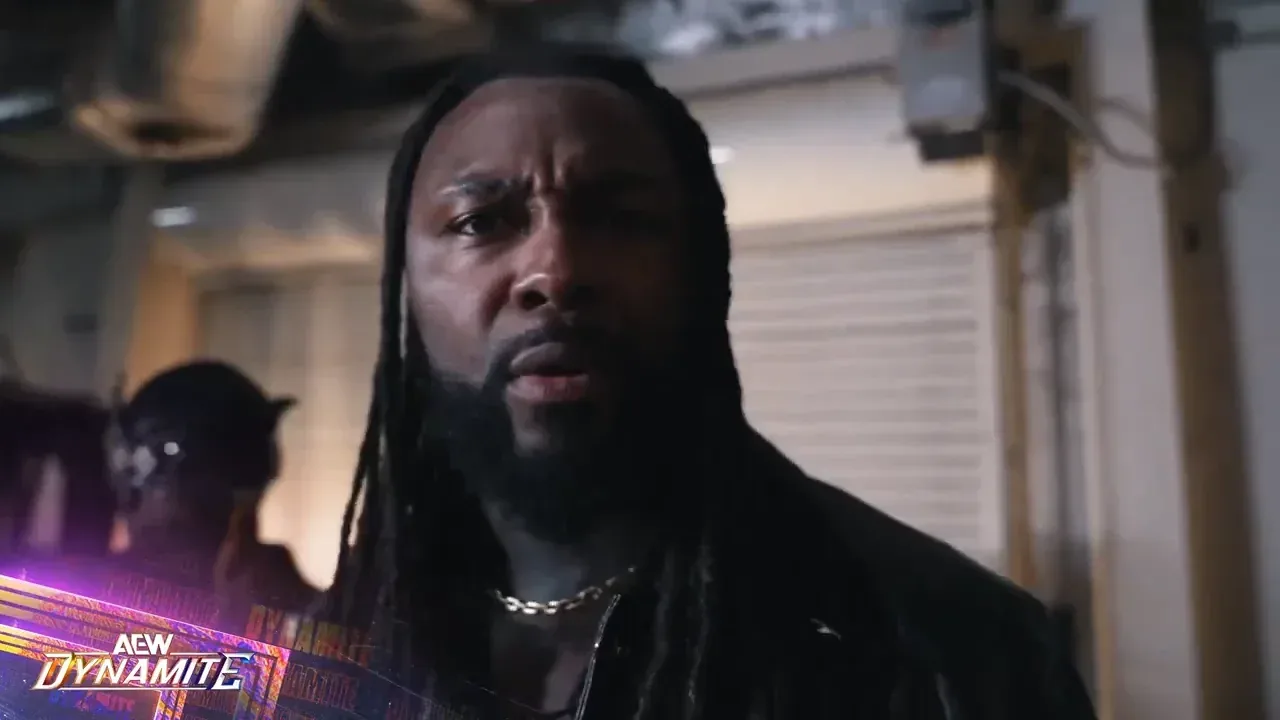
Swerve Strickland does not expect professional wrestling’s two largest North American promotions to unite for a full-scale crossover event anytime soon. In fact, the AEW star believes a WWE-AEW supercard is unlikely to happen during his lifetime.
It is an answer that will disappoint fans who have spent years imagining lineups filled with interpromotional dream matches. A meeting between WWE and AEW could theoretically create a card unlike anything modern wrestling has presented: reigning champions from separate companies, major stars testing themselves against rivals they have never shared a ring with, and matchups that have largely existed only in online debates.
But Strickland’s view is rooted less in whether the wrestlers would want to compete and more in the business realities surrounding them. In his estimation, the obstacle is control — specifically, the responsibility each company has to maintain the stature of its own performers and its own brand.
“It’s Control. It’s All About Marketing.”
Asked whether fans will ever see a WWE-AEW cross-promotional event in his lifetime, Strickland gave a direct response: “No. Not in my lifetime at least.”
For more background on this topic, read Bandido Names Kenny Omega and Ilja Dragunov as Dream AEW Singles Opponents.
Pressed on why he feels that way, Strickland pointed to the balancing act behind any potential matchup between major stars from competing promotions. He compared WWE’s position to that of a major sports league guarding its identity.
“It’s control. It’s all about marketing. It’s like the NFL, WWE has to protect their shield. There’s no way they’d allow any of our wrestlers to look better and be better [than them].”
The issue, from Strickland’s perspective, is not simply choosing who wins a single match. In wrestling, results are part of a larger presentation. A win, a loss, a dominant performance, or even the way a wrestler is positioned within a match can influence how that talent is viewed by the audience going forward. That makes collaboration especially complicated when both sides have stars they are attempting to establish, protect, or elevate.
Strickland used several WWE names to illustrate the point. He called Oba Femi “a world beater” and noted the value in keeping someone with that presentation looking strong. He also named Gunther, Roman Reigns, and Cody Rhodes as figures WWE would have substantial reason to protect, emphasizing Rhodes in particular because of his prior association with AEW.
“Obi Femi is a world beater. You gotta protect that and make sure he keeps looking good. Gunther, have to protect that. Roman [Reigns], have to protect that. Cody [Rhodes], have to protect, even more so because of AEW. There’s a lot of that happening.”
The point applies in both directions. AEW has its own top acts, championship picture, long-term stories, and audience expectations to consider. A crossover event may sound straightforward when reduced to a list of fantasy bouts, but it would require both promotions to agree on the status of their biggest stars, the match finishes, and the larger implications after the show is over.
The Women’s Division Would Add Another Layer
Strickland also highlighted the women’s divisions as an area where the question of protection could become even more difficult. He specifically mentioned Rhea Ripley, Liv Morgan, and Chelsea Green when discussing the challenge of matching recognizable WWE talent against AEW counterparts.
“When it gets to the women, then that’s even tougher. Rhea [Ripley], Liv [Morgan], Chelsea [Green] all have to be protected.”
That observation underscores why a one-night event is not necessarily a simple solution. Promotions do not merely promote wrestlers as individuals; they build divisions around them. A talent’s momentum can be tied to championship pursuits, alliances, rivalries, character direction, and the broader perception that they belong near the top of the card.
Those concerns grow when a proposed match involves performers with distinctly different roles in their home promotions. A wrestler who is booked as a dominant headliner in one company might be facing someone whose own promotion considers equally central to its future. Neither company would be eager to leave the event with its major attraction appearing secondary.
Strickland’s comments do not reject the appeal of the concept. Instead, they identify why fans’ enthusiasm does not automatically translate into a feasible business arrangement. The desired matches may be obvious to viewers, while the negotiations behind them would be anything but simple.
Seth Rollins vs. Will Ospreay Represents the Appeal
Among the matchups Strickland referenced was Seth Rollins versus Will Ospreay, a bout that represents the kind of generational attraction fans often discuss when imagining WWE and AEW working together.
“You wanna see Seth [Rollins] and Ospreay. That’s the generational thing, but who do you protect? Who has the leverage?”
The appeal is easy to understand. Both men have been positioned as elite-level performers, and a match between them would invite intense discussion around style, pace, athleticism, and legacy. Yet Strickland’s larger question remains the key one: who has the leverage in arranging it, and what does each side believe it can gain or lose from the result?
For wrestlers, the answer may be much less complicated. Strickland said that performers in the locker room generally want the matches. He spoke warmly about his friendships with WWE talents Carmelo Hayes, Jevon Evans, and Oba Femi, stressing that a shared event could be driven by competition and mutual respect rather than concern over which promotion claims a victory.
“Us in the locker room, we just wanna have these matches. I’m good friends with Carmelo [Hayes], Jevon [Evans] and Oba. Those are my boys. I love those guys. I don’t care who wins. Double DQs. I don’t care.”
That distinction is central to Strickland’s outlook. Wrestlers can view an interpromotional match as an opportunity to create something memorable with peers they admire. Executives, meanwhile, must view the same match through the lenses of television, branding, talent presentation, marketing, and the long-term value of their intellectual property.
A double disqualification may be an amusing answer from a wrestler willing to prioritize the experience, but it also reflects the problem. A finish designed to avoid definitively beating either competitor could protect both sides in theory, while potentially frustrating an audience expecting a clear resolution. There is no universal answer that satisfies every business and creative concern.
Strickland Wants to Be the Fantasy Match
When asked whether there was a particular WWE wrestler he wanted to face, Strickland declined to name one. Rather than frame himself as someone chasing a fantasy encounter, he said he now sees himself as the attraction others would want to wrestle.
“I don’t do those anymore. I wanna be the fantasy match. I’m at that stage now.”
It is a confident statement from a performer who has consistently presented himself as a major player. Strickland’s position is not that dream matches have lost their appeal. His comments on Rollins and Ospreay, along with his enthusiasm about facing friends such as Hayes, Evans, and Femi, make clear that he understands why supporters want those collisions.
Instead, he is defining his own standing within that conversation. Strickland wants to be viewed not as a wrestler looking across the industry for a defining opponent, but as one of the names whose availability would create the dream match in the first place.
That perspective arrives as Strickland continues to be involved in AEW’s trios scene. He is one-third of a group with The New Level, consisting of Kofi and Austin Creed. The trio recently lost the AEW Trios Titles to Hangman Page, Bandido, and Brody King — collectively known as Brodido — at AEW WrestleDream.
While that result has shifted the championship landscape, it does not change the broader significance of Strickland’s remarks. The possibility of WWE and AEW joining forces remains one of wrestling’s most enduring what-if discussions. Fans can build cards in seconds and debate match results for days. The people inside the industry, however, must account for the power, promotion, and protection attached to every one of those names.
Strickland’s conclusion is blunt: the matches may be desirable, and the wrestlers may be willing, but the control required to make a WWE-AEW event work is precisely why he does not expect to see it happen.

Darryl Polo
Darryl Polo is a passionate wrestling fan covering WWE, AEW, TNA and beyond. He loves great rivalries, breakout stars and the moments that keep fans talking long after the bell. How we work.