
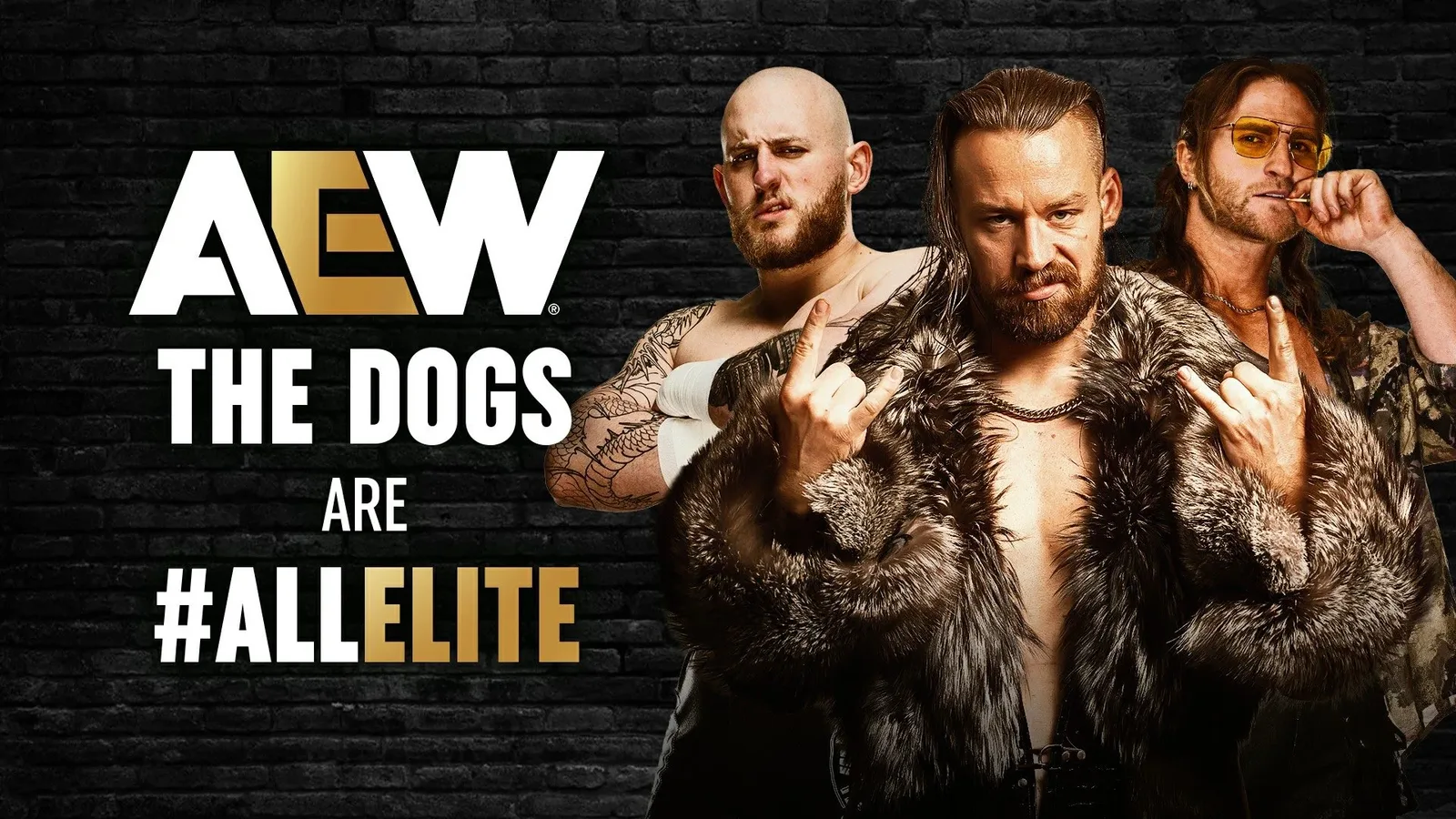
David Finlay has offered a candid assessment of one major difference between working for All Elite Wrestling and New Japan Pro-Wrestling: the money.
Finlay and Clark Connors were officially announced as All Elite in March 2026. Connors had already been appearing regularly on AEW television from the start of the year alongside Gabe Kidd, while Finlay made his AEW debut that month. The two members of The Dogs reflected on the transition during an appearance on What Happened When with Tony Schiavone, where the conversation turned to how they have enjoyed their time in the company.
Finlay’s first response focused on the practical upsides of the new environment, his on-screen role, and being able to work alongside familiar allies.
“I like it. I get to kick ass and be with my boys. Different city, twice a week. What’s not to like? I get to mess with you [Schiavone] on TV and make your life miserable. Life is good. Nothing to really complain about,” Finlay said.
For more background on this topic, read Ric Flair Praises Tony Khan’s Generosity and Calls AEW President a Potential All-Time Great Promoter.
Connors then brought up compensation as another clear positive, saying, “The money. I like the money, too. A lot of it.”
Finlay did not hedge when expanding on that point.
“Yeah, AEW money is way better than New Japan money,” Finlay said.
Finlay and Connors Begin a New AEW Chapter
The comments arrive several months after Finlay and Connors were formally confirmed as AEW talent. Their association has been built around their place in The Dogs, with Gabe Kidd also a central figure in the group. Connors’ AEW presence began before the March announcement, as he had been competing on television alongside Kidd since the beginning of 2026.
Finlay’s arrival brought another established name from the group into AEW’s active roster picture. His remarks to Schiavone make it clear that he has found positives both inside and outside the ring. He referenced the chance to travel to different cities twice each week, remain aligned with his “boys,” and antagonize Schiavone as part of his television persona.
That answer also captured the attitude Finlay has projected throughout his career. Rather than offering a guarded corporate response, he framed AEW as a place where he can continue presenting himself aggressively while working with people he knows. The reference to making Schiavone’s life miserable was delivered in the context of their on-screen interactions, but it also underlined that Finlay sees value in having room to establish his character on AEW programming.
Connors’ answer was considerably shorter, but it opened the door to the most notable line of the discussion. Financial terms in professional wrestling are seldom publicly detailed, and neither Finlay nor Connors provided any figures, contract terms, or additional specifics. Still, Finlay’s direct comparison leaves little doubt about his personal view of the difference in pay between AEW and NJPW.
A Notable Comparison With New Japan
Finlay’s statement is especially notable because New Japan has been such a significant part of his professional identity. Before joining AEW, he had been closely associated with NJPW, and he had previously said that New Japan offered him a salaried deal when AEW launched.
That earlier detail gives added context to his new comments. Finlay was not discussing NJPW from a distance or as someone without familiarity with the company’s business structure. He had previously been presented with the possibility of a salary arrangement there, and he is now openly saying that AEW’s financial terms are substantially stronger from his perspective.
There is an important limit to what can be taken from the quote. Finlay did not disclose what he was paid in New Japan, what AEW is paying him, whether the comparison concerns guaranteed money, travel arrangements, frequency of dates, bonuses, or any other aspect of compensation. He also did not frame the statement as an attack on NJPW or discuss the reasons behind the difference. His wording was simple and personal: AEW money is “way better” than New Japan money.
Even without exact numbers, the remark stands out because it is an unusually straightforward public acknowledgment of the economic appeal of an AEW deal. Wrestlers often discuss creative opportunities, schedule flexibility, locker-room relationships, or exposure when addressing a move between major promotions. Finlay touched on several of those ideas as well, particularly travel, stablemates, and television character work. But the financial answer was the most unambiguous part of the exchange.
The Dogs’ Chemistry Has Carried Into AEW
Finlay’s emphasis on being “with my boys” points to the value of arriving in AEW with existing relationships and a ready-made unit. Connors and Kidd were already connected on AEW television before Finlay’s debut, meaning Finlay was not entering an unfamiliar situation alone. The group’s established chemistry provided a foundation for his AEW introduction.
For Connors, the opportunity has included regular exposure alongside Kidd. For Finlay, joining them has created a setting where he can work within a familiar identity rather than immediately having to construct one from scratch. The Dogs are tied together by a confrontational, hard-edged presentation, and Finlay’s comments suggest he is comfortable bringing that same energy to AEW.
Their appearance with Schiavone also highlighted the group’s willingness to lean into antagonistic interactions beyond match action. Finlay specifically mentioned enjoying the ability to “mess with” Schiavone on television. That is a small detail, but it speaks to the importance of presentation for performers shifting between promotions. A wrestler’s success is not limited to who they face in the ring; it also depends on whether their personality, alliances, and style can translate to a new television landscape.
At this stage, Finlay has expressed no regrets about the move. His comments instead described an experience he views positively: a recurring travel schedule, work alongside trusted partners, opportunities to play his character on TV, and stronger compensation.
What Finlay’s Remarks Do — and Do Not — Establish
Finlay’s statement will inevitably draw attention because it compares two prominent wrestling employers in direct terms. However, it should be read for exactly what it is: his assessment of his own situation. It does not establish a universal pay scale for every wrestler in either promotion, nor does it reveal the full financial makeup of the agreements involved.
Compensation can vary dramatically based on a performer’s experience, role, availability, number of dates, merchandise arrangements, travel requirements, and many other factors. Finlay did not offer a broader breakdown of those issues. He spoke only from his own position after becoming officially All Elite in March.
What is clear is that money was not treated as an afterthought by either man. Connors immediately identified it as a benefit, and Finlay emphatically agreed. That exchange was delivered alongside more personal reasons for enjoying AEW, rather than in place of them. Finlay likes working with his allies, likes the television dynamic, likes the routine of traveling to new cities, and says the financial side is significantly better than what he experienced in New Japan.
For Finlay and Connors, the early months of their official AEW run have therefore been defined by familiarity and opportunity. Connors had already been visible with Kidd, Finlay has now joined that environment, and both have made clear that they see advantages in their current situation. Finlay’s comparison with NJPW may be the headline-grabbing element, but the wider message was that he is enjoying his new home.

Darryl Polo
Darryl Polo is a passionate wrestling fan covering WWE, AEW, TNA and beyond. He loves great rivalries, breakout stars and the moments that keep fans talking long after the bell. How we work.