
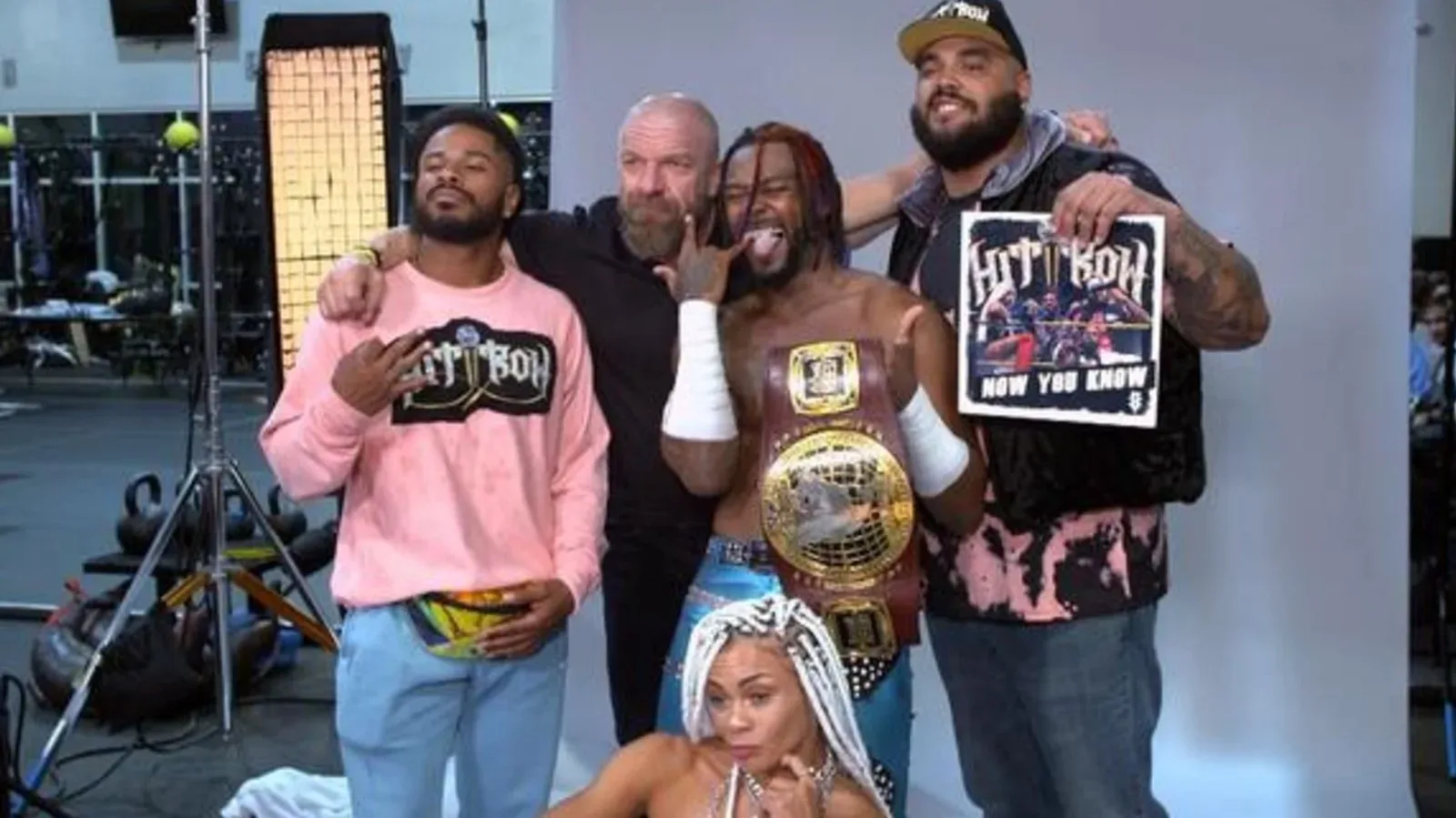
Swerve Strickland believes Triple H saw significant potential in him from the moment WWE brought him into the company, even if his eventual run there did not provide enough room for that potential to fully emerge.
Speaking with Extreme Channel, Strickland looked back on his WWE tenure, which included a reign as NXT North American Champion and a brief period on the main roster. The current AEW star said Triple H, who was leading NXT at the time, made it clear that he wanted Strickland signed quickly rather than putting him through a conventional tryout process.
“I think Triple H understood what he had because he didn't even give me a tryout. He just wanted to sign me, get me,” Strickland said.
For Strickland, that decision remains meaningful. It suggests that the people overseeing NXT had already identified qualities in him that made him worth acquiring immediately. Yet he also feels the circumstances around his time in WWE did not give him the runway required to turn that early belief into a sustained, defining run.
For more background on this topic, read WWE NXT Viewership Rises to Five-Week High on November 17, 2026.
Strickland’s comments were not framed as a simple criticism of one executive or one promotion. Instead, he described a broader issue in professional wrestling: promotions often operate with limited patience, crowded rosters, and an understandable desire to center performers who are already gaining momentum. In that environment, a wrestler can be viewed as highly talented while still not receiving the consistent opportunities needed to establish themselves.
A Fast Signing, But Limited Time To Grow
Strickland said the period in which he arrived was particularly competitive. Both AEW and NXT were looking to strengthen their talent pools, and he characterized the climate as one where promotions were eager to secure notable performers before another company could do so.
“Like, there was also a time when both AEW and NXT were trying to swipe the talent and make sure the talent pool was just cleared, you know. But he made sure to get me off the board as quick as possible, especially in that class that I came through with,” Strickland said.
That context is central to his reflection. Signing a performer quickly is one part of the process; finding the appropriate creative role, timing, and long-term direction is another. Strickland believes the latter pieces did not come together during his WWE run, not because he doubts that decision-makers recognized his upside, but because he did not remain in the environment long enough to evolve within it.
“I just didn't have the time there to truly flourish and mature and grow into what I could potentially be, you know,” he said.
Strickland did accomplish a notable milestone in NXT by winning the North American Championship. That achievement established him as a champion within the brand and placed him in a group of wrestlers trusted with a title that has often served as a major platform. However, winning a championship does not automatically guarantee an extended opportunity to define a character, build a long-running rivalry, or become a fixture at the top of a brand.
His move to WWE’s main roster was also short-lived. In retrospect, Strickland sees that compressed timeline as a major reason the audience did not get to see the fullest version of the performer he believed he could become. His point was not that success had been impossible in WWE. Rather, he said the process of adapting to the system and finding the right working relationship takes time.
NXT Had Major Priorities During Strickland’s Run
Strickland also pointed to the level of competition around him in NXT. During his time there, the brand featured several acts receiving major attention, including Karrion Kross, Keith Lee, Samoa Joe, and The Undisputed Era. Those names reflect the depth of the roster and the number of performers and groups positioned prominently at the time.
In any promotion, television time, major program slots, championship opportunities, and creative focus are finite. A crowded roster can offer valuable competition and compelling matchups, but it can also make it difficult for every performer to receive a sustained chance to build momentum. Strickland indicated that NXT’s focus on other featured acts left him with fewer openings to show the full range of what he could do.
That does not erase the importance of his NXT North American Championship reign, nor does it change the fact that WWE signed him with clear interest. But it helps explain why Strickland’s assessment is more nuanced than simply saying he was overlooked. He believes Triple H understood his value, while also believing that the structure and timing of his WWE stint prevented that belief from becoming a larger, longer-lasting showcase.
The distinction matters because it separates recognition from opportunity. A company can identify talent, sign it quickly, and still be unable to give that talent the conditions needed to reach its ceiling. Strickland’s reflection is that his WWE run fell into that category.
Strickland Sees A Wider Industry Problem
Strickland made clear that he does not view impatience as exclusively a WWE issue. He said promotions across wrestling can be reluctant or unable to devote extended time to talent development, especially when other performers are already hot and the company has a reason to capitalize on their momentum.
“Sometimes promotions, it's not just a WWE thing, but all promotions, they don't have the patience to really give their time to their talent to truly have them blossom, especially when other people are having their runs and they want to kind of strike when the iron's hot with that,” Strickland said.
That perspective reflects a fundamental challenge for every major wrestling company. Wrestling is built around momentum. When an act connects, promotions often need to act quickly in order to maintain audience interest. At the same time, performers who are still refining their presentation may need repetition, meaningful matches, character progression, and the freedom to learn from mistakes before they become complete television acts.
There is no universal timetable for that process. Some wrestlers make an immediate impact. Others require a longer stretch before their voice, character, and in-ring identity fully click. Strickland’s experience has led him to emphasize the importance of patience, communication, and a chance to understand a company’s particular system.
His comments also underline how much a wrestler’s path can change based on timing. Being surrounded by established names and emerging priorities can limit a performer’s immediate ascent. A later opportunity, in a different company and with a different degree of creative space, can produce an entirely different outcome.
AEW Provided The Time He Wanted
Strickland believes AEW has supplied the environment he was missing earlier in his national television career. He said that, with more time, a stronger relationship, and a better understanding of how to adapt, his WWE story might have unfolded differently. But he also said that AEW has given him the opportunity to pursue that growth.
“I feel like if I had the time, the relationship, the understanding, and the time to adapt and really understand the system, who knows? But that's what I did get in AEW,” Strickland said.
That final point is the clearest takeaway from Strickland’s reflection. He is not dismissing the role WWE and NXT played in his journey. On the contrary, he credits Triple H with recognizing his ability early enough to bring him in without a tryout. He also recognizes that the roster environment around him was filled with performers who were receiving major attention.
But Strickland believes his development required more time than WWE ultimately gave him. In AEW, he feels he has been afforded that time to adapt, mature, and better show what he can bring to the ring and to a larger story.
For a performer whose WWE tenure was relatively brief, that is a measured assessment rather than a bitter one. Strickland’s view is that potential recognition is important, but it is only the first step. The opportunity to grow, make adjustments, and remain in a position long enough for audiences to see that growth is what ultimately determines whether potential becomes a defining career run.
In pictures

Darryl Polo
Darryl Polo is a passionate wrestling fan covering WWE, AEW, TNA and beyond. He loves great rivalries, breakout stars and the moments that keep fans talking long after the bell. How we work.