
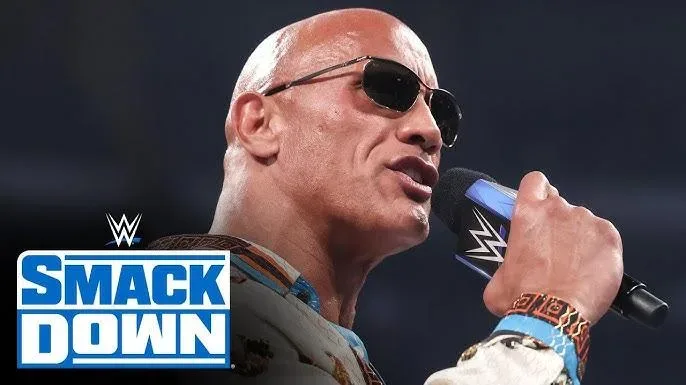
Damian Priest has identified Dwayne “The Rock” Johnson as the professional wrestler whose acting career he would most like to mirror as he continues exploring opportunities outside the ring.
Priest recently appeared in Steps, which became available to stream on Netflix on November 20. The WWE star discussed his ambitions in a conversation with Collider, where he was asked which wrestler-turned-actor offered the clearest blueprint for the kind of Hollywood career he would want to pursue.
For Priest, the answer was immediate. Johnson’s ability to move between major action projects, live-action performances and animation stood out as the standard he would like to chase.
“If you want to have a mirrored career to somebody in Hollywood, I mean, that’s the guy, right? He’s- it does everything everywhere, and from animation to action, live action. The guy’s incredible at everything he does. So that would easily be the one.”
For more background on this topic, read Swerve Strickland Says Triple H Recognized His Potential Before WWE Run Ended.
Priest points to the broadest possible Hollywood template
The Rock is an understandable choice for any wrestler looking at acting as a serious long-term pursuit. Johnson has built one of the most prominent entertainment careers ever achieved by a performer who began in professional wrestling, establishing himself across multiple genres rather than being defined by one type of role.
That versatility is the key part of Priest’s answer. He did not limit his praise to Johnson’s action work or to the sheer scale of his film career. Instead, Priest highlighted the range involved in moving from animation to action and other live-action projects. It suggests that the WWE star is looking beyond a one-off appearance and sees value in developing the flexibility to work in different formats.
For wrestling talent, acting can present a natural extension of the skills developed on television each week. WWE performers are accustomed to working before cameras, communicating character through physicality, delivering dialogue under pressure and connecting quickly with large audiences. Those strengths do not automatically make the transition to film or television simple, but they can offer a useful foundation.
Priest’s remarks also reflect the increasingly established path from WWE to mainstream entertainment. Hulk Hogan was among the early major examples of a wrestler seeking a wider acting profile. In later years, Johnson, John Cena and Batista each became notable success stories, though each has taken a distinct approach to projects, roles and public identity.
Johnson’s route remains especially significant because of its scale. He has been able to maintain an international profile while appearing in projects designed for different audiences, including family entertainment, large-scale action productions and animated features. For Priest, that broad appeal appears to be the element worth emulating.
Steps gives Priest a new creative outlet
Priest’s appearance in Steps marks a recent addition to his work away from WWE programming. With the film now streaming on Netflix, it gives fans an opportunity to see him in a setting separate from the presentation of his current wrestling character.
There is a meaningful difference between appearing as a WWE Superstar and performing in a scripted acting project. Wrestling requires performers to inhabit characters in an ongoing, often live environment where the audience response can influence the moment. Film and television performance operates under a different rhythm, with scenes constructed around a story, direction and the demands of the particular role.
That distinction makes opportunities such as Steps valuable for performers who want to learn what kind of acting work suits them. A project does not have to represent a full departure from wrestling to matter. It can be part of a gradual process of building experience, finding comfort on a different kind of set and demonstrating an ability to contribute outside the ring.
Priest did not lay out a detailed timeline for future acting plans in his comments. He also did not suggest that pursuing Hollywood means stepping away from WWE. His answer was focused on admiration for Johnson’s body of work and the kind of career range it represents.
That is important context for a WWE performer who remains closely associated with his in-ring career and television character. The comments read as an expression of ambition rather than an announcement of a career change.
Wrestling’s crossover tradition continues
Professional wrestling and acting have long had a close relationship. The overlap is often discussed in terms of charisma and larger-than-life personalities, but the connection goes beyond that. Wrestlers spend years learning timing, movement, emotional escalation and how to tell stories to an audience. Those are not identical to the requirements of screen acting, yet they are adjacent skills.
At the same time, wrestling stars who enter acting face expectations that can be difficult to meet. Their success is often measured not simply by whether they appear in a project, but by whether they can take roles that feel distinct from their established wrestling personas. That challenge is part of what makes Johnson’s career so notable and explains why Priest singled him out.
Cena and Batista offer further examples of different ways the transition can develop. Their careers underline that there is no single formula for a wrestler entering Hollywood. Some performers become closely linked with comedy, some with action, some with dramatic work, and some seek a mixture of all of those avenues. The strongest careers tend to be those in which performers find projects that fit their own screen presence while continuing to grow beyond familiar expectations.
Priest’s own comments indicate that he appreciates the value of variety. By specifically mentioning animation as well as action and live-action work, he pointed to an interest in the breadth of Johnson’s output rather than only the most obvious blockbuster side of it.
Aspiration without a limitation
The comparison to The Rock should not be read as Priest claiming that he expects to duplicate Johnson’s accomplishments exactly. Johnson’s place in entertainment is unusual, and Priest framed his response as an answer to a hypothetical question about the career he would choose to mirror. It was praise for an exceptional benchmark.
Still, the answer provides a clear indication of how Priest views acting. He is not talking about it as a novelty or merely a promotional side project. He described the appeal of a career defined by adaptability and by work across a number of entertainment spaces.
That mindset could serve him well as he adds acting credits while continuing his WWE work. A wrestler’s established presence can create immediate audience recognition, but sustained success away from the ring requires more than name value. It requires the willingness to take on new challenges, develop different performance tools and avoid being boxed into a single type of role.
Johnson’s career is the example Priest chose because it embodies that potential at the highest level. From Priest’s perspective, the goal is not simply to appear in an action film. It is to have the sort of expansive career that can move between animation, action and live-action storytelling while maintaining a connection with audiences.
For now, Steps gives Priest a current acting credit as he explores that direction. His WWE responsibilities remain central to his public profile, and his comments offer no indication that he is leaving wrestling behind. Instead, they show a performer interested in expanding his creative opportunities and willing to set the bar as high as possible.
With Johnson as the model, Priest has made his preferred destination clear: a future in which he can bring the same presence that has made him a recognizable WWE figure into a diverse range of acting projects.

Darryl Polo
Darryl Polo is a passionate wrestling fan covering WWE, AEW, TNA and beyond. He loves great rivalries, breakout stars and the moments that keep fans talking long after the bell. How we work.