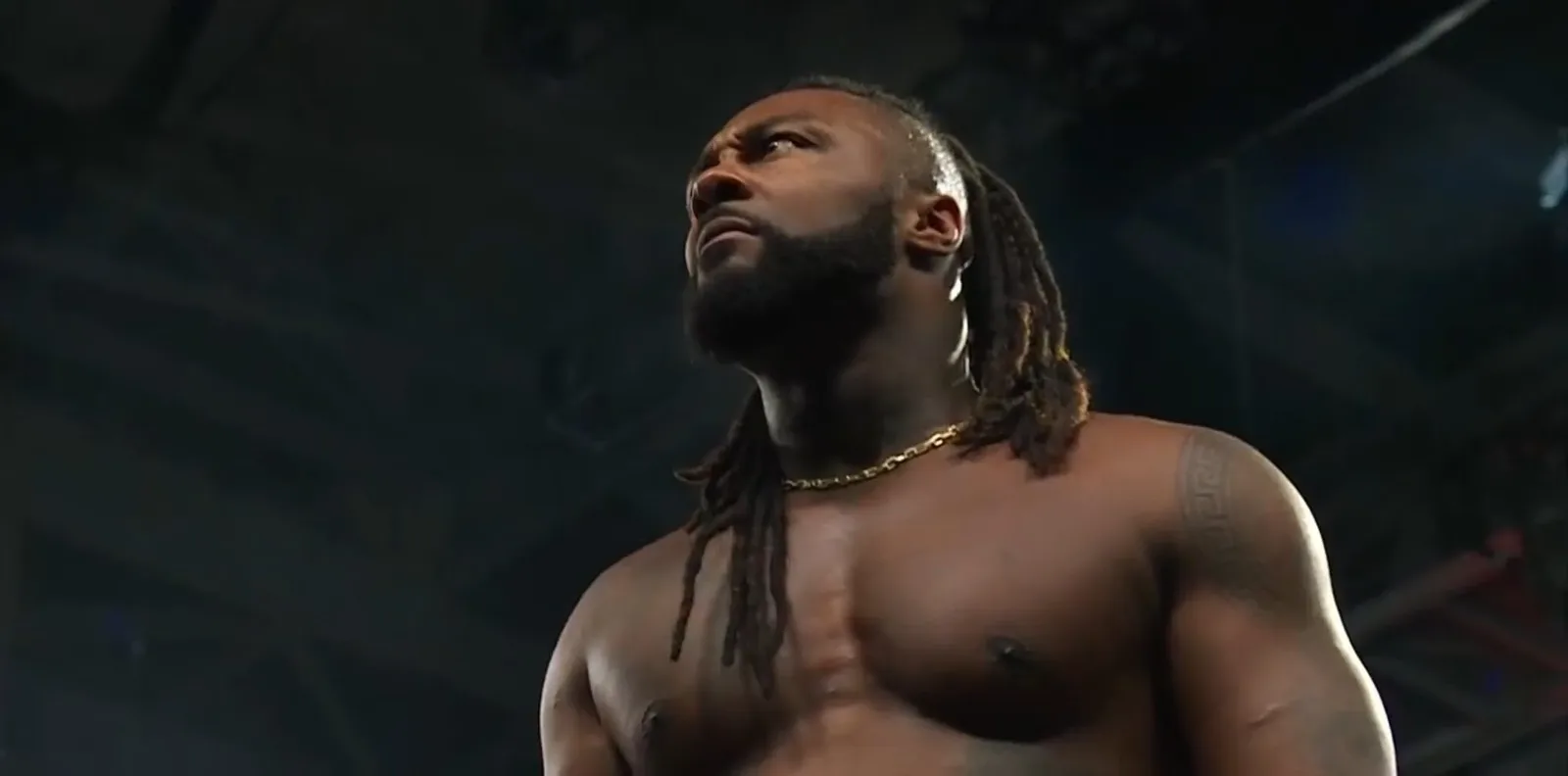
Swerve Strickland has offered an honest look at the physical reality behind life as a professional wrestler, explaining that his approach to recovery is built around trying to avoid pills whenever possible.
Speaking with Hot 97, Strickland discussed the wear that comes with wrestling and the limited nature of recovery while maintaining an active career. Rather than presenting a miracle solution for the aches and damage accumulated through matches, travel and training, the AEW star described a routine based on basic measures: heat, ice and rest.
“There is no real recovery,” Strickland said. “Just heating pad, ice, lay down.”
That blunt assessment reflects the demanding schedule and physical expectations that accompany professional wrestling. Wrestlers perform in a sport where discomfort is often an unavoidable part of the job, and where the distinction between feeling fully recovered and simply being ready to keep moving can be difficult to define. Strickland did not portray his regimen as a complete answer to those demands. Instead, he emphasized that he attempts to manage them without making medication a default part of the process.
For more background on this topic, read Kenny Omega Says AEW All In Clash With Will Ospreay Felt ‘Destined To Be’.
“I try to avoid pills as much as possible because I want to try to find some remedy that doesn’t require medication or like abusing it or you know?”
Strickland’s remarks address an issue that has long been part of the wider conversation around wrestling. The profession has a deep history of performers working through pain, injuries and fatigue, with medication sometimes becoming a source of concern in an environment that rewards toughness and consistency. His comments were not framed as a criticism of anyone else’s choices or personal medical needs. Rather, Strickland was clear that he has tried to find an approach that works for him without relying on substances he does not want to use.
For Strickland, that means prioritizing the most straightforward options available to him. A heating pad, ice and taking time to lie down may sound simple, but his point was that there is value in searching for alternatives before turning to medication. He characterized that decision as part of an effort to avoid both taking pills unnecessarily and the possibility of misuse.
A Personal Approach To The Demands Of Wrestling
Recovery methods can vary widely from wrestler to wrestler. Every performer has different physical needs, different routines and different experiences with pain management. Strickland did not suggest there is one universal plan that can erase the impact of wrestling’s physical toll. In fact, his statement that there is “no real recovery” underlined how difficult it can be to fully reset while competing.
His comments instead focused on the boundaries he has set for himself. Strickland said he tries to avoid pills “as much as possible,” language that recognizes medication can have a legitimate role while also making clear that it is not his preferred first option. His concern is specifically rooted in trying not to depend on medication or abuse it.
That perspective is especially notable in a profession where performers are routinely expected to absorb punishing contact. Wrestling requires athletes to take falls, execute athletic maneuvers and work with opponents in a setting designed to create a sense of danger for the audience. Even when actions are coordinated and performed by experienced professionals, the physical strain is real. Strickland’s description of heat, ice and rest illustrates a practical, restrained philosophy toward handling that strain.
The AEW star also said that smoking is not part of his routine. He explained that he has never smoked and does not see it as something for him, even while acknowledging that other wrestlers may make different choices.
“Heating pad… I don’t smoke, I never smoked so,” Strickland said. “There’s a lot of wrestlers, for a long time, it was outlawed. Like, you’d get popped for tests and stuff like that. Now it’s regular. It’s, like, oh, okay. I understand it. I get it. It’s just not for me.”
The key part of Strickland’s answer is its personal nature. He said that he understands why others may choose differently, but stressed that smoking is simply not his preference. His recovery outlook is not about declaring that all wrestlers must follow one path. It is about finding remedies that align with his own limits and values.
Strickland Does Not Present A Shortcut
There is a significant difference between promoting a quick fix and acknowledging the difficult, repetitive work of managing physical wear. Strickland’s comments fall firmly into the latter category. The methods he named are not glamorous, and he did not claim they provide instant relief. His language instead conveyed that recovery can be a matter of doing what is available, listening to the body and trying to avoid choices that may create other problems.
That is why his opening statement carried weight. “There is no real recovery” is not a celebration of wrestling through pain. It is an acknowledgment that the demands of the profession can leave little room for a complete physical reset. For an active wrestler, recovery may often be an ongoing process rather than a final destination.
Strickland’s preference for non-medication remedies also comes with an important qualifier: he said he tries to avoid pills as much as possible. He did not make sweeping medical claims, dismiss professional care or offer medical advice to others. The focus was on his own effort to avoid medication unless he feels it is necessary and to stay clear of abuse.
That distinction matters in a conversation involving physical health. The best course of treatment can differ based on an individual’s condition and medical guidance. Strickland was speaking about his personal habits and the choices he makes while navigating the physical side of wrestling, not presenting a substitute for medical care.
The Physical Side Of Swerve Strickland’s Career
Strickland’s willingness to discuss recovery fits with the intensity associated with his in-ring career. His matches are often defined by speed, athleticism, aggression and a willingness to engage with the high-stakes atmosphere that major wrestling rivalries demand. The physical consequences of that style are part of the broader reality he addressed during the interview.
Elsewhere in the same conversation, Strickland reflected on being powerbombed by Hangman Page on a cinder block, another reminder of the extreme physical imagery that can be involved in a major wrestling feud. He did not connect that specific moment directly to the recovery comments, but both topics speak to the demanding world in which he performs.
Professional wrestling audiences often see the finished performance: the entrance, the match, the rivalry and the aftermath on television. What they do not always see is the work that follows once a performer leaves the ring. Strickland’s comments put attention on that less visible side of the profession. His answer was not built around a dramatic secret or specialized technique. It was based on a heating pad, ice, rest and a conscious choice to avoid relying on pills.
For Strickland, the goal is clear. He wants to find remedies that do not require medication and avoid the potential for abusing it. He also recognizes that others may approach recovery differently, particularly when it comes to smoking, without suggesting that their decisions are his to judge.
In a sport where recovery is rarely simple, Strickland’s outlook is grounded in restraint. He knows there may be no such thing as complete recovery while continuing to wrestle at a high level, but he is trying to manage the process in a way that feels sustainable for him. That means heat, ice, rest and an effort to keep medication from becoming an unnecessary crutch.
Darryl Polo
Darryl Polo is a passionate wrestling fan covering WWE, AEW, TNA and beyond. He loves great rivalries, breakout stars and the moments that keep fans talking long after the bell. How we work.