
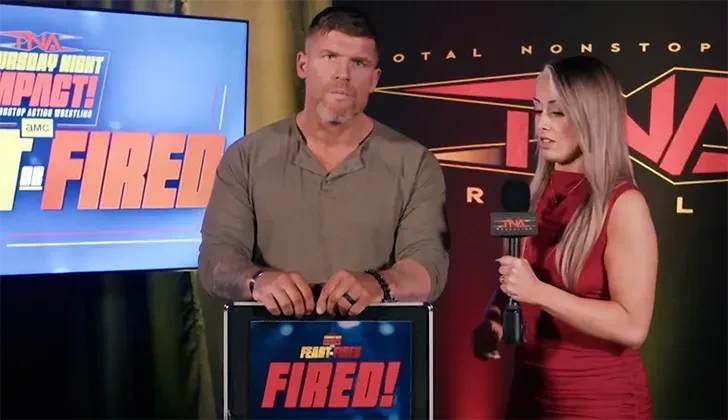
Steve Maclin has reflected candidly on the frustrations he experienced while working through creative plans in TNA Wrestling, explaining that he wanted to turn real feelings and real-life circumstances into meaningful television stories even when the direction did not always develop as he hoped.
The former Impact World Champion and TNA International Champion discussed a period in which he felt certain storylines could have done more to prepare the company for talent departures and keep the product moving forward. Maclin stressed that he was not part of the creative team, though he appreciated being able to offer input when opportunities arose.
For Maclin, the central issue was not simply whether he agreed with a particular decision. It was the challenge of finding a productive narrative purpose in situations where it seemed clear that some wrestlers were headed out of the promotion. He believed those moments could have been used to build momentum and establish what came next, rather than allowing a story to lose steam.
“I was trying to really dive into that story, like here I was as a guy trying to be so selfless for so long for the company, and [management is] just clamoring for people getting ready to leave right away,” Maclin said. “The writing was on the wall with certain talent just leaving as to how the story was going to end. All right, cool, so how do we make the most of this story to make the product, for when they do leave, continue to move on instead of just coming to a dead stop? None of it made sense sometimes.”
For more background on this topic, read Steve Maclin Explains Why He Felt Stuck Near the End of His TNA Run.
Maclin Wanted Storylines to Reflect Real Stakes
Maclin’s comments underline a familiar tension in professional wrestling: performers can invest heavily in a character arc without having final control over how that arc is executed or resolved. A wrestler may see an emotional thread, a rivalry or a shift in the locker-room landscape as an opportunity to create compelling television. But the ultimate creative call rests elsewhere.
That did not prevent Maclin from trying to contribute. He said he was thankful to have a forum to present his perspective, even if the final result did not always reflect what he had suggested. His approach was rooted in using authenticity rather than separating the on-screen product entirely from what was happening around it.
“Obviously, I’m not part of the creative process. I can add my two cents, which I’m really appreciative of, where I can throw my opinion into the hat, but it just doesn’t come out of it,” Maclin said. “It was just one of those things where I was trying to take real-life situations and feelings and add that into the storyline.”
That perspective fits the identity Maclin established during his time in TNA. His presentation has often leaned into intensity, ambition and a willingness to frame himself as someone who has earned a larger position through work rather than entitlement. As a former world champion, he was placed in significant matches and programs, making him especially invested in how the company’s biggest stories were handled.
Maclin did not identify specific talent, angles or creative decisions in his remarks. Instead, he spoke broadly about the difficulty of trying to sustain a story when departures appeared inevitable. His point was that an exit does not have to leave a void in the product. In his view, it can be used as part of a transition that creates fresh opportunities and gives the audience a reason to stay engaged after a familiar name is gone.
A Wrestling Industry With More Doors Open
While Maclin looked back on difficult creative circumstances, he also spoke positively about the present state of the industry for working wrestlers. He pointed to the range of promotions available to talent today, from major companies to growing independent scenes and international organizations.
Maclin contrasted that environment with the uncertainty he felt after his WWE release. At that point, he said, the question was what came next and whether the independent circuit would be the only route available. TNA represented an important alternative for him, and he now sees even more avenues for wrestlers to find work and build their reputations.
“When I was let go from WWE, it was like, ‘All right, what do I do now? Go to the indies?’ but luckily, with TNA there, there was another place,” Maclin said. “In the climate of wrestling now, there’s places to work everywhere. Independents are starting to boom again. You have TNA, you have WWE, you have AEW, you have New Japan, you have NOAH, you have CMLL, AAA – there’s just so many different places to work now. It’s just a good thing and a good time in the world of professional wrestling for the actual athletes.”
Maclin’s list reflects the increasingly broad landscape available to performers. WWE and AEW remain major destinations in North America, while TNA offers another national platform with its own established identity. Beyond those companies, New Japan Pro-Wrestling, Pro Wrestling NOAH, Consejo Mundial de Lucha Libre and Lucha Libre AAA Worldwide represent major options across Japan and Mexico. The independent scene also remains a vital place for talent to gain experience, experiment with their character work and reach new audiences.
The growth of that ecosystem has made cross-promotional appearances and unexpected matchups more realistic than they might have seemed in previous eras. Wrestlers can develop their name in one setting and take that momentum elsewhere, while promoters can create cards around unique combinations of talent. For Maclin, that flexibility is a benefit for the athletes who are willing to pursue opportunities.
His own upcoming schedule offers a clear example. Maclin is set for a major singles match against Adam Copeland at MLP Northern Rising 2026, an event taking place Saturday, October 3 at the Mattamy Athletic Centre at Maple Leaf Gardens in Toronto, Ontario, Canada.
Adam Copeland Match Brings a Major Toronto Opportunity
The bout with Copeland carries obvious significance for Maclin. Copeland is an AEW star and one of the most recognizable names of his generation, while the Toronto setting adds another layer to the occasion. Maple Leaf Gardens has an enduring connection to Canadian wrestling history, and the Mattamy Athletic Centre now provides the venue for a matchup that Maclin said he once would not have imagined.
“It’s taking advantage of those opportunities, and they’re opportunities that you’d never think would happen,” Maclin said. “Here I am, Oct. 3, having a match against Adam Copeland in Maple Leaf Gardens in Toronto. It’s just something you don’t think of, and I’m glad I bet on myself like I always have, and it’s paying off.”
For Maclin, the match is more than a high-profile booking. It is a personal marker of how far a career can travel after a release, a promotion change and the uncertainty that follows both. He has described betting on himself as a consistent part of his mindset, and the Copeland meeting is the kind of opportunity made possible by a wrestling business with multiple active destinations.
It also arrives after Maclin’s established run in TNA, where he reached the top of the company as Impact World Champion and added the TNA International Championship to his résumé. Those accomplishments gave him a foundation that can carry into independent and special-event appearances, including a bout with an opponent of Copeland’s stature.
Maclin’s creative frustrations remain part of his TNA experience, but his comments did not present them as the end of the story. Instead, they showed how strongly he believes performers should look for ways to turn difficult circumstances into a compelling narrative. Whether or not every idea reaches television, Maclin’s stated goal was to make stories matter beyond the immediate moment and leave the product with momentum.
That same forward-looking outlook now leads him to Toronto. On October 3, Maclin will step into the ring with Adam Copeland at MLP Northern Rising 2026, taking part in the sort of match he says demonstrates just how many possibilities are available in modern professional wrestling.

Darryl Polo
Darryl Polo is a passionate wrestling fan covering WWE, AEW, TNA and beyond. He loves great rivalries, breakout stars and the moments that keep fans talking long after the bell. How we work.