
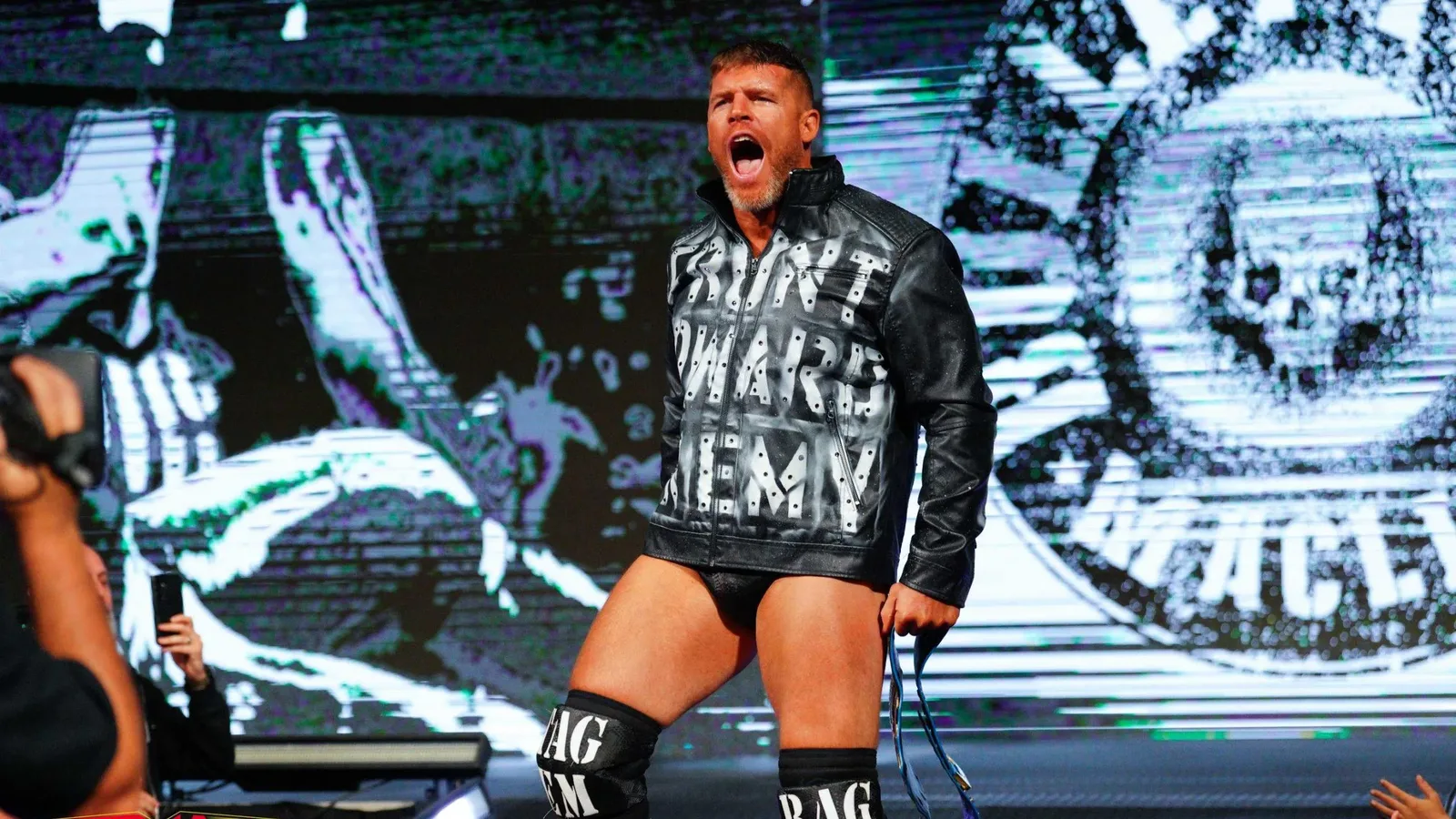
Steve Maclin has offered a candid assessment of the frustrations he felt during the closing stretch of his TNA Wrestling tenure, describing a period in which he believed his creative ideas repeatedly failed to develop into meaningful stories.
Speaking ahead of Maple Leaf Pro Wrestling’s Northern Rising event, Maclin reflected on reaching a point near the end of his fifth year with the company where he no longer felt he was progressing. The former TNA International Champion said he was consistently trying to contribute ideas that could help create stronger programs, elevate the championship he held, and benefit the wrestlers working opposite him. In his view, however, those efforts did not lead to the larger creative follow-through he was seeking.
“I kind of felt towards the end of my fifth year I was just spinning the wheels where I was throwing ideas to creative and they were taking them and then nothing would come of it,” Maclin said.
Maclin’s comments provide direct insight into the mindset behind his departure. Rather than focusing on a single incident or one rejected proposal, he described an accumulated frustration: ideas were being discussed, but he did not feel they were becoming fully realized angles. For a performer who says he puts significant effort into the narrative side of his work, that disconnect eventually became difficult to accept.
For more background on this topic, read Joe Hendry Says 2016 Match With Drew McIntyre Helped Push Him Toward Full-Time Wrestling.
The issue was especially apparent to Maclin during his reign as TNA International Champion. He won the title in April 2025, and he viewed the championship as a potential platform for stories that could stretch beyond the promotion’s usual boundaries. Maclin specifically raised the possibility of taking the title to Mexico or Japan, framing those options as ways to create purpose and identity for the belt.
“Even when I became International Champion [in April of 2025], it was like, ‘All right, cool, where are we going to? Am I going to Mexico, Japan? How are we going to make this title mean something?’” Maclin said.
That question goes to the heart of what Maclin wanted from the run. A championship labeled “International” naturally presents opportunities for a wrestler and promotion to explore matchups, destinations, and partnerships outside their immediate environment. Maclin did not say that any particular international plan had been promised to him. Instead, he explained that he pitched possibilities and hoped the championship would receive a more defined direction.
For Maclin, the concern was not simply whether every suggestion would be approved. Creative discussions are a standard part of wrestling, and not every idea can become a television angle or a featured match. His frustration came from feeling that the concepts he brought forward did not come to life in the way he envisioned.
“Every pitch that I threw just never came to fruition like I imagined,” Maclin said.
He also described the emotional toll of feeling as if he was continually pushing against resistance. Maclin said he eventually found himself accepting decisions even when they did not match the direction he wanted, a response that he indicated does not fit his approach as a performer.
“It just felt like I was always fighting an uphill battle where I just folded every time, like, ‘Okay, cool, whatever you guys want, then,’” Maclin said.
Maclin’s remarks underline how seriously he views the responsibility of participating in a wrestling story. He said he wants to give everything he has to an angle, not solely for his own benefit, but also to improve the overall product and create value for the wrestler standing across the ring from him. That perspective helps explain why the lack of creative momentum became such a significant issue in his final stretch with TNA.
“For me, that’s not something I like to do, especially when I try to put every bit of me into a story to better the product, to better the company and to better the person I’m in the ring with,” Maclin said.
The comments should be read as Maclin’s personal account of his experience and priorities. He did not identify specific individual creative personnel, disclose particular pitches beyond the international possibilities connected to the championship, or detail a single moment that sealed his decision. What he did make clear is that he had reached a point where he felt creatively stalled and unable to turn the ideas he believed in into sustained programs.
Maclin’s Focus Turns to Northern Rising
With his TNA chapter behind him, Maclin is preparing for a major assignment at Maple Leaf Pro Wrestling’s Northern Rising. He is set to face Adam Copeland at the event, giving Maclin an opportunity to step into the ring with one of the most accomplished and recognizable veterans in modern professional wrestling.
The match is notable on its own merits, regardless of the context surrounding Maclin’s TNA departure. Copeland’s presence makes Northern Rising a high-profile setting, while Maclin enters with a clear desire to show the intensity and purpose he brings to his work. A bout with a performer of Copeland’s stature offers a different kind of spotlight: one centered on a singular matchup rather than the longer-term creative uncertainty Maclin described from his previous run.
Maclin’s reflections also make his immediate post-TNA direction worth watching. His comments suggest that creative investment is a major factor in how he evaluates opportunities. He is not presenting himself as someone content simply to appear on a card or hold a title without a story attached to it. The emphasis in his remarks was on direction, progression, and making the work matter for everyone involved.
That philosophy can translate in several ways outside a major weekly television environment. A featured independent or international match can still carry considerable importance when the wrestlers are given a clear reason to compete and the match is treated as an event. Maclin’s upcoming meeting with Copeland has the inherent stakes that come from two established names sharing a ring, and it gives Maclin a prominent chance to demonstrate the kind of purposeful presentation he has been seeking.
An Unfiltered View of Creative Frustration
Maclin did not frame his concerns as a complaint about effort alone. In fact, his comments show that he was actively trying to participate in the process. He was pitching directions, considering potential travel and opponents connected to the International Championship, and thinking about how a title reign could contribute to a broader wrestling landscape. The disappointment, from his perspective, was that those conversations did not lead to the outcomes he felt could have strengthened the work.
His reference to “spinning the wheels” is particularly telling. In wrestling, momentum can be shaped by wins, championships, rivalries, promos, and the consistency of a character’s presentation. But Maclin’s assessment centers on another essential element: the ability to build from one development to the next. Winning the International Championship in April 2025 gave him a possible launching point. He wanted to know where that launch would lead.
Maclin’s answer was that he did not find the path he expected. The gap between winning a championship and establishing a meaningful direction for it became part of the wider dissatisfaction he experienced. His remarks do not diminish the importance of the title win itself, but they do reveal that a championship accomplishment alone was not enough for him. He wanted the reign to create something larger.
As Northern Rising approaches, Maclin has now articulated the standards he intends to bring into his next phase. He wants stories with purpose, collaborations that elevate his opponents, and ideas that receive the chance to become more than pitches. Whether his match with Adam Copeland becomes the first major step in that phase will be determined in the ring, but Maclin has made his outlook unmistakably clear.
For now, the central takeaway from his reflection is simple: he left TNA feeling that he had more to offer creatively than he was able to show. At Northern Rising, against Copeland, he will have another prominent opportunity to prove what that investment can look like when the bell rings.

Darryl Polo
Darryl Polo is a passionate wrestling fan covering WWE, AEW, TNA and beyond. He loves great rivalries, breakout stars and the moments that keep fans talking long after the bell. How we work.