
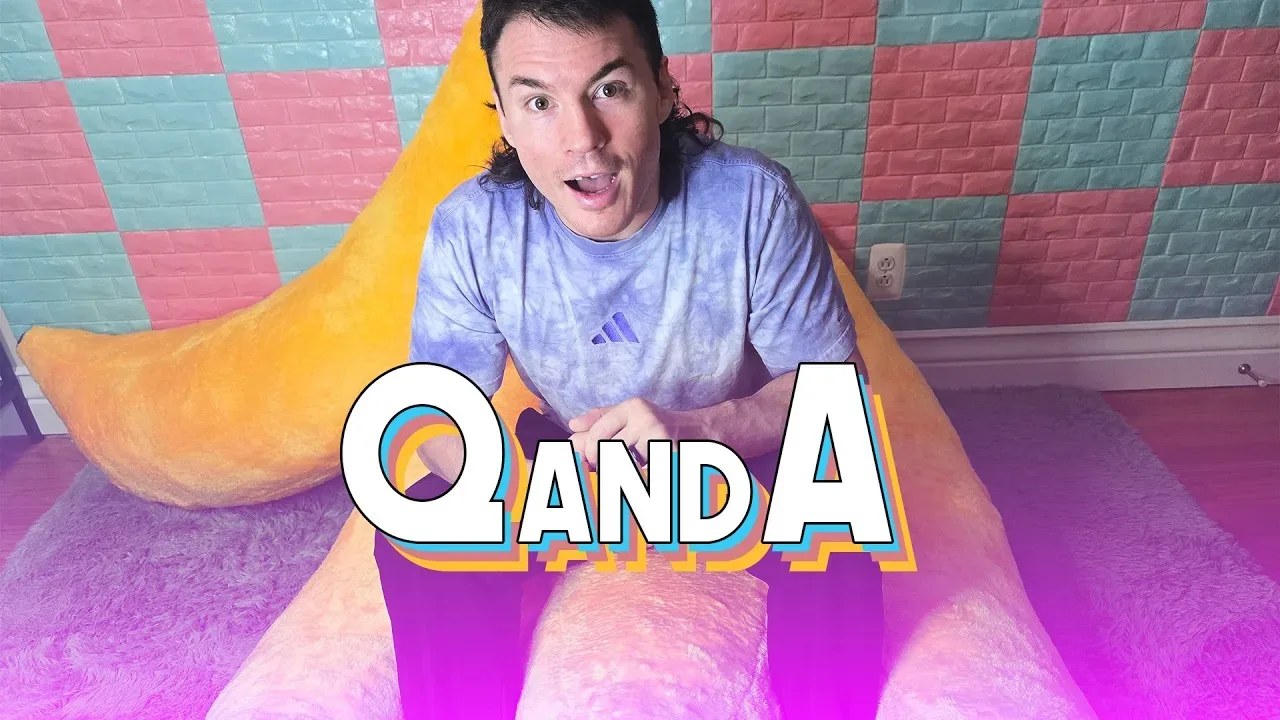
Speedball Mike Bailey has competed across much of the professional wrestling world, building a career that has taken them through the United States, Mexico, Japan and numerous European markets. One major region remains absent from that extensive travel list, however: South America.
During a recent Q&A, Bailey discussed the places they would most like to work in the future and made clear that their ambition is not limited to a single country. Instead, Bailey pointed to South America as an entire continent they hope to visit both as a wrestler and as a traveler.
“I don’t think that there is one country that I can—I would like to wrestle there. But I can very clearly say, I have never wrestled in South America before, and I know that there is a great wrestling scene.”
Bailey specifically highlighted Chile and Brazil while discussing the region. Their comments reflected an awareness of scenes that are already active and growing, rather than simply treating South America as unexplored territory. Bailey named Guanchulo, whom they met during time spent in DDT in Japan, as someone whose work has helped them see more of the Chilean wrestling landscape.
For more background on this topic, read Nigel McGuinness Calls Wembley Return a ‘Blessing’ as He Reflects on AEW In-Ring Comeback.
“I know Chile. Shout out Guanchulo, who I met in DDT in Japan a long time ago and has really, through his work, let me see a lot of the Chileans in general. He’s banging. I have a lot of friends in Brazil. I know that Brazilian wrestling is huge and popping right now, and yeah, I’ve never been to South America, never wrestled in South America. So I’d love to go out there and wrestle.”
South America remains a major destination for Bailey
Bailey’s stated interest fits naturally with the path they have taken throughout their career. Speedball has become synonymous with a style that can be translated across promotions and national borders: fast-paced striking, complex movement, athletic aerial offense and submissions that demand precise positioning from both competitors.
That versatility has allowed Bailey to work in distinctly different wrestling environments. Japan, Mexico, Europe and the United States each bring their own traditions, pacing and audience expectations. Bailey’s willingness to travel has been a defining feature of their profile, and a South American run would represent another meaningful step in that global journey.
The comments did not include a timetable, a prospective promotion or a specific event. Bailey simply expressed the desire to make the trip happen. Still, the remarks establish South America as an area of genuine interest for a wrestler whose career has repeatedly been shaped by international opportunities.
There is also a personal aspect to the goal. Bailey said they have never visited South America at all, making the possibility about more than adding a new location to a match record. For a performer who has regularly crossed borders to wrestle, train and experience different scenes, the chance to combine travel with competition appears especially appealing.
How Bailey’s finishers got their names
The Q&A also gave Bailey an opportunity to pull back the curtain on the names behind several moves associated with their matches. The discussion covered Ultima Weapon, Flamingo Driver and Time Adventure, with each name carrying a different story.
Bailey initially joked about the changing nature of a wrestler’s finishing offense, saying they were not entirely sure what move currently qualifies as a finisher. But they then addressed Ultima Weapon, the Shooting Star Double Knee Drop that has become one of the most recognizable attacks in their arsenal.
“There’s obviously Ultima Weapon, right? Which is the Shooting Star Double Knee Drop, which is specifically named after the sword that Cloud uses in Final Fantasy VII, in the final scene of the game where he slays the one-winged angel, Sephiroth, and I think that’s just a cool name. It’s a cool sword. I love Final Fantasy.”
The name is a direct reflection of Bailey’s affection for Final Fantasy VII. In the game, Ultima Weapon is connected to Cloud and the climactic confrontation with Sephiroth. Bailey took that reference and attached it to an attack that, like its namesake, is designed to feel decisive and spectacular.
For audiences familiar with Bailey’s work, Ultima Weapon’s name also fits the overall character of the move. The Shooting Star Double Knee Drop blends an aerial flourish with a punishing landing, making it an appropriate finish for a wrestler whose offense frequently combines kick-based precision with high-risk athleticism.
Colt Cabana named the Flamingo Driver
The origin of the Flamingo Driver was considerably more spontaneous. Bailey explained that the move developed while experimenting at Revolution Pro Wrestling in England. With Veda positioned on the top rope, Bailey was trying unusual submissions and holds before landing on a configuration that seemed to have potential.
“I just had Veda sitting on the top rope and I was just tying them in weird submissions for no reason, and I ended up with the one hand behind the back, both legs trapped, hooked over the head that I could walk out with, and I was like, ‘oh, this is cool. This could become a thing. Maybe it’s stupid. Maybe it’s too dangerous.’”
The maneuver was not initially presented as a fully formed move with an established title. Bailey recalled Colt Cabana seeing the experimentation and asking what it was called. Bailey did not have an answer at the time.
“Then Colt Cabana was like, ‘what’s that move called?’ I was like, ‘I don’t know. It’s not even a move.’ He was like, ‘oh, Flamingo Driver.’ I was like, ‘oh, that’s pretty cool.’”
Bailey added that they may have been practicing the driver motion on a crash pad, which could explain the “Driver” portion of the name. What began as an impromptu bit of experimentation ultimately became a signature part of Bailey’s repertoire, with Cabana supplying the memorable label.
The story underlines a familiar reality of professional wrestling: signature moves are often refined through repetition, training and improvisation rather than appearing fully complete from the beginning. Bailey’s recollection also shows the role fellow wrestlers can play in the creative process, even when it comes down to identifying a name that simply sounds right.
Time Adventure brought Bailey’s training period into AEW
Bailey’s explanation for Time Adventure carries the most personal emotional connection of the three. The spinning leg lariat was developed during a period when Bailey was waiting for their visa to be processed. While at home, Bailey focused heavily on training each day and spent the time developing ideas for the future.
The move’s title comes from Adventure Time, one of Bailey’s favorite cartoons. Its final episode is titled “Time Adventure,” and Bailey described the title as connected to a song used by the principal characters against a major villain who represents chaos.
“It’s specifically named after a song that all the main characters use to defeat the big evil guy, which is basically the embodiment of chaos, and it’s the harmony and togetherness of their song that defeats the bad guy.”
Bailey recalled listening to that song while training, particularly during a session involving pre-workout and deadlifts. The message behind the song resonated strongly enough that Bailey felt compelled to incorporate it into their next major chapter.
“I was listening to the song at the gym off my mind, off pre-workout and deadlifts, and it’s just like I felt the song and its meaning in my soul, and I was like, ‘I have to bring that to AEW somehow.’”
Bailey had been workshopping the spinning leg lariat for months in training and was eager to unveil it in AEW. That debut came in a win over Mortos, giving Time Adventure an immediate place in Bailey’s AEW story.
Together, the three explanations reveal how Bailey’s wrestling identity is assembled from several influences. Ultima Weapon comes from a beloved video game. Flamingo Driver emerged from in-ring experimentation and a suggestion from Colt Cabana. Time Adventure grew out of intense training, an uncertain visa wait and a cartoon finale that Bailey found deeply meaningful.
For Bailey, the names are not random decoration. They document creative moments, friendships, fandoms and professional milestones. And as Speedball continues to look for new corners of the wrestling world to explore, South America could eventually provide the setting for the next chapter in that evolving collection of stories.

Darryl Polo
Darryl Polo is a passionate wrestling fan covering WWE, AEW, TNA and beyond. He loves great rivalries, breakout stars and the moments that keep fans talking long after the bell. How we work.