
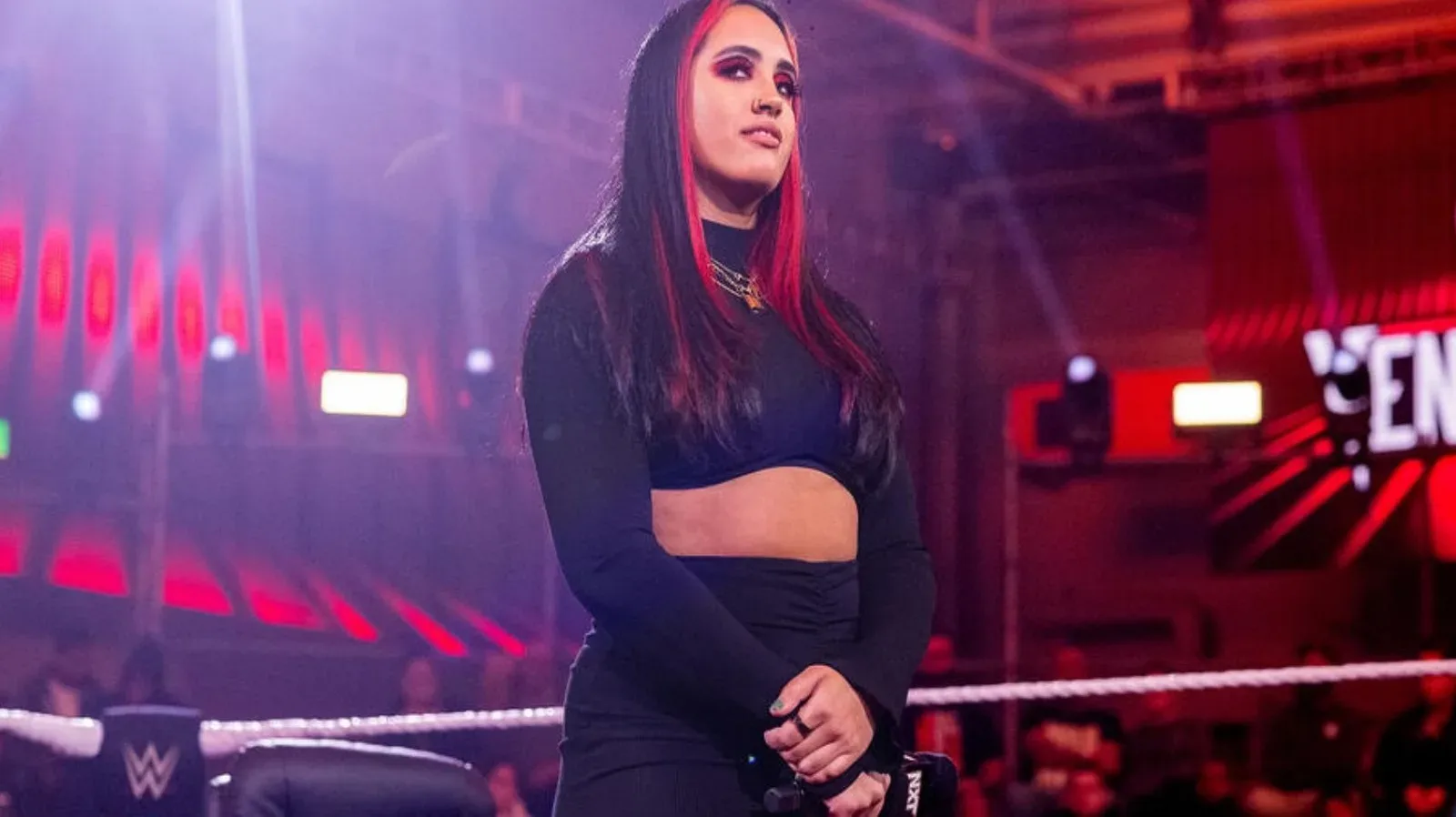
Simone Johnson has offered her most extensive public explanation yet for her decision to depart WWE, describing the move as a difficult but necessary step after a lengthy period of personal reflection.
Johnson, the daughter of Dwayne “The Rock” Johnson, announced her WWE departure at the end of January after spending time in NXT in multiple capacities. She had been presented as an in-ring performer, worked as part of The Schism, and later served as the NXT General Manager. Her announcement came as a surprise to many fans familiar with her work at the WWE Performance Center and on NXT programming.
Speaking on What Do You Want to Talk About? with Cody Rhodes, Johnson made clear that the decision was not an impulsive one. While there were several factors involved, she said the possibility of moving on had been on her mind well before her contract reached its expiration point.
“It was something I had been thinking about for, I think about a year prior,” Johnson said on What Do You Want to Talk About?. “I knew that my contract was up in February. A couple things had been happening, there’s a lot of different reasons why I chose to leave, and it was incredibly hard. But, I felt like it was time.”
For more background on this topic, read Chelsea Green Reveals Why Matt Cardona’s Real Name Took Time To Stick.
That framing adds important context to an exit that initially generated speculation about what had led her to step away. Johnson did not point to a single incident or offer a simplified explanation. Instead, she characterized her choice as the result of a broader realization that she needed a different environment and a new set of experiences in order to continue developing.
Johnson Wanted an Opportunity to Grow
The central point in Johnson’s explanation was her desire for growth. She spoke warmly about her WWE tenure and stressed that she remains appreciative of the opportunities she received. At the same time, she said she had come to believe she could not grow in the way she wanted while remaining in her existing position.
“I really, really wanted to grow and I didn’t feel like I was in a position at WWE to where I could grow,” Johnson said. “I’m incredibly grateful for my time there, I would not change it for the world, but I just think I knew. I was like, ‘I need to do something else. I need to learn and grow and see what’s on the other side.’”
It is a notably measured assessment of a major career transition. Johnson did not portray her time with WWE as a mistake, nor did she dismiss the value of her work there. Her comments instead suggest that gratitude and dissatisfaction can coexist when someone reaches a point where their ambitions no longer align with the path immediately in front of them.
For performers and television personalities in a developmental system, growth can mean several things at once. It can involve finding a clearer creative direction, gaining confidence in a particular role, expanding professional skills, or simply discovering what kind of work is most fulfilling. Johnson did not specify what her next chapter will entail, but she was direct that she felt compelled to explore possibilities beyond WWE.
That distinction matters. Her comments were not a declaration that she had rejected the entire experience or that there was one definitive issue behind the departure. She said there were “a lot of different reasons,” while keeping the focus on the personal conclusion she ultimately reached: it was time to pursue something else.
An NXT Run That Included Several Different Roles
Johnson’s WWE journey involved more than one on-screen identity and responsibility. She was associated with The Schism during her time as an in-ring performer before later taking on the General Manager role in NXT. That progression placed her in distinctly different kinds of television positions, from a character connected to a group to an authority figure tasked with appearing in a prominent non-wrestling role.
Her departure therefore removes a performer who had been asked to navigate a variety of presentations within the NXT setting. The demands of those roles are different, but both require a performer to develop an on-camera presence while working within WWE’s highly structured production environment.
Johnson’s stated wish to learn and see “what’s on the other side” leaves open a wide range of possibilities, though she did not announce a specific next destination or project during the discussion. There is no indication in her comments that she has made a public commitment to another wrestling promotion. The firmest takeaway is simply that she wanted the freedom to seek new experiences after her WWE contract came up in February.
Her description of the decision as “incredibly hard” also reflects the weight of leaving a company where she had spent a significant period developing. Departures from WWE can often invite immediate assumptions about creative disagreements, future plans, or behind-the-scenes conflict. Johnson’s own words offer a more personal and less sensational account: she had thought deeply about the decision, valued the time she spent there, and concluded that a change was needed for her own development.
The WrestleMania 40 Backlash Was Also Part of the Conversation
Elsewhere in the conversation with Rhodes, Johnson addressed a separate experience that affected how she viewed her own journey and wrestling audiences for a time. She recalled being booed at NXT Vengeance Day during the public backlash tied to the WrestleMania 40 situation involving Rhodes and The Rock.
At the time, WWE’s story direction briefly appeared to position The Rock in a WrestleMania match that had been widely expected to involve Rhodes. The reaction from many fans was intense, and the eventual WWE storyline incorporated the conflict surrounding Rhodes, The Rock, and the WrestleMania main-event picture.
Johnson said that being caught in that atmosphere at Vengeance Day changed how she felt about her journey and about fans for a period. Her comments do not establish that the incident alone determined her WWE exit; in fact, she specifically said she had been considering leaving for around a year and that there were multiple reasons behind the choice. Still, the episode appears to have been meaningful enough to remain part of the broader conversation about her time in the company.
The moment illustrates the unusual pressures that can surround performers connected to major wrestling figures, particularly when audience reaction to a high-profile storyline spills beyond the people directly involved in it. Johnson had her own role within NXT, but the response she encountered came during a period when her father’s involvement in WWE’s WrestleMania plans had become one of the industry’s biggest discussion points.
Her willingness to discuss that experience alongside her departure provides a more complete picture of the emotional complexity behind a WWE career. Public reaction, changing creative circumstances, career expectations, and personal aspirations can all shape the way a performer evaluates where they are and where they want to go next.
A Respectful Exit, With the Future Still Undecided Publicly
Johnson’s message was ultimately one of appreciation combined with resolve. She did not minimize the significance of leaving WWE, and she did not suggest the choice came easily. But after considering it for approximately a year, she felt she needed to make room for a new stage of her life and career.
That clarity may be the most significant element of her explanation. Rather than framing the departure solely around what was missing, Johnson emphasized what she hopes to gain: the chance to learn, grow, and discover opportunities beyond the system she knew.
For now, Johnson has not publicly detailed what comes next. What she has made clear is that her WWE departure was a deliberate decision rooted in a desire for personal and professional growth, not a sudden move made without reflection. She leaves with gratitude for her time in NXT, while looking toward whatever may be waiting on the other side.
In pictures

Darryl Polo
Darryl Polo is a passionate wrestling fan covering WWE, AEW, TNA and beyond. He loves great rivalries, breakout stars and the moments that keep fans talking long after the bell. How we work.