
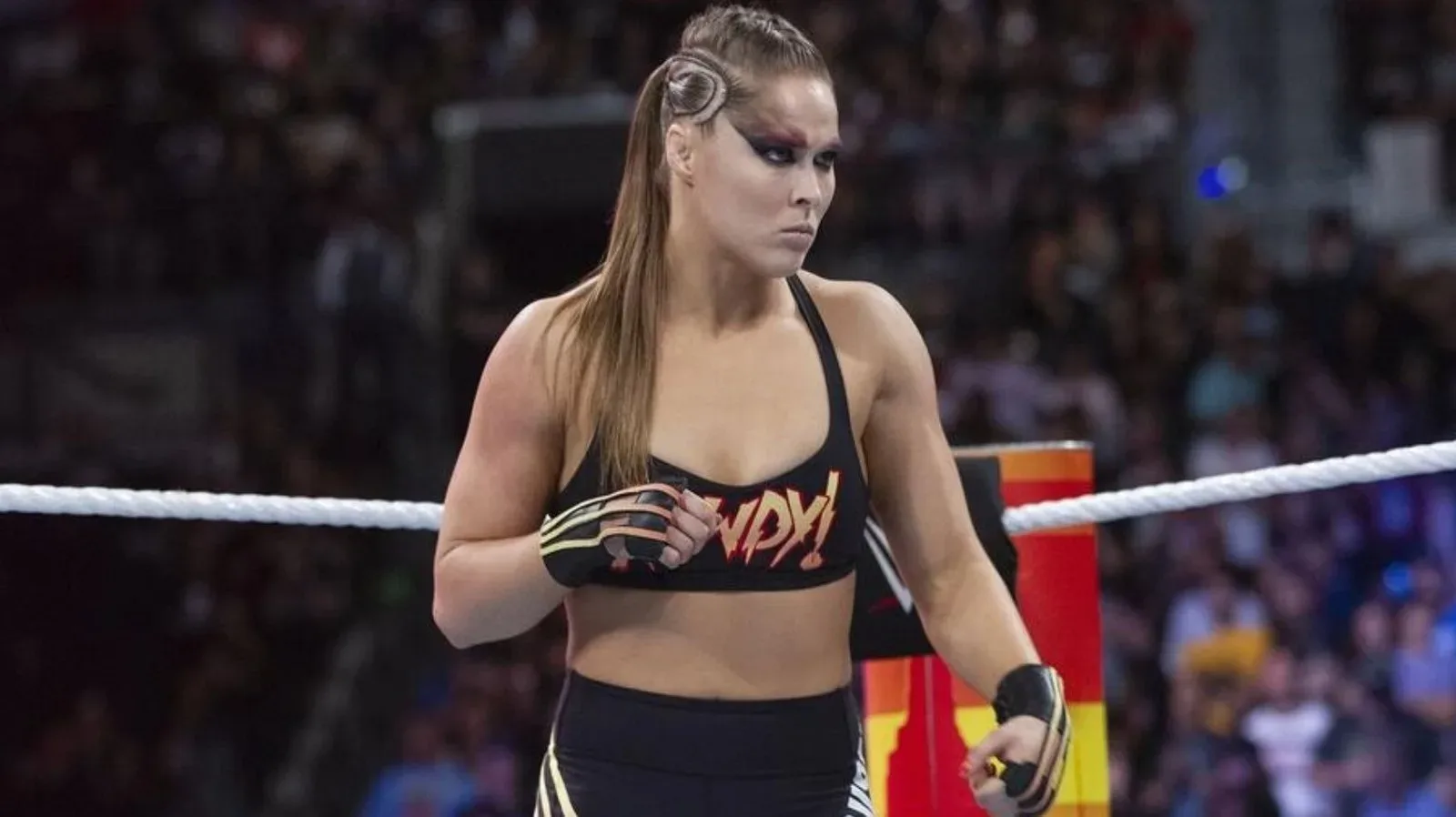
Shayna Baszler has offered a detailed defense of former WWE colleague and longtime friend Ronda Rousey, recalling an instance in which Rousey allegedly took it upon herself to confront WWE creative over women’s matches losing time on pay-per-view cards.
Speaking with Denise Salcedo, Baszler addressed the perception that Rousey did not care deeply about professional wrestling during her WWE tenure. Baszler argued that such a reading misses work Rousey did away from the cameras, particularly efforts to push for better treatment and greater consistency for WWE’s women’s division.
Rousey arrived in WWE with an unparalleled level of mainstream combat-sports recognition. Following her historic UFC career, she began preparing for pro wrestling and made her in-ring debut at WrestleMania 34 in 2018. Her WWE run produced major matches and significant attention, even as audience reactions to her evolved over time. She ultimately departed after SummerSlam 2023, where she lost to Baszler, her real-life best friend and now a TNA talent.
For Baszler, however, Rousey’s legacy in wrestling cannot be evaluated solely through television segments, match reactions, or the controversial discussions that followed her exit. She believes Rousey’s willingness to use her own standing to advocate for women’s wrestling was substantial, even if much of it happened privately and never became part of her public image.
For more background on this topic, read Jacob Fatu Expected Back With The Bloodline For Survivor Series: WarGames.
A meeting Rousey reportedly would not leave to chance
Baszler recalled a particular situation in which a Rousey pay-per-view match had six minutes removed from its allotted time after an earlier bout ran long. In Baszler’s telling, the incident was not viewed as an isolated inconvenience. Rousey saw it as part of a larger pattern in which the women’s side of the card repeatedly bore the consequences when timing changed.
Rather than simply raising the issue in passing, Rousey reportedly purchased her own flight to WWE headquarters in Stamford, Connecticut, in order to meet with creative. Baszler said Rousey’s purpose was direct: she wanted to know whether the recurring loss of time for women’s matches would change, and whether her presence in the company could help force that change.
“There was a time where Ronda had a pay-per-view match and got six minutes cut off her match because a match before had gone over their time,” Baszler told Denise Salcedo. “When that happened, she bought a ticket and flew herself to headquarters to have a meeting with creative at that time to be like, ‘Guys. This keeps happening. The women keep losing time. I need to know right now, is this going to change? Because if it’s not, I don’t need to be here.’”
Baszler said Rousey’s concern was not about securing more minutes for herself alone. Instead, she characterized her friend’s stance as one centered on improving the broader women’s division. In Baszler’s recollection, Rousey made clear that money and fame were not the reasons she was prepared to remain in WWE if the company was not committed to advancing the division.
The story is notable because it frames Rousey’s leverage differently than it is often discussed. As an athlete who entered WWE already carrying worldwide name recognition, Rousey had options and did not need wrestling to establish herself as a star. Baszler’s point was that Rousey understood that position and was prepared to apply it in a way that benefited colleagues whose influence inside the company was not necessarily the same.
Why buying her own flight mattered
Baszler also described asking Rousey why she had paid for the trip herself when WWE could have arranged travel for a meeting. Rousey’s response, as Baszler remembered it, was practical: paying for her own ticket meant the company could not simply cancel the meeting and leave her waiting elsewhere.
“She’s like, ‘No, because if I buy my own ticket, they can’t cancel the meeting on me. Because I bought my ticket,’” Baszler said to Denise Salcedo.
That detail stood out to Baszler as evidence of how seriously Rousey approached the issue. It was not merely a matter of voicing disappointment after a match time adjustment. Rousey was, in Baszler’s account, making sure the conversation happened and making it clear that she expected a substantive answer.
Baszler further suggested that Rousey never sought public credit for the meeting. She said Rousey would not be inclined to publicize an act like that through interviews or social media. As a result, Baszler questioned how much of the locker room even knew at the time about what Rousey was doing on her own time to argue for the women around her.
That distinction is central to Baszler’s defense. Public figures in wrestling are often judged through what fans can see: televised performances, interviews, social media, title reigns, and the stories attached to them. Baszler’s comments focus on the less visible side of Rousey’s tenure, where conversations about match time, creative priorities, and the treatment of an entire division may not become public until someone involved chooses to discuss them later.
Baszler sees a broader impact from Rousey’s arrival
Beyond internal advocacy, Baszler also credited Rousey with bringing new attention to WWE. Rousey’s combat-sports background gave her a unique ability to draw viewers who might not otherwise have followed professional wrestling. Baszler said fans from the MMA world, including people who had dismissed wrestling as “fake,” tuned in because they wanted to see Rousey.
In Baszler’s view, some of those viewers did not stop with Rousey. They became invested in the stories and performers around her. That is an important point when considering the value of a crossover star: the impact is not limited to one match or one name. A high-profile arrival can introduce a promotion and its roster to audiences who had not previously given the product a chance.
Rousey’s name was already a major one before WWE, and Baszler indicated that this visibility created opportunities for the women’s roster as a whole. Whether fans came specifically for Rousey or remained for the wider product, Baszler’s argument is that her friend’s presence expanded the potential audience for women’s wrestling on WWE programming.
It also adds context to why Rousey’s frustration over lost match time would have mattered to Baszler. If Rousey believed her arrival had brought additional eyes to the division, then ensuring women’s matches received meaningful time was not simply an internal production concern. It was connected to whether that expanded audience would be given enough opportunity to see the division presented as a major part of the show.
A complicated WWE legacy remains
Rousey has not been quiet about her WWE experiences since leaving the company. She has discussed creative direction, booking frustrations, and difficulties that she said arose while working with Vince McMahon during her second run. Those remarks, together with the changing fan reception she experienced, have ensured that assessments of her wrestling career remain sharply divided.
Baszler acknowledged that Rousey is a polarizing figure, and she does not expect her friend to receive universal praise. Her comments were instead a reminder that polarizing performers can have contributions that are not immediately visible to audiences. Baszler’s account presents Rousey as someone willing to challenge the company when she believed women’s matches were being treated as expendable in the event of timing problems.
There is also a personal dimension to the story. Baszler and Rousey shared a genuine friendship long before their SummerSlam 2023 meeting, and Baszler naturally has firsthand perspective that many fans do not. Her recollection is not a comprehensive account of every aspect of Rousey’s WWE career. It is, however, a specific example of the way Baszler says Rousey used her influence behind the scenes.
For Baszler, the lasting message is straightforward: Rousey’s commitment to women’s wrestling should not be dismissed because she did not publicly advertise every conversation or confrontation. The former UFC star may continue to generate debate over her WWE run, but Baszler believes at least part of that run should be remembered for an effort to demand better conditions and more meaningful opportunities for the women’s locker room.
In pictures
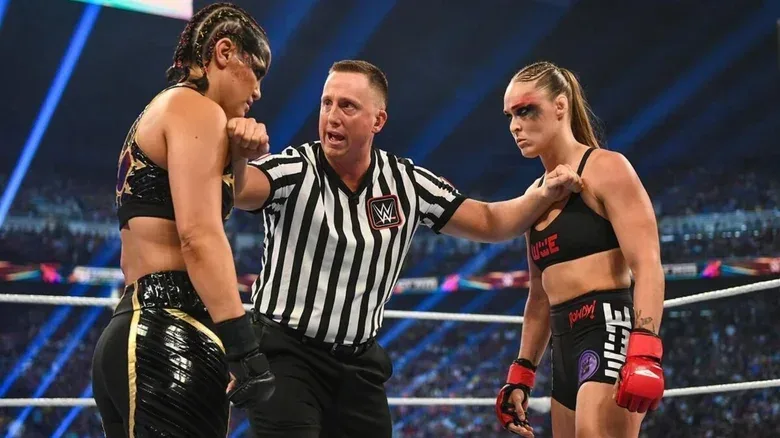

Darryl Polo
Darryl Polo is a passionate wrestling fan covering WWE, AEW, TNA and beyond. He loves great rivalries, breakout stars and the moments that keep fans talking long after the bell. How we work.