
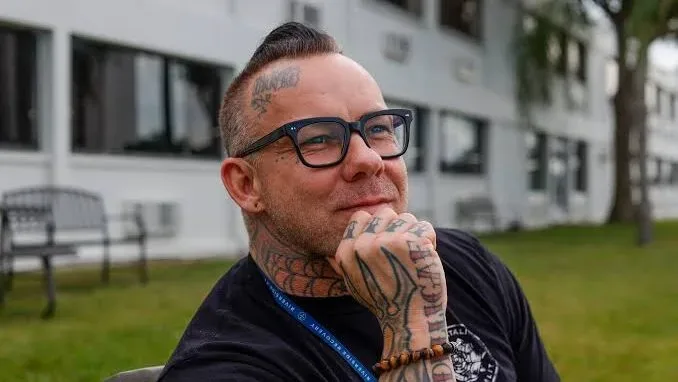
Shannon Moore has spoken candidly about the role sobriety outreach plays in his life today, describing a support network that he believes has helped professional wrestling move toward a far healthier culture of asking for help.
During a recent appearance on Insight with Chris Van Vliet, Moore said he regularly hears from people who are dealing with addiction or other personal struggles. Those calls do not come solely from the wrestling industry, he explained. By publicly discussing his own experiences, Moore said he has become someone people feel they can contact when they need support.
For Moore, that responsibility is rooted in a larger change he has seen in and around wrestling locker rooms. He contrasted the present atmosphere with an earlier period in which the industry’s conversation around substance abuse and personal health could be bleak.
“That’s what it’s about for me today,” Moore said when asked about helping people with sobriety. “We’ve been able to change that dead pool list” into what he called “the living pool.”
For more background on this topic, read WWE Reportedly Considered Mainstream Song License for The 946 Entrance.
The phrase referred to a grim idea that Moore said had once circulated among wrestlers: a list speculating about who might be the next person to die. Moore’s point was not that the problems have vanished, but that wrestlers and others now have more visible avenues to seek assistance before a crisis becomes irreversible.
Moore Sees a Change in the Culture
Moore credited several wrestlers with helping establish a culture of recovery and peer support. He specifically named Brian, Dan Spivey and Jeff Jarrett, also known as Double J, as people he believes have played meaningful roles in helping others. Moore included himself in that ongoing effort, saying that the collective willingness to speak openly and offer guidance has changed the conversation.
He also praised WWE’s wellness policy, saying it has saved lives. WWE introduced its Talent Wellness Program in 2006, and the subject of wrestler health has remained a major part of the company’s public discussion in the years since. Moore’s comments focused on the practical impact of having resources and a recognizable structure available when somebody is struggling.
“When people are struggling,” Moore said, there are now people and places they know they can reach out to. That distinction is central to his message. Sobriety support is not simply about acknowledging that addiction exists; it is also about ensuring that a person has a path toward help and feels able to use it.
There was no suggestion in Moore’s remarks that every situation is the same or that a phone call alone resolves a serious problem. Instead, he emphasized access, connection and the importance of speaking before isolation takes over. Those are especially significant themes in an industry built around constant travel, physical punishment, career uncertainty and a long-standing expectation that performers push through pain.
Why Peer Support Matters in Wrestling
Professional wrestling has increasingly confronted the human cost of its past culture over the last several decades. The work can demand extraordinary physical endurance, but it also places performers in circumstances where injuries, time away from family, changing employment situations and public pressure can create difficult personal challenges. For many wrestlers, finding someone who understands those particular pressures can make the prospect of reaching out feel less intimidating.
Moore’s comments underline the value of peer-to-peer support in that environment. He did not present himself as a substitute for formal treatment or professional care. Rather, he described being part of a wider group of people who can answer the phone, listen, point someone in a better direction and remind them that they are not alone.
That can be a powerful first step. A wrestler, former wrestler or fan may be more likely to contact someone whose story they recognize than to immediately seek help through an unfamiliar system. Moore said the calls he receives extend beyond wrestling, which illustrates how public honesty can have an impact well outside of a performer’s original audience.
His message also avoids framing recovery as a finished chapter. The language Moore used was centered on what he does “today,” a reminder that sobriety is often discussed as an ongoing commitment rather than a single moment of change. By sharing that perspective publicly, he has made clear that people in need of support should not have to wait until their circumstances become catastrophic to speak up.
From a Career in the Ring to Helping Others
Moore is known to wrestling audiences for a career that included prominent runs in WWE and TNA. He appeared in WWE as part of Mattitude alongside Matt Hardy before later gaining particular recognition as one half of the tag team the Hardys referred to as the “Moore-on,” and he went on to wrestle under the name Shannon Moore in TNA.
Like many wrestlers who have worked at a high level, Moore’s career gave him firsthand exposure to the demands and realities of the business. His latest comments did not dwell on specific past incidents or name individuals who have contacted him for help. That restraint is important. Recovery conversations involve privacy, and Moore instead kept the focus on the need for people to know they have somewhere to turn.
His comments should also be viewed as an encouragement rather than a claim that one person or one policy can solve every issue. The broader progress he described depends on continued attention from companies, veterans, active performers, families and medical professionals. Moore’s role, as he explained it, is to make himself available and use his own story to help reduce the shame that can prevent someone from making that first call.
A Message Built on Availability
The most striking element of Moore’s discussion was its simplicity: he said he is “constantly getting phone calls” when someone needs help. That does not make for the kind of headline-grabbing wrestling story built around a match, a title or a contract, but it speaks to a meaningful form of influence within the industry.
Wrestling’s most important changes are not always visible on television. Sometimes they are found in the quiet decisions made behind the scenes: a performer choosing to ask for help, a veteran choosing to answer, or a company maintaining a wellness structure that gives people an option before their situation worsens.
Moore believes the industry has made real movement away from the fatalism that once shaped too many conversations. His “living pool” description is deliberately hopeful, but it is not presented as complacency. It is a call to keep building networks where recovery is discussed openly and where those facing addiction understand that support can be available.
For Moore, helping another person find that support appears to be a defining priority. His willingness to discuss sobriety publicly has given others a reason to reach out, and he says he intends to continue being there when they do.

Darryl Polo
Darryl Polo is a passionate wrestling fan covering WWE, AEW, TNA and beyond. He loves great rivalries, breakout stars and the moments that keep fans talking long after the bell. How we work.