
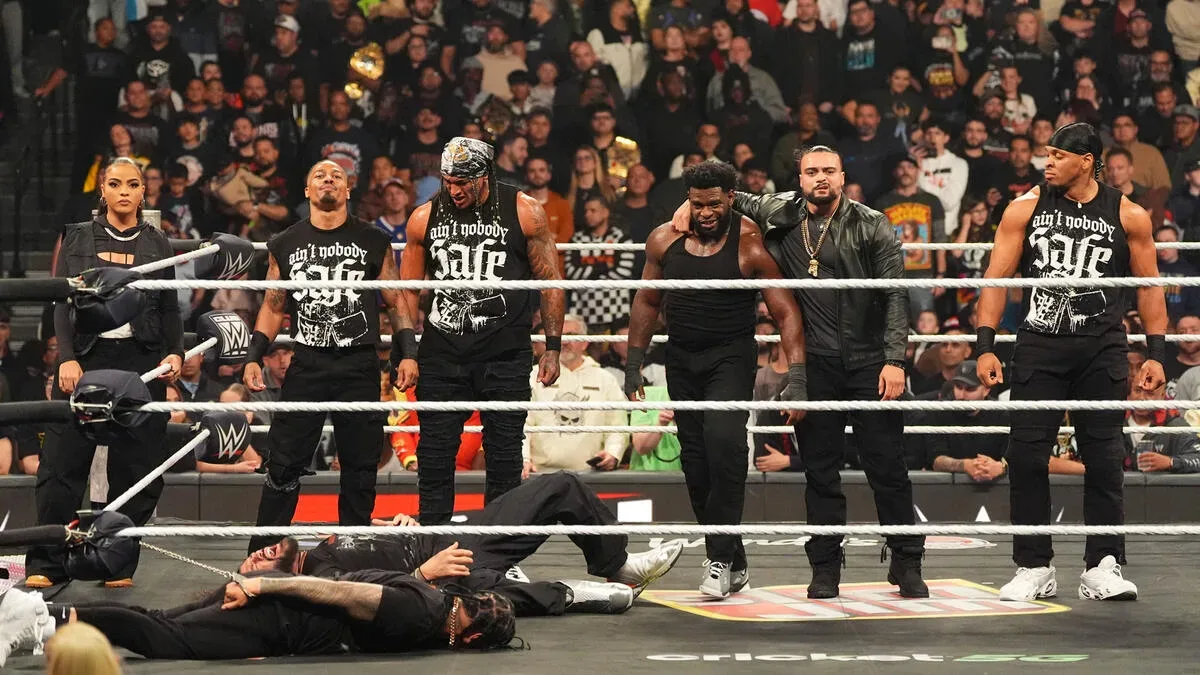
WWE reportedly explored a potentially significant presentation change for The 946, considering the licensing of a mainstream song for the group’s entrance music. The idea did not ultimately move forward at this stage, as it was tabled before reaching WWE’s legal department, but there are indications that the option could be revisited in the future.
Entrance music remains one of the most important pieces of a WWE act’s identity. A theme can establish a wrestler or faction’s attitude before a bell rings, shape the crowd’s first reaction, and create an immediate association that lasts well beyond a particular storyline. For The 946, WWE’s consideration of a commercially released song suggests the company was at least weighing a more distinctive musical identity for the act.
At present, there is no indication that a specific song was selected, that negotiations with an artist or rights holder began, or that a licensing deal was completed. The proposal reportedly stopped before WWE’s legal department became involved. That distinction is important: an internal creative or presentation discussion is far different from an approved music license, particularly when a major company must navigate the rights associated with using a song across television, streaming, social platforms, live events, promotional material, and archival programming.
View the referenced post on X
The Proposal Was Paused Before a Formal Licensing Process
The reported plan was not discarded after a public rollout or an announced change. Instead, it was tabled before the legal side of WWE’s operation was brought into the process. That means there is no reason to expect an immediate music switch for The 946 based on this consideration alone.
For more background on this topic, read WWE Raw Scheduled for Early 6 PM ET Start on November 23 in Wichita.
Still, the fact that the possibility was discussed is notable. Licensed music is not a routine choice for every WWE entrance. Original themes allow the company to maintain greater control over the music used by its talent and make it easier to deploy those tracks consistently across programming. A mainstream song, meanwhile, can arrive with pre-existing audience familiarity, a specific emotional tone, and an image that may fit an act in a way an in-house composition does not.
Those benefits can come with substantial expense and complexity. Rights agreements may differ depending on where and how a song is used. A track intended for an arena entrance could also be heard on weekly television, premium live events, video clips, highlight packages, streaming replays, video games, and promotional campaigns. The broader the intended use, the more factors can become part of the discussion.
Because the concept did not advance to legal review, it remains unclear what form WWE envisioned for the potential song. It could have been considered as a full-time replacement theme, a special presentation element, or simply an idea explored during broader conversations about The 946’s direction. No further details have been established regarding the music under consideration.
Why Entrance Music Matters for a WWE Act
In WWE, music is often inseparable from character presentation. The opening seconds of a theme can tell viewers whether an arrival is meant to feel triumphant, threatening, chaotic, arrogant, emotional, or unpredictable. When that music hits in front of a live audience, it also gives fans a cue for how to react before the performer appears.
That makes a theme change more than a cosmetic decision. It can signal that WWE wants to sharpen an act’s identity, give it a different level of importance, or align its presentation with a new chapter on screen. A recognizable licensed track can be especially useful when a company believes the sound of the music itself can communicate something immediate about the wrestlers using it.
For a group such as The 946, a new entrance song could potentially affect the entire atmosphere around their appearances. Factions frequently need music that introduces multiple personalities while still presenting a united front. The right selection can reinforce a group’s shared attitude and help establish its entrance as a moment rather than merely a transition between segments.
None of that confirms WWE has settled on a major overhaul for The 946. The reported discussion only establishes that a mainstream song was considered. But it does show that the company has examined an avenue that is usually reserved for acts it believes may benefit from a particularly defined presentation choice.
Licensed Themes Have a Different Set of Challenges
A mainstream track can generate a strong reaction, but the process behind its use is rarely simple. WWE has to consider more than whether a song fits a performer. Licensing can involve multiple parties and rights issues, and a song that works perfectly in an arena may not be practical for every platform on which WWE content appears.
Original entrance music avoids many of those hurdles. It can be edited, updated, replayed, and incorporated into future productions with fewer outside considerations. It also becomes a piece of WWE’s own musical catalog, allowing the company to build a sound around a character without the risk that a future rights issue could affect old footage or distribution.
That does not mean licensed music is off the table when WWE sees value in it. Rather, it means the company must decide whether the creative upside justifies the additional cost and administrative work. In The 946’s case, the idea reportedly did not get far enough to enter the formal legal stage, making it impossible to know whether cost, timing, creative preference, availability, or another factor led to the decision to pause it.
It is also possible for a tabled concept to return later under different circumstances. A storyline shift, stronger momentum, a major event, or a revised creative approach could lead WWE to reassess whether a licensed song is worth pursuing. The available information indicates that WWE could revisit the idea down the line, though there is no timeline attached to that possibility.
What to Watch for With The 946
For now, The 946’s current entrance presentation remains the relevant on-screen version of the act. There has been no confirmed announcement of a new theme, no identified artist, and no indication that a debut date has been set for any musical change.
Fans should also avoid reading a finalized plan into the reported consideration. Wrestling creative regularly evaluates ideas that never reach television, and music discussions are no exception. Some concepts are explored because they fit a moment in time, while others are set aside and later revived when the performer, storyline, or business conditions are different.
The most meaningful takeaway is that WWE appears to have considered using a notable additional resource in The 946’s presentation. Even without a completed deal, the internal interest in a mainstream track reflects the importance WWE places on the way an act is introduced to its audience.
If the concept is eventually revisited, the key questions will be straightforward: whether WWE identifies a song that matches The 946’s on-screen identity, whether the rights can be secured for the company’s intended uses, and whether the group’s creative direction makes the investment worthwhile. Until then, the plan remains a shelved possibility rather than an impending change.
Entrance music has long been one of wrestling’s quickest ways to define a star or faction, and WWE’s reported consideration for The 946 shows that the company understands the potential impact of getting that element exactly right. At this point, however, no licensed theme is confirmed, and any future move remains subject to WWE deciding to reopen the discussion.

Darryl Polo
Darryl Polo is a passionate wrestling fan covering WWE, AEW, TNA and beyond. He loves great rivalries, breakout stars and the moments that keep fans talking long after the bell. How we work.