
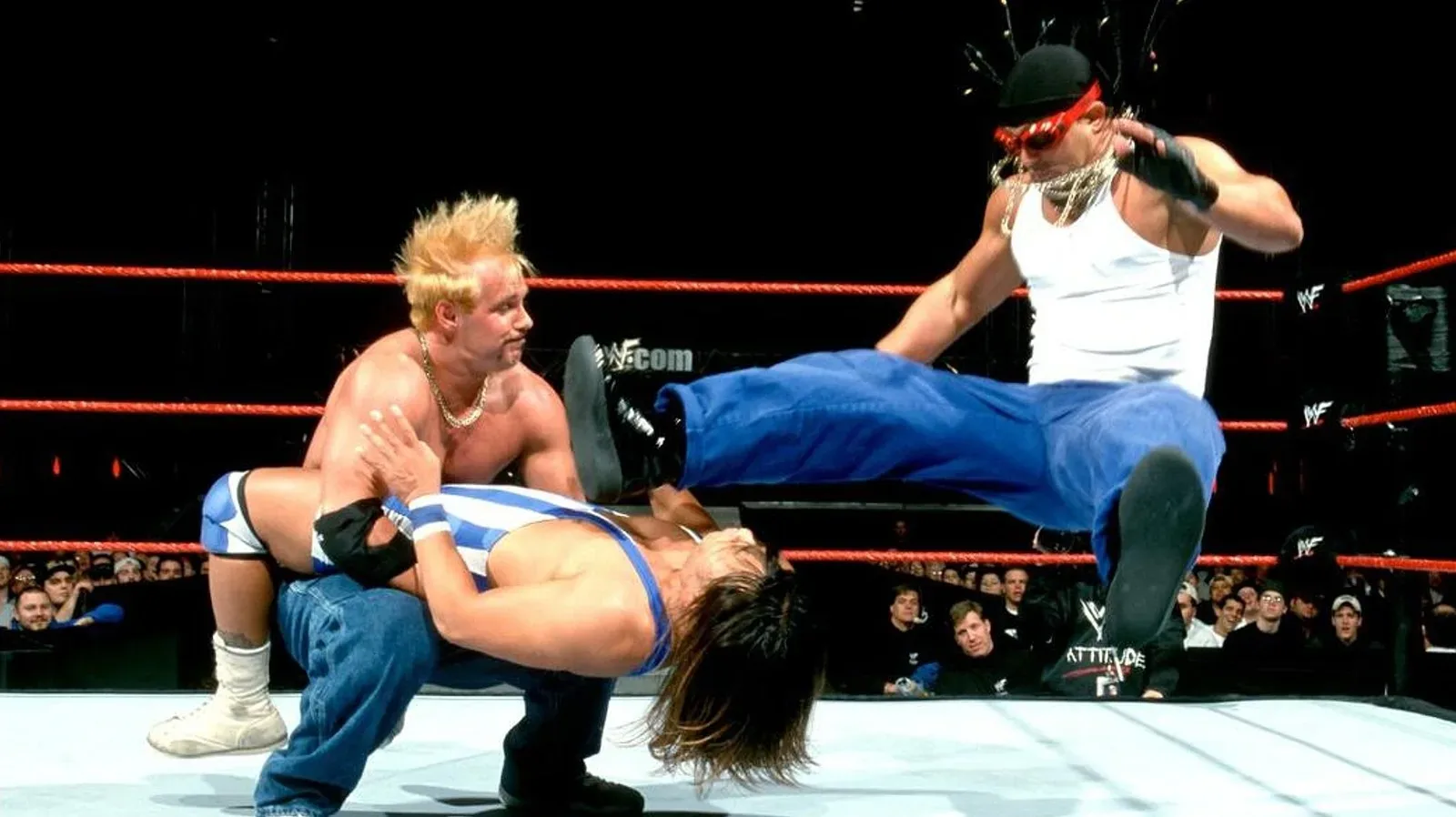
Scott “Scotty 2 Hotty” Garland has looked back on the unexpectedly improvised path that led to the creation of Too Cool, the WWE tag team he formed with the late Brian “Grand Master Sexay” Christopher during the Attitude Era.
For many WWE fans, Too Cool is inseparable from its crowd-pleasing dance routines, colorful streetwear, and eventual alliance with Rikishi. The group’s presentation became one of the era’s most distinctive acts, blending comedy, charisma, entrance energy, and a connection with the audience that grew far beyond its initial place on the card. But Garland recalled that the team did not begin with a polished plan, matching characters, or even an established name.
Instead, its first major moment came from a sudden pairing for the tag team battle royal at WrestleMania XIV in Boston in 1998. At that stage, Garland had spent a considerable period at home without a meaningful direction in WWE and had begun to think about the possibility of asking for his release. The WrestleMania assignment gave him an opportunity, but it was not initially presented as the beginning of an enduring tandem.
An Unplanned WrestleMania XIV Team
Garland explained on INSIGHT with Chris Van Vliet that he and Christopher had been positioned on opposite sides before being put together. Christopher had been working as a heel, while Garland had been portrayed as a babyface. They had wrestled each other several times, but there was no obvious creative connection between their respective characters when they were announced as partners for the battle royal.
For more background on this topic, read Michael Hayes Says WWE Split From The Hardys ‘Broke My Heart’.
That lack of an immediate fit was apparent in their earliest presentation. There was no shared identity and no unified gimmick designed to explain why the two performers belonged together. The pairing was simply part of a large WrestleMania match. Yet it provided the starting point for a team that would ultimately remain linked to some of WWE’s most memorable crowd-participation segments of the late 1990s and early 2000s.
Garland said the first step toward giving the act some direction came from a conversation with Vince McMahon. While the wrestlers were in catering, Garland brought up names that he and Christopher had used before arriving in WWE. Garland had competed on the independents as Scott “Too Hot” Taylor, while Christopher had used “Too Sexay” Brian Christopher.
The information gave WWE a simple way to bring the two characters together. The following week on television, the performers were identified as Scott “Too Hot” Taylor and “Too Sexay” Brian Christopher, with the duo operating under the name Too Much.
It was a logical branding move built from their prior identities, but it was only an early version of what the act would become. Too Much may have established the framework of the partnership, but it did not immediately produce the reaction that later defined Too Cool. Garland indicated that the team spent roughly a year under the Too Much name before the next major creative shift arrived.
From Too Much to Too Cool
The rebranding to Too Cool came through Vince Russo, according to Garland. The name change was important, but the broader presentation also evolved. Christopher suffered an injury around that period, and when he returned, WWE looked to revise the duo’s appearance in a way that better reflected the youth fashion of the time.
The creative guidance was notably broad: Garland and Christopher were instructed to dress in a way that reflected how kids were dressing in malls. That direction pushed the team away from more conventional wrestling attire and toward baggier street clothes, particularly the oversized jeans associated with hip-hop fashion of the era.
The wardrobe change was not merely cosmetic. Garland noted that the loose-fitting clothing could be adapted for wrestling practicality, allowing the team to wear necessary knee pads, braces, and other protective gear underneath while still maintaining the visual style WWE wanted. It became a key component in helping the act stand apart from a roster that was filled with more traditionally attired wrestlers.
That evolution also illustrated a larger truth about successful wrestling acts: a name or costume alone rarely creates lasting popularity. Too Cool found its identity through the combination of Garland and Christopher’s chemistry, their growing willingness to lean into the entertainment elements of the presentation, and the audience’s response when the team began to find a more natural rhythm.
The act eventually became especially associated with dancing, an element that allowed the performers to connect with fans in a way that did not depend solely on wins and losses. Their routines were accessible, instantly recognizable, and capable of involving the crowd and other WWE talent. In an era remembered for major headline rivalries, Too Cool carved out a separate space through personality and audience interaction.
Rikishi Changed the Dynamic
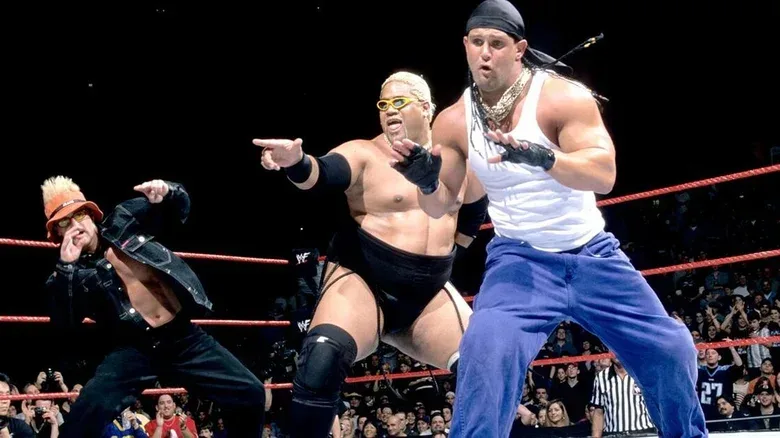
While Too Cool had already developed as a pairing between Garland and Christopher, the addition of Rikishi took the act to another level. Their trio became known for the kind of segments that could turn a routine television appearance into a major audience reaction, with all three men joining in the dancing that became their signature.
Garland placed the beginning of Rikishi’s association with Too Cool in December 1999. The speed at which the group clicked was evident shortly afterward at the 2000 Royal Rumble. Only about four weeks after the alliance began, the three men shared a now-famous dance moment during the Royal Rumble match before Rikishi eliminated both Garland and Christopher.
That sequence captured the unusual appeal of the group. Even in the middle of a match built around competition and elimination, the trio had enough momentum and charisma to pause for a moment of celebration. The dance was more than a diversion; it showed how fully the characters had connected with the audience.
Garland acknowledged that he was initially skeptical about the idea of pairing Rikishi with Too Cool. From his perspective, Rikishi did not appear to fit the world he and Christopher had established. The styles, looks, and overall energy seemed different on paper. However, Garland said that the first night they worked together immediately changed his mind.
He described the chemistry as something difficult to explain, emphasizing that there was an immediate sense that the combination worked. In professional wrestling, creative pairings can be planned for months and still fail to resonate. Others begin with uncertainty, apparent contradictions, or minimal direction before an organic connection reveals itself. Garland’s recollection of the Rikishi partnership falls clearly into the latter category.
Although Garland said Rikishi’s run with Too Cool lasted less than a year, he identified it as one of the highlights of his career. That relatively brief stretch left a much larger legacy because the act produced moments fans continued to remember long after its original run.
A Legacy Built on Chemistry and Adaptation
The story of Too Cool’s formation is a reminder that some of WWE’s most enduring acts are not always introduced with a fully formed blueprint. Garland and Christopher were first assembled for a WrestleMania battle royal despite previously working on opposing sides. Their individual identities were not initially aligned, and their team name emerged only after Garland explained their earlier ring names to McMahon.
Even then, the Too Much era was not the final product. The team underwent a name change, an overhaul of its visual presentation, and eventually a major expansion through Rikishi. Each adjustment added another layer. The result was an act that became far more recognizable than its uncertain beginning would have suggested.
Too Cool’s appeal was also rooted in the fact that it could be both lighthearted and meaningful to the audience. Garland and Christopher were not positioned as the central stars of every show, yet they created reactions that many wrestlers in higher-profile roles would have wanted. Their connection with Rikishi made the act feel even bigger, and their dance segments became part of the broader culture of WWE programming at the time.
For Garland, the journey began at a point when he was uncertain about his future in the company. A random WrestleMania pairing became a tag team, that tag team became Too Much, and Too Much eventually transformed into Too Cool. The addition of Rikishi then produced the version most strongly remembered by fans.
It is a career-defining example of how quickly circumstances can change in wrestling. Opportunity can come from an assignment that seems temporary. A casual conversation can provide the basis for a new character direction. And a partnership that appears mismatched at first can become something special once the performers step in front of a live crowd.
Too Cool’s journey was not the result of one immediate breakthrough. It was built through revisions, timing, and the chemistry of Garland, Christopher, and Rikishi. Their lasting popularity remains a testament to how an act can grow from an unplanned beginning into one of WWE’s most fondly remembered attractions.
In pictures

Darryl Polo
Darryl Polo is a passionate wrestling fan covering WWE, AEW, TNA and beyond. He loves great rivalries, breakout stars and the moments that keep fans talking long after the bell. How we work.