
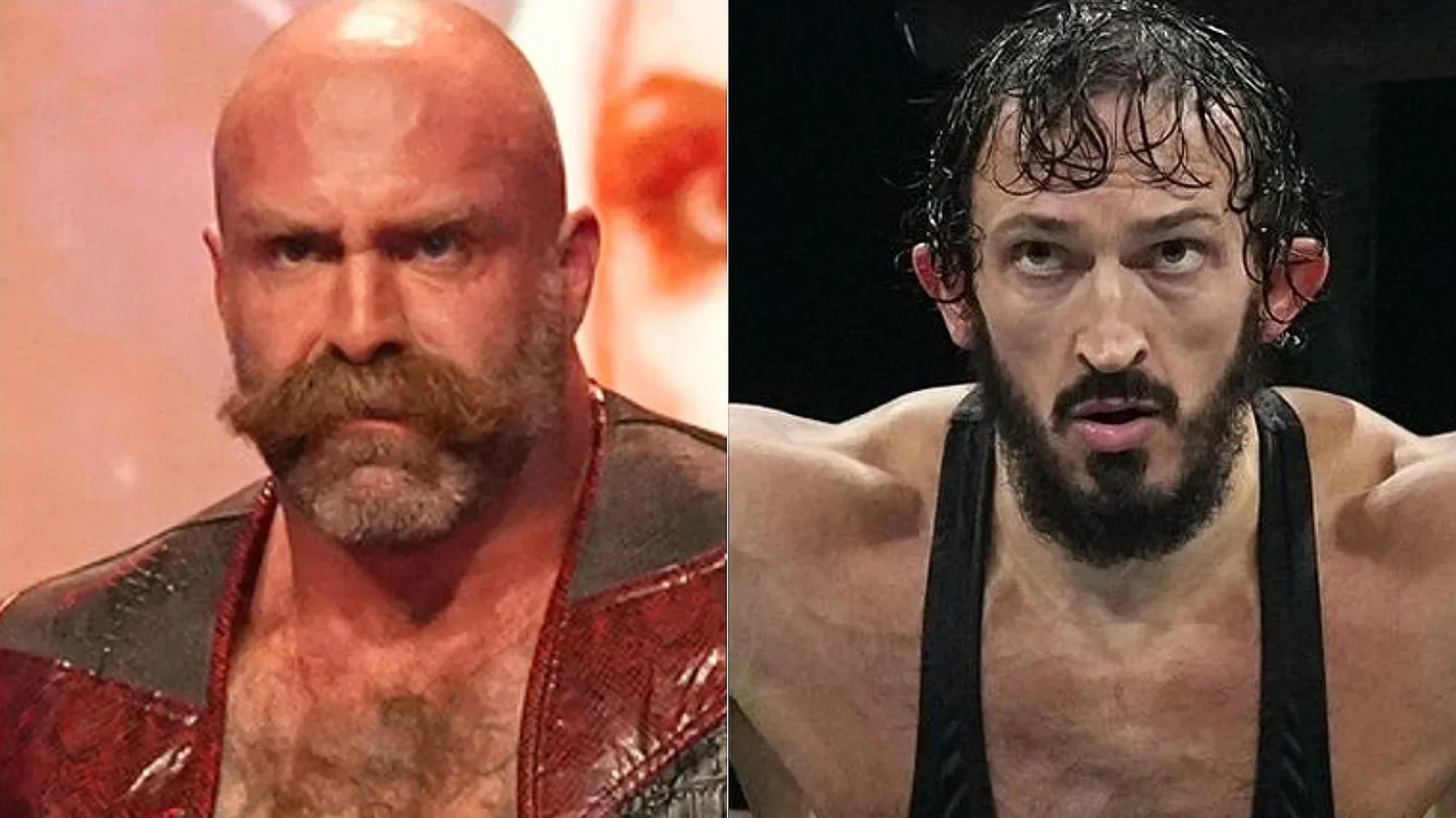
AEW has faced an extraordinarily difficult period following the deaths of PAC and Andy “The Butcher” Williams, who were lost only weeks apart. As the company and the wider wrestling community continue to mourn both men, Samoa Joe has offered a thoughtful perspective on how performers and staff have tried to support one another through grief.
Joe recently returned to AEW programming amid that emotional backdrop. Asked about the atmosphere behind the scenes, the former AEW World Champion did not suggest there is a simple formula for handling loss in a wrestling locker room. Instead, he pointed to the kind of personal support that friends, colleagues and loved ones offer one another when there are no easy answers.
“There’s no real established protocol beyond how anybody grieves amongst friends and loved ones,” Joe said. “I think in times like this, we try to be there for each other and available for that late-night call if you need to talk about it or something like that.”
That answer speaks to the personal nature of the situation. Professional wrestling is a public business, one in which performers travel, compete and appear on television in front of a global audience. But the response to the losses of PAC and Williams has also been deeply human: people checking on each other, being present when someone needs to talk, and recognizing that grief does not follow a schedule.
For more background on this topic, read Kalisto Reflects on PAC’s Influence and Their Time Together in the Ring.
Joe’s comments also underscored that the impact extends beyond the individual performers who shared AEW locker rooms with PAC and Williams. Both men left marks across professional wrestling, and their absences have resonated among colleagues, fans and others throughout the industry. For Joe, that broad response reflects the lives and careers they built, as well as the relationships they formed along the way.
AEW Paid Tribute to Both Men on Television
AEW honored PAC and Williams with dedicated tribute shows, including 10-bell salutes. Those moments gave the company’s talent and audience an opportunity to collectively acknowledge the losses, while also placing the focus on remembrance.
Williams’ tribute on AEW Collision was capped by a 12-man battle royal. The format brought a large portion of the roster together for a match that closed a show built around honoring Williams. In a company where in-ring competition is central to its identity, the battle royal also represented a way for the locker room to continue doing what it does while paying respect to one of its own.
The episode of AEW Dynamite held in honor of PAC featured a 10-man tag team main event. PAC’s former Death Riders stablemates faced The Don Callis Family in that bout, connecting the tribute to a major part of PAC’s AEW history. The match was not simply another television main event; it was part of a night shaped by remembrance for a wrestler whose presence had been felt across the promotion.
There is always a difficult balance when a wrestling company faces tragedy. The business is built around live events and weekly programming, and those shows must often continue even when the people involved are mourning. Joe said that, in the midst of that challenge, the opportunity to keep the show moving has itself carried meaning.
“I think, if anything, we’re grateful that we even have the opportunity to have the show go on,” Joe continued.
That sentiment does not minimize the losses or suggest that work removes the pain. Rather, it recognizes that performing can provide a shared space for people who are processing difficult emotions. Wrestlers frequently describe the locker room as a community forged through long travel, physical sacrifice, competition and the unique demands of the profession. When a member of that community is gone, coming together for a show can become one way to support each other and honor their memory.
Joe Praises Tony Khan and the AEW Locker Room
Joe also praised AEW President Tony Khan for being sensitive to the talent during this period. His remarks placed emphasis not only on leadership, but also on the solidarity within the company. In moments of loss, the practical pressures of television production and live performance remain, but Joe’s comments indicate that care for the people involved has been central to how AEW has approached the situation.
The veteran’s perspective carries particular weight because he has spent decades in the wrestling business and has worked in many environments. His response did not frame grief as something to be solved with a formal process. Instead, he highlighted availability, compassion and the willingness to listen. Those can be simple actions, but they can matter enormously when people are hurting.
“I think in these times we band together,” Joe said. “We definitely cherish and have a better understanding that our time on this earth is precious. We should tell the people that we care about them, and we love them when we get the opportunity.”
It is a message that reaches beyond AEW or even wrestling. The deaths of PAC and Williams have clearly prompted reflection among those who knew and worked with them, but Joe’s words center on a universal idea: people should not wait for tragedy to express appreciation for those around them.
A Reminder of Wrestling’s Shared Community
Even within a competitive industry, professional wrestling has long been shaped by close bonds. Talent may compete against each other in the ring, belong to opposing groups on television or work for different companies over the course of their careers, yet personal relationships often run much deeper than those storylines. Joe’s observation that the losses have been felt throughout wrestling illustrates that reality.
PAC and Williams were each connected to fans and peers in ways that went beyond any single match or show. The tributes on AEW Collision and AEW Dynamite gave the company a visible way to recognize that influence. The 10-bell salutes, in particular, placed the wrestling action aside for a moment of collective reflection before the performers and audience continued together.
For those in AEW, the weeks since the losses have involved the same struggle familiar to anyone grieving a friend or colleague: finding a way to function while carrying sadness, memories and concern for the people around them. Joe’s comments do not present that process as finished. They instead describe an ongoing commitment to being there for one another, whether through a conversation, a late-night call or simply the shared routine of preparing for another event.
Continuing to put on shows can be demanding under any circumstances. In this context, it has also served as a reminder of why the work matters to the people who do it. The ring, the backstage area and the travel that connects one event to the next are places where wrestlers spend enormous portions of their lives together. When that community loses two people in such a short span, its response becomes about more than programming. It becomes about taking care of one another.
Joe’s message was ultimately one of unity and urgency. The losses of PAC and Andy “The Butcher” Williams have brought pain to AEW and to the broader wrestling world, but they have also reinforced the value of reaching out and making sure the people closest to us understand what they mean. As AEW continues to honor both men, that sense of togetherness remains at the heart of Joe’s reflection: in difficult times, people band together, remember those they have lost and make space for one another to grieve.
In pictures

Darryl Polo
Darryl Polo is a passionate wrestling fan covering WWE, AEW, TNA and beyond. He loves great rivalries, breakout stars and the moments that keep fans talking long after the bell. How we work.