
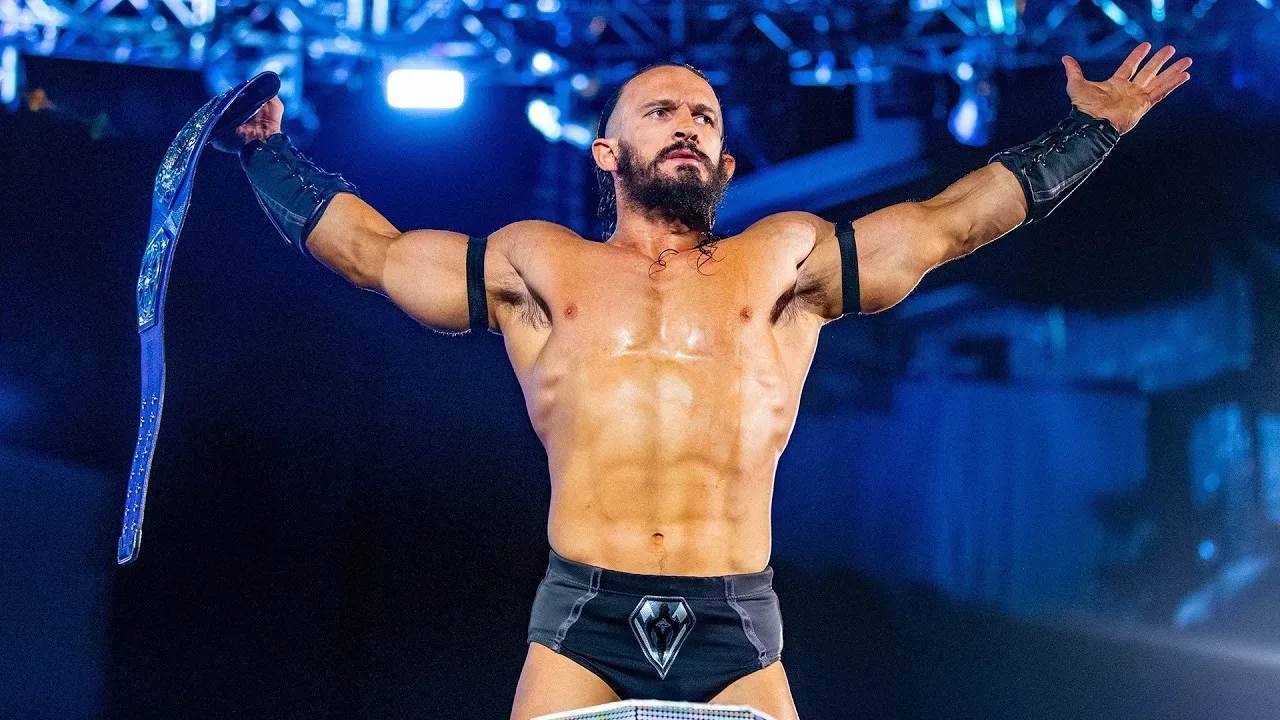
Kalisto has reflected on the passing of PAC, speaking warmly about the late wrestler’s distinctive ability, private but humorous personality, and the lasting influence he had on his own approach to the ring.
PAC’s death was announced by AEW during the weekend of All Out last month, prompting an outpouring of tributes from throughout professional wrestling. For Kalisto, the loss remains difficult to process. In a recent interview, he referred to PAC by his first name, Ben, and described the news as something that still feels unreal.
“Man, Ben, it’s just surreal. I was just thinking about it this morning still,” Kalisto said.
The comments offered a personal perspective on PAC beyond his widely recognized accomplishments and reputation as one of wrestling’s most dynamic performers. Kalisto said PAC was someone who could keep to himself, yet could also be extremely funny. He remembered him as enjoyable to work with and expressed regret that their paths did not cross in the ring more often.
For more background on this topic, read Kofi Reflects on The New Level’s AEW All In Arrival and Last-Minute Contract.
“He kept to himself, but also too funny. Awesome to work with, man. I wish I could have worked with him more,” Kalisto said.
For Kalisto, PAC was not simply a respected peer he encountered after reaching a major stage. He was a wrestler whose work had been meaningful to him earlier in his own career. Kalisto recalled watching footage of PAC’s time in Dragon Gate and being drawn to the originality of his offense, movement, and overall presentation.
That admiration speaks to the particular regard in which PAC was held by fellow wrestlers. His work blended explosive athleticism with sharp technique and a style that could shift between speed, intensity, and precision. Kalisto described that approach in artistic terms, saying PAC’s work had a natural flow that stood apart.
“I’ve always wanted to work with him, with Ben, man, just seeing his Dragongate videos and stuff,” Kalisto said. “He’s one of the other wrestlers that inspired me to do the style that I try to do also. His style was unique. It was awesome. It just flowed like art.”
Kalisto’s recollection underscores the impact that PAC’s international work had on wrestlers who came to prominence in different promotions and at different points in time. Before they shared a ring, Kalisto had already studied what PAC brought to the ring and recognized qualities that resonated with the style he wanted to pursue himself.
That connection eventually became professional as well as personal. Kalisto remembered their first match taking place at the Arnold Classic. The bout was not televised, but it remains vivid in his memory because it fulfilled a long-held ambition to wrestle someone he had admired. The early start created an unusual setting, with Kalisto recalling that it was around 8 a.m., but he said the two wrestlers quickly found the energy and rhythm needed to make the match work.
“First time I worked with him was at the, I believe it was at the Arnold Classic,” Kalisto said. “It was non-televised. It was in front of the people, 8 a.m. I’m tired, but man, we were killing it, and I just thought we were just having such a great match.”
That memory is especially telling because it does not center on a major televised spectacle or a widely replayed match. Instead, Kalisto emphasized the satisfaction of being able to work with PAC in front of a live audience and discovering that the experience lived up to the anticipation he had carried from watching him previously.
The pair later met again on SmackDown in a match for the United States Championship. Kalisto said both competitors understood there was potential to take their work together even further. While the opportunity was significant, he believes they could have done more if they had been afforded the chance to continue building on what they had started.
“The second time I worked with him was on SmackDown for the US title, which man, we could have done more,” Kalisto said. “We know we could have done more. I would have loved to have done more.”
Rather than frame that feeling as a complaint, Kalisto focused on gratitude. He said that simply getting to share the ring and locker room with PAC was meaningful. His words also reinforced a recurring element of the tributes that have followed PAC’s death: the difference between the intense presence he projected as a performer and the kindness colleagues experienced around him away from the spotlight.
“I’m just super grateful to be in the ring with him and just share the locker room with him,” Kalisto said. “Such a sweetheart. What everybody’s saying is this, it’s very true. It’s very, very, very true.”
PAC’s legacy has naturally been discussed through the lens of his extensive body of work, his physical intensity, and the high standard he brought to matches. Kalisto’s remembrance adds another dimension, centering on the effect PAC had on a fellow wrestler who saw him as both an inspiration and a colleague.
There is also a notable sense of unfinished possibility in Kalisto’s memories. He wanted more matches with PAC and believed the two could have explored more together. That is often part of how wrestlers remember a respected contemporary: not only through what occurred, but through the matches, ideas, and moments that might have been possible with more time.
Still, Kalisto made clear that he does not take their shared history for granted. Their first meeting at the Arnold Classic and later encounter on SmackDown gave him the opportunity to compete with a wrestler whose work had helped shape his own ambitions. In an industry built around constant movement, limited schedules, and changing rosters, those opportunities can be rare.
Kalisto’s words carry the weight of someone mourning a friend and fellow performer while also looking back at a career influence. He remembered PAC as talented, original, funny, and generous in the shared environment of a wrestling locker room. He also remembered the excitement of finally stepping in the ring with a wrestler he had watched from afar.
Near the end of his tribute, Kalisto returned to the personal impact PAC had on him. The loss, he said, was hard, and his final thought was simple: PAC was someone he deeply admired.
“It was hard, man,” Kalisto said. “I looked up to him a lot too.”
As tributes continue to honor PAC following his passing, Kalisto’s recollection stands as a reminder that influence in wrestling is not confined to championships, television appearances, or major events. It can be found in footage that motivates another wrestler to develop a style, in a non-televised match early in the morning, and in the respect formed when two performers finally have the chance to create something together.
For Kalisto, PAC was Ben: a singular talent whose wrestling moved “like art,” a colleague he wished he had worked with more often, and an inspiration he will continue to remember.

Darryl Polo
Darryl Polo is a passionate wrestling fan covering WWE, AEW, TNA and beyond. He loves great rivalries, breakout stars and the moments that keep fans talking long after the bell. How we work.