
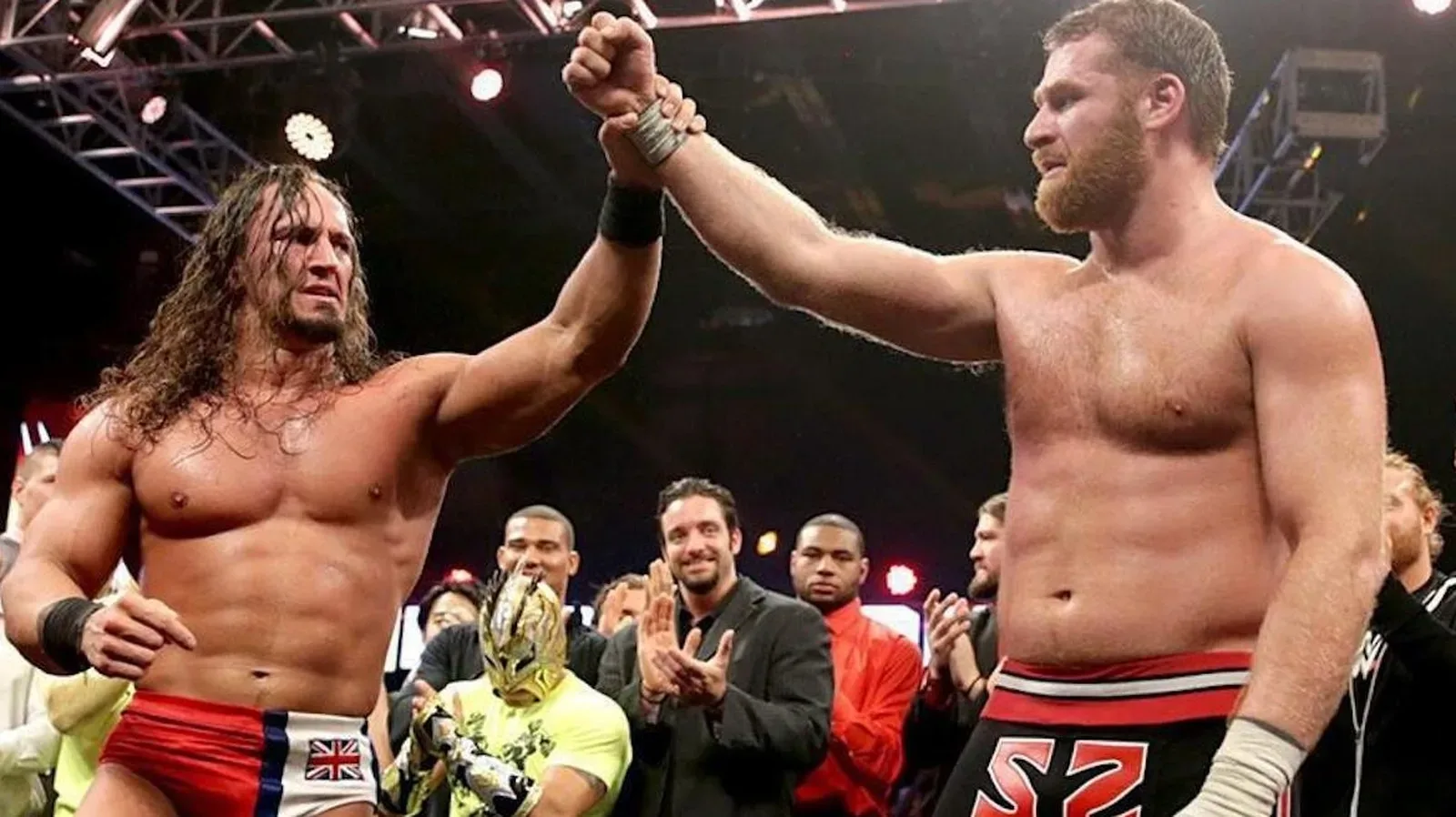
WWE Undisputed Champion Sami Zayn has addressed why he has not made a public social-media post following the death of his longtime friend Benjamin “Pac” Satterley.
Satterley died last month due to bronchial asthma, a loss that sent shockwaves through professional wrestling. Tributes arrived from fans, peers and promotions across the business, while AEW presented a memorial show in his honor. Kevin Owens, another close friend and longtime contemporary of Satterley and Zayn, also assembled a tribute video featuring WWE talent.
For Zayn, however, the magnitude of the loss has made a conventional online tribute feel inadequate. Speaking on Insight with Chris Van Vliet, Zayn said he had anticipated being asked about Satterley but found himself uncertain about how to articulate a bond formed over years of shared travel, work and life experiences.
“I wasn't able to post anything, I haven't posted anything, because what do you even say in a tweet, you know what I mean? ‘Hey, here's this guy that was like a brother to me, that I traveled the world with, that I grew up with.’ Like this bond, it's hard to articulate what these bonds mean. And then I'm supposed to do it in a tweet or like an Instagram post with 10 pictures out of the hundreds of thou — you know what I mean? None of it will do it justice.”
For more background on this topic, read SiriusXM CEO Jennifer Witz Says WWE Radio Listening Has Grown Nearly 20% Since July Launch.
Zayn’s comments offer a candid reminder that public tributes and private mourning do not always move at the same pace. In an era when wrestlers and fans frequently turn to social media immediately after major news, silence can invite questions from an audience accustomed to seeing performers share their lives online. Zayn made clear that his lack of a post should not be confused with a lack of feeling. Instead, he described the difficulty of reducing an intensely personal friendship to a few photographs or a short written statement.
A Friendship Built Long Before WWE and AEW
The relationship between Zayn and Satterley was forged well before either man became a centerpiece name on major televised wrestling programming. Both spent formative years building their reputations internationally, navigating the demanding independent wrestling landscape and crossing paths with many of the same peers. Their connection was not merely professional. As Zayn described it, Satterley was like a brother.
That distinction is central to why the loss has been so hard to discuss in a public format. Wrestlers often speak about the unique relationships developed on the road: friendships formed during long drives, nights in unfamiliar cities, training sessions, difficult matches and the shared uncertainty of pursuing a career in an unforgiving industry. Those experiences can create connections that are difficult to explain to anyone outside that circle.
Satterley’s influence reached numerous corners of wrestling. His work as Pac established him as one of the most acclaimed high-flying and technically gifted performers of his generation, while his intensity and physical style helped him stand apart in every major setting in which he competed. But for those who knew him closely, the performer seen in the ring was only one part of who he was.
Zayn noted that Satterley meant something different to every person who was close to him. That perspective reflects why broad public remembrances, while meaningful, cannot fully capture the individual nature of grief. A tribute show, a video package or a message from a colleague can honor a legacy, but none can encompass every shared memory between friends and family.
Why a Public Post Felt Impossible
Zayn also acknowledged that perfectionism played a role in his inability to publish a message. He said that both he and Satterley shared that trait, which created an added pressure to make any tribute feel worthy of the person being remembered. The result was not indifference, but paralysis: the sense that no version of the post could properly meet the moment.
That internal conflict extended to the question of audience. Zayn said he began asking himself who a public message would be for, particularly when the people closest to Satterley already understood the depth of the relationships involved. His comments did not dismiss the sincerity of public grief from fans or peers. Rather, they emphasized that some losses are held most honestly within the private spaces shared by family and close friends.
“I start going down this path of ‘who the f*** is this even for?’ Who needs to know? I know and the people that matter know, you know what I mean? The people in our circle, his wife, his mom, me, my wife – my wife was extremely close with him too, she's profoundly affected by it. All of our close friends, all the guys that we came up with, he meant something different to everybody. So you're allowed to just have that.”
That final thought is perhaps the clearest expression of Zayn’s position. Public mourning has become a familiar part of the wrestling world, especially when a beloved performer dies unexpectedly. Fans understandably look to colleagues for reflections, stories and confirmation of the impact a wrestler had behind the scenes. Yet Zayn’s comments underline that those closest to a loss are not obligated to make their emotions public on a timetable set by the news cycle.
He specifically mentioned Satterley’s wife and mother, as well as his own wife, who was also extremely close with Satterley and has been profoundly affected by his death. The loss, in Zayn’s account, has touched an interconnected group of people whose relationships with Satterley existed far beyond any wrestling card, television segment or social-media interaction.
Tributes Across the Wrestling World
The wider wrestling community has continued to honor Satterley following his death. AEW’s tribute show provided a major public space for colleagues and fans to recognize his career and legacy. Elsewhere, wrestlers who shared locker rooms, tours and matches with him have reflected on the impact he made as both a performer and a person.
Kevin Owens’ tribute video, which included WWE talent, also demonstrated the extent to which Satterley’s relationships crossed promotional lines. Professional wrestling can be divided by company affiliations on television, but the personal history among performers frequently transcends those boundaries. For many wrestlers, especially those who emerged from the same independent scenes, their shared past remains deeply important regardless of where they later worked.
Zayn’s decision not to post does not place him outside that collective remembrance. His interview makes the opposite clear. The pain in his words and the details he chose to share show how present Satterley remains in the lives of those closest to him. Rather than attempting to summarize their friendship in a polished online statement, Zayn chose to explain why he could not bring himself to do so.
Grief Does Not Need a Format
There is no single correct way to mourn, and Zayn’s reflections speak directly to that reality. Some people honor a friend through stories, some through creative work, some through ceremonies, and some by keeping their memories away from public view. In wrestling, where performers’ professional and personal identities can often be intertwined in front of a global audience, the distinction between what is shared and what is protected can be especially difficult to manage.
For Zayn, the challenge was not a shortage of memories or affection. It was the opposite. The friendship contained too much history to be represented by a tweet or an Instagram carousel. Any selection of words or pictures risked feeling incomplete next to years of travel, growth and mutual experience.
His remarks on Insight with Chris Van Vliet stand as a personal tribute in their own right, even if they are not the social-media post many had expected. Zayn did not offer a definitive public summary of Satterley’s life, nor did he try to frame his own grief as representative of everyone else’s. He spoke instead about the limitations of language, the weight carried by Satterley’s loved ones and the validity of holding some memories close.
As the wrestling world continues to remember Pac, Zayn’s message is a powerful one: love and loss are not measured by a public post. For those who shared the deepest parts of Satterley’s life, the memories and the grief remain theirs, whether they are ever condensed into words for the internet or not.
In pictures

Darryl Polo
Darryl Polo is a passionate wrestling fan covering WWE, AEW, TNA and beyond. He loves great rivalries, breakout stars and the moments that keep fans talking long after the bell. How we work.