
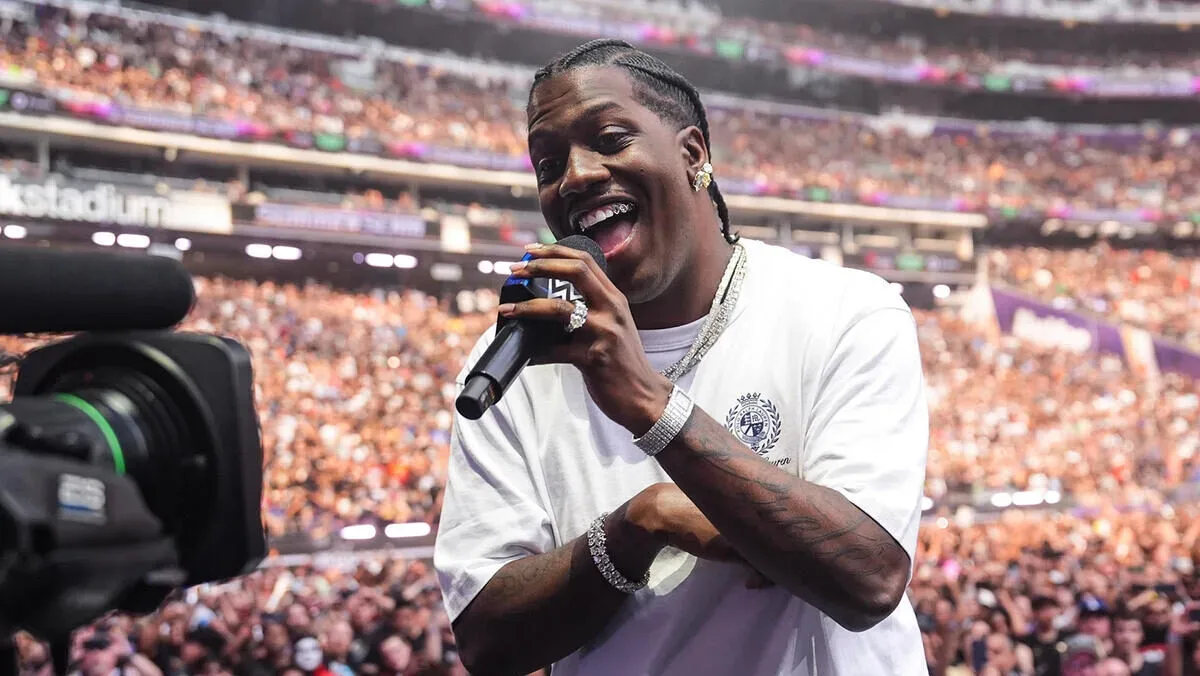
Lil Yachty has made it clear that his recent involvement with WWE is not something he views as a one-off celebrity appearance. The two-time Grammy-nominated artist and producer says he wants to become a full-time part of the company, and he is prepared to walk away from releasing music altogether if his WWE ambitions continue to develop.
Yachty has been aligned on WWE television with United States Champion Trick Williams, serving as an ally and manager-type presence around the titleholder. While celebrity cameos have long been part of WWE programming, Yachty’s comments indicate that he sees a far more extensive future for himself in the ring and on television. He spoke openly about wanting to climb WWE’s ranks, earn the financial rewards he believes a larger role would bring, and devote himself fully to the business.
“I’d like to go full-time; I’m trying to go full-time. I won’t ever put an album out ever again.”
That is a striking declaration from an artist whose career has been built in music, but Yachty did not present it as an offhand remark. He doubled down on the idea that a successful WWE run could become his full professional focus.
For more background on this topic, read Lil Yachty Says He Temporarily Lost Most Vision In Left Eye During Health Scare.
“If I climb the ranks in WWE and get the checks that I want, this music sh*t can kiss me goodbye. I swear to God. I will be back flipping, getting thrown through tables and whatever else until my body give out on me.”
Yachty’s comments arrive after his WWE involvement moved beyond simply appearing beside Williams. He made his in-ring debut against Baron Corbin at Sunday Night’s Main Event, taking a significant step in transitioning from an on-screen personality into a participant willing to compete. He has not appeared on WWE television since Corbin attacked him on the September 11 edition of Friday Night SmackDown.
WWE’s Structure Has Made an Impression
When discussing the difference between performing music and working in WWE, Yachty said he does not see a direct connection between the two. Rather than describing wrestling as an extension of his established performance experience, he emphasized how much more structured, time-sensitive, and disciplined WWE is.
In his view, music gives him considerably more freedom. Onstage, he can dictate the environment, make adjustments in the moment, and recover if something does not go exactly as planned. WWE, he explained, presents a completely different set of demands. Talent work around strict timing, cameras, producers, and a limited amount of television time in which to make a clear impact.
“Nah, no correlation. It’s so much different; it’s so much more militant you gotta be in WWE. This is my show. I call the shots, I make the rules, I do what I want. WWE, it’s time, it’s cameras… producers. It’s so different. It’s like militant, and you gotta be on your sh*t.”
That distinction is important for any celebrity entering WWE. A recognizable name can generate attention immediately, but adapting to the pace of weekly wrestling television is another matter. WWE programming requires performers to communicate a character, advance a story, react to the live crowd, work within production cues, and stay aware of the wider show—all in a tightly controlled window.
Yachty specifically pointed to the pressure wrestlers face when they only have a short segment to make their message resonate. A strong appearance can keep audiences invested until the next week’s episode. A weak one can have consequences, particularly when television time is limited and competition for prominent spots is intense.
“You got X amount of time and you gotta make everything count and you gotta captivate that audience. You don’t see them again till next Friday, and you got a real small time in your segment to get your point across, your message across and be remembered for six more days until next Friday.”
Yachty added that a performer has to make an impression substantial enough that viewers remain interested when the story returns. He also acknowledged the precarious nature of television exposure, noting that a mistake or an ineffective segment can mean not being featured the following week.
From Celebrity Association to In-Ring Aspirations
The relationship between Lil Yachty and Trick Williams has given Yachty a defined place within WWE’s current landscape. Instead of arriving without a storyline purpose, he has been tied directly to the United States Champion and has been part of Williams’ presentation. That association has immediately placed him near a championship program and put him in position to interact with established WWE figures.
His issue with Baron Corbin raised the stakes. Corbin’s attack on the September 11 edition of SmackDown kept Yachty off WWE television afterward, but it also followed Yachty’s in-ring debut against Corbin at Sunday Night’s Main Event. The physical angle and the match provided concrete evidence that Yachty’s role was not confined to standing at ringside or delivering a brief promotional appearance.
There remains a major difference, however, between making an in-ring debut and building a sustainable full-time WWE career. Yachty himself appears to understand that reality. His remarks about WWE being “militant” were not framed as criticism. Instead, he said he loves that environment. The appeal seems to be rooted in the discipline, urgency, and challenge that come with WWE’s format.
That mindset could be crucial if he intends to pursue more than occasional appearances. WWE performers are expected to develop consistency as characters while working under the company’s production structure. For someone with Yachty’s stated goal of becoming full-time, the question will not only be whether he can generate a moment, but whether he can keep adding to a story week after week.
A Career Decision With Major Implications
Yachty’s statement that he would never release another album if WWE works out is especially notable because it frames wrestling as more than a side project. He is describing a possible career pivot. At present, that outcome remains conditional on “climb[ing] the ranks” and receiving the compensation he wants. He did not provide a timetable for that transition, nor did he announce any specific full-time agreement with WWE.
Still, his language leaves little doubt about his interest. He is not merely open to doing more with WWE; he is actively trying to make a permanent move happen. His willingness to speak about taking bumps, being thrown through tables, and continuing until his body can no longer handle it illustrates how seriously he is taking the physical side of professional wrestling.
That enthusiasm will naturally draw attention, especially after his debut opposite Corbin. Celebrity involvement can create an initial spotlight, but sustained participation requires a willingness to accept the physical demands and the discipline Yachty described. His comments suggest he has embraced both parts of the equation, at least in principle.
What Comes Next for Yachty on WWE Television?
Yachty’s absence from WWE TV since Corbin’s September 11 attack leaves an obvious opening for his next appearance. The attack provides a built-in storyline reason for him to return, whether that means continuing his conflict with Corbin, resuming his role beside Trick Williams, or pursuing another direction.
No further WWE appearance, match, or long-term arrangement was announced alongside Yachty’s comments. As a result, the immediate status of his on-screen program remains uncertain. What is no longer uncertain is his public stance on a deeper commitment to wrestling.
For Lil Yachty, WWE has offered a challenge that he says differs sharply from the freedom of music. It is a world of production cues, narrow time limits, disciplined execution, and immediate audience judgment. Rather than pushing him away, those pressures have apparently made him want more. If he gets the opportunity to continue rising within WWE, he says he is ready to make professional wrestling the defining focus of his career.

Darryl Polo
Darryl Polo is a passionate wrestling fan covering WWE, AEW, TNA and beyond. He loves great rivalries, breakout stars and the moments that keep fans talking long after the bell. How we work.