
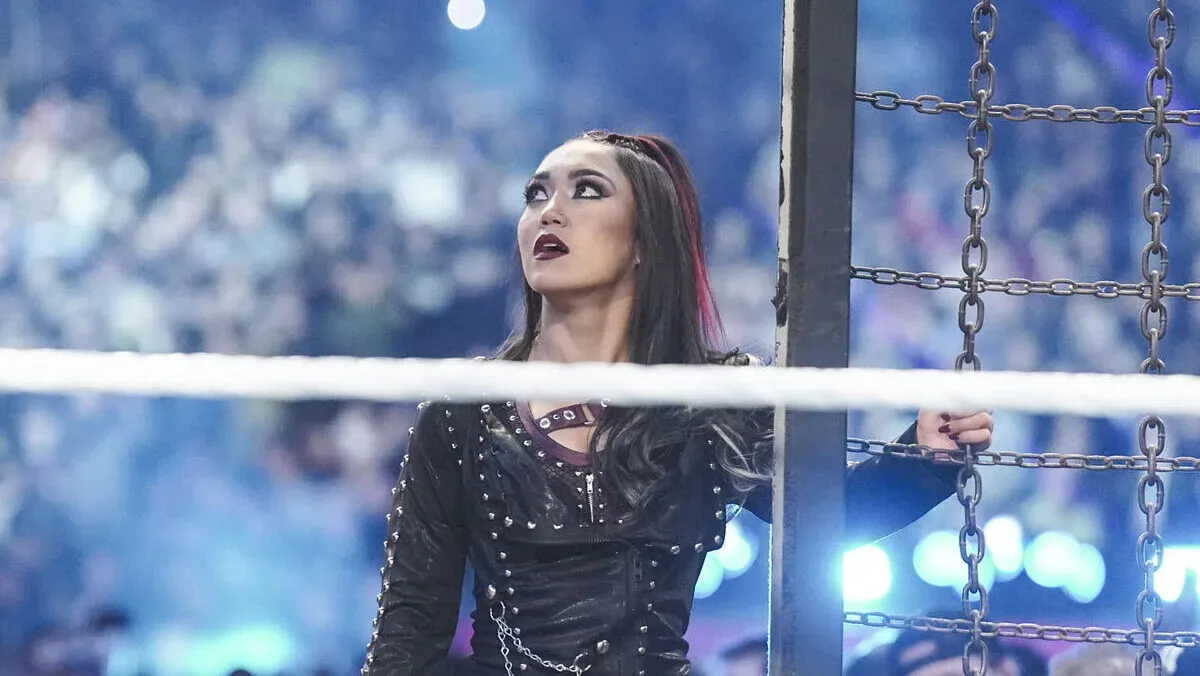
Roxanne Perez is standing firmly behind her current WWE entrance theme, even after fans initially met the change with a mixed response.
Perez debuted revised entrance music in July of last year, using a substantially altered remix of the theme that had previously become closely associated with her. The transition prompted uncertainty from portions of the audience, a familiar response whenever a wrestler’s established entrance identity is adjusted. For Perez, however, the new sound represents a presentation that is more in line with the version of herself she wants to project in WWE.
Speaking with Allenownz Wrasslin, Perez acknowledged that she saw the criticism following the switch. She also explained why she understands the attachment fans had to the earlier music, while making it clear that she personally loves the theme she uses now.
“Oh, yeah. I really love my theme song, honestly, and I do remember seeing some stuff where people weren’t so happy about it,” Perez said. “But I do feel like that happens when you get music changed because I came up with this music that I had before. So it’s like they know me with that. They resonate me with that, and then so when it changes, it’s kind of like a weird transition.”
For more background on this topic, read Roxanne Perez Says Royal Rumble Marathons Feel Like ‘10 Minutes’ in the Ring.
The response reflects the unusual importance entrance music can carry in professional wrestling. A theme is not simply background audio before a match. It is often one of the first signals of a performer’s identity, helping define their energy before they reach the ring, speak on a microphone, or begin wrestling. When a song is tied to a wrestler through an important period of their career, fans can understandably view any replacement or extensive reworking as a change to the wrestler’s overall character.
Perez recognized precisely that relationship. Her former theme was part of the image audiences knew as she rose through WWE, and its familiarity made it easy for fans to connect the music with her accomplishments and personality. A remix, even one built from material listeners already recognize, can therefore create an adjustment period. The reaction is not necessarily a rejection of the wrestler; it can also reflect how strongly the original track had become embedded in the audience’s memory.
Still, Perez believes her newer music more accurately serves her present direction. Rather than viewing the change as a departure from who she is, she sees it as a way to sharpen the qualities she wants to emphasize during her entrance.
“But I really do love it,” Perez continued. “I agree with you that it fits my aesthetic so much more now. Especially because I’m not just happy to be here, you know? I am happy to be here, but I am also taking every opportunity that I can get, and I know that I am the prodigy of the WWE. I think that in my entrance, I really encapsulate all of that, you know?”
A theme change tied to a changing presentation
The key point in Perez’s explanation is that she does not present the current theme as a minor production adjustment. She connects it directly to her confidence, ambition, and belief in her own standing. Her description of herself as “the prodigy of the WWE” gives the remix a broader purpose: it is intended to help communicate a wrestler who expects opportunities and intends to maximize them.
That is a notable distinction from simply saying the new music sounds better. Perez is describing an aesthetic fit. In wrestling terms, that means the music is part of the total presentation, alongside a wrestler’s mannerisms, pace, body language, ring gear, promos, and competitive approach. The entrance becomes an opportunity to establish the tone of the performer before the bell rings.
Perez’s comments also suggest that her current presentation is designed to balance gratitude with self-belief. She said she is happy to be in her position, but not merely content to have arrived. The added emphasis is on pursuing every chance available and carrying herself with the assurance of someone who sees major potential in her own future. That combination can be central to the way a wrestler is received: fans may appreciate the drive while also responding to the edge and confidence that help distinguish a competitor in a crowded environment.
For Perez, the remixed theme appears to underline that evolution. It retains a connection to the music that came before it, but its substantial changes allow her to frame the entrance around a different energy. The goal, in her own words, is to encapsulate the complete picture of where she is now.
Why fan reactions to entrance music can be immediate
Entrance themes frequently inspire especially strong reactions because they are built around recognition. The opening seconds of a song can create anticipation in an arena, signal a surprise appearance, or instantly establish whether the audience is meant to feel excitement, tension, confidence, or hostility. That function is especially valuable for wrestlers whose entrances are closely linked to a particular stage of their ascent.
As Perez noted, her earlier music was the song through which many viewers came to know her. That familiarity is powerful. Fans associate a theme with entrances they have watched repeatedly, significant victories, setbacks, rivalries, and the broader emotional experience of following a wrestler. Even when a performer believes a new track better matches their direction, listeners can need time to develop that same connection.
The initial criticism surrounding Perez’s updated theme fits that wider pattern. The most immediate reaction to a change often centers on comparison. Fans compare the new version’s pace, mood, and recognizability with what came before, rather than considering it solely as part of a new presentation. Perez did not dismiss that response. Instead, she described the shift as a “weird transition,” showing an understanding that the audience’s association with the previous music was real.
At the same time, performers ultimately need an entrance that feels authentic to them. If the person walking through the curtain believes the music reinforces their character and confidence, that can be reflected in the way they carry themselves. Perez’s enthusiasm for the current theme matters in that respect. Her entrance is not only intended for viewers; it is also part of how she enters a match mentally and physically.
Perez embraces the identity she wants to convey
Perez’s comments place the focus on ownership. She is not framing the remix as something she has simply accepted after a change was made. She repeatedly stated that she loves it and feels it fits her aesthetic more effectively. That personal investment gives the theme a clear role in her WWE identity.
Her use of the word “prodigy” is equally important. It conveys more than optimism about the future. It is a statement of expectation, both for what Perez believes she can accomplish and for how she wants the audience to view her. A wrestler who identifies herself that way is presenting an image of someone determined to be seen as exceptional, not merely another competitor trying to find a place on the roster.
The current entrance music is part of that statement. Perez believes the sound and atmosphere now better align with a wrestler who is driven to seize opportunities and who wants her arrival to communicate poise, purpose, and confidence. Whether every fan immediately prefers the remix or remains attached to the prior version, Perez has made her own position clear: the newer theme is the one she feels represents her best at this stage.
Elsewhere in the same interview, Perez also discussed the experience of spending long stretches in Royal Rumble matches. Her remarks on the theme, though, offer a concise look at how seriously she views every part of her WWE presentation. For Perez, the entrance begins before the match does, and the music is meant to tell the audience exactly how she sees herself: grateful for the opportunity, determined to capitalize on it, and fully confident in the prodigy identity she is bringing to the ring.

Darryl Polo
Darryl Polo is a passionate wrestling fan covering WWE, AEW, TNA and beyond. He loves great rivalries, breakout stars and the moments that keep fans talking long after the bell. How we work.