
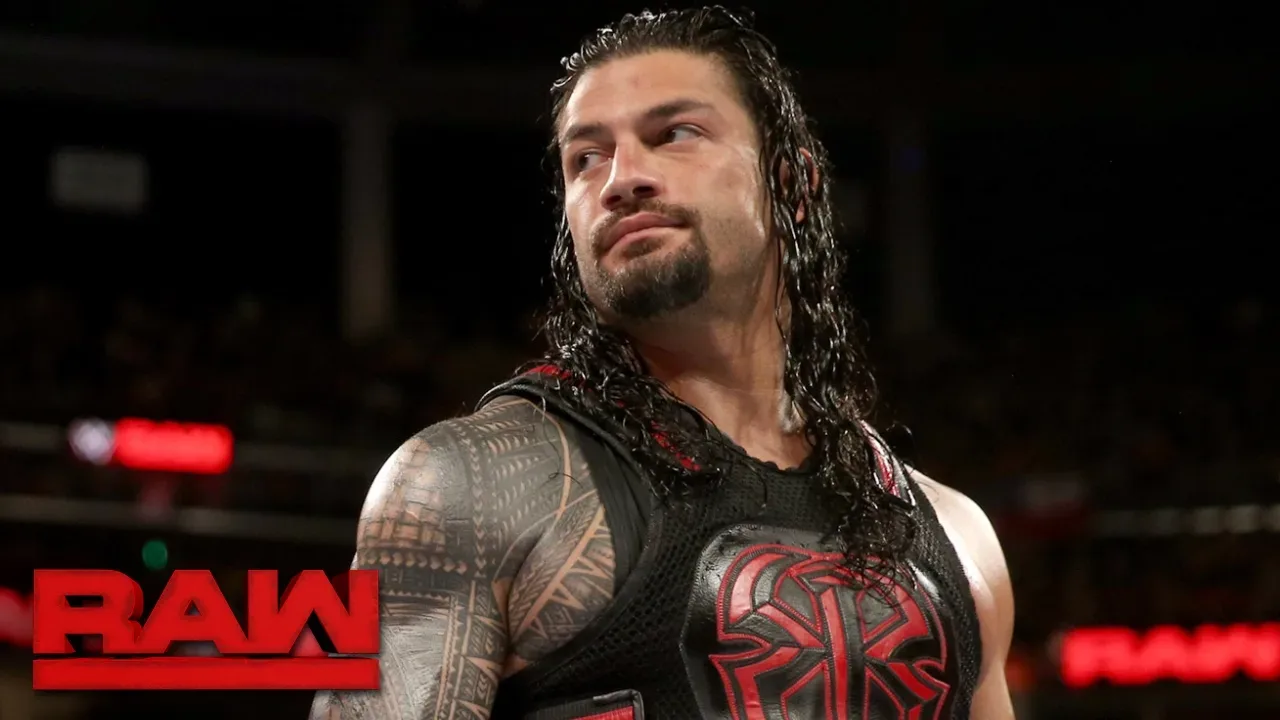
Roman Reigns has weighed in on the online conversation surrounding his standing in WWE, making the case that business metrics—not just fan opinion—have consistently supported the company’s investment in him.
Speaking with Sam Roberts, Reigns discussed the way his name is used in wrestling conversation and argued that attention itself is a measurable part of the modern entertainment landscape. The former Undisputed WWE Champion said the intense discussion around his legacy is not surprising to him, particularly in an era when online views, engagement and social-media debate are closely monitored.
Reigns’ comments arrived amid renewed discussion of his career, his place among WWE’s top stars and the degree to which he has delivered as the company’s centerpiece. Conrad Thompson was among the prominent wrestling personalities who helped spark that conversation in recent weeks. Reigns has since addressed the topic directly in more than one interview setting.
Reigns points to views, analytics and attention
Reigns said his name carries clear value in wrestling media and online conversation because it draws an audience. In his view, that is not merely a matter of perception; it is part of the data used to judge a performer’s reach and relevance.
For more background on this topic, read Bully Ray Questions WWE Having Women’s Champion Chelsea Green Lose on Raw.
“We’re in a world now where views are currency,” Reigns said. “If you want to maximize your views, you use my name.”
The WWE star did not frame that dynamic as a complaint. Instead, he described it as part of the broader entertainment ecosystem, one in which performers, media figures and fans are constantly connected. Reigns acknowledged that audiences have more direct avenues than ever to express their opinions, and he included those opinions within the wider set of measurements that matter in the industry.
That distinction was central to his response. Reigns did not dismiss fan reaction as irrelevant. Rather, he argued that online discussion is only one element of the picture. His position is that social engagement, views and debate must be considered alongside the business indicators available to the people making major decisions within WWE.
“That’s how we make these measurements,” Reigns said while discussing online engagement. “That’s a part of the metric. That’s a part of the analytics.”
For Reigns, the larger conclusion is straightforward: WWE’s presentation of him in a featured role was not the product of unsupported preference. He stated that the numbers have backed up his placement, even when fans have differed sharply over the creative direction, character work or booking surrounding him.
LA Knight comparison centers on merchandise
Reigns also referenced his recent victory over LA Knight when discussing the value of measurable business performance. While praising Knight’s abilities and his success as a merchandise seller, Reigns compared Knight’s current merchandise business with the sales attached to Reigns’ earlier “Big Dog” persona.
“LA Knight, hell of a talent. Hell of a merch mover,” Reigns said. “The Big Dog moved more merch than LA Knight does.”
The comparison is notable because Reigns specifically invoked a character presentation from roughly eight years ago. The “Big Dog” era predates the Tribal Chief persona that became central to Reigns’ rise as WWE’s dominant modern attraction. By citing merchandise from that earlier period, Reigns’ point was that his commercial impact did not begin with his more recent character evolution.
Reigns did not provide specific sales figures, time periods, product categories or internal WWE data during the interview. As a result, the comparison remains his own assessment of the available business metrics rather than a publicly documented side-by-side merchandise report. Still, his larger message was clear: he believes the company’s confidence in him has repeatedly been justified by objective performance indicators.
Knight remains one of WWE’s most recognizable and popular acts, and Reigns was careful to credit him as both talented and commercially effective. The comments were not presented as an attempt to deny Knight’s popularity. Instead, Reigns used Knight as an example while emphasizing the scale of the business he says he has generated over the course of his own career.
A familiar debate around WWE’s top stars
Questions about who should occupy WWE’s leading role have long been part of the company’s fan culture. The debate often becomes especially loud when a performer receives sustained television focus, championship opportunities or a major WrestleMania-level program. Reigns has been at the center of that type of discussion for much of his time as a singles main-event star.
His remarks underscore the gap that can exist between fan debate and the business framework used by a major promotion. Fans may evaluate a wrestler through match quality, promo style, booking choices, crowd reactions or personal preference. A company, meanwhile, can consider a broader range of factors, including merchandise, viewership, digital traffic, ticket demand, sponsor appeal and long-term brand recognition.
Reigns argued that criticism often overlooks that difference. He suggested that people commenting from outside the decision-making process may not have access to the data that informs how a talent is positioned. In his view, that is the dividing line between being a fan with an opinion and being in a role that can make decisions affecting the industry.
“The position has always been verified,” Reigns said. “Everybody’s going to have an opinion on it.”
That outlook fits the public persona Reigns has cultivated in recent years: a performer who projects certainty in his own status and sees his accomplishments as supported by tangible evidence. Whether discussing championship success, audience interest or merchandise, his response places the emphasis on outcomes rather than outside narratives.
Legacy discussion is unlikely to disappear
The conversation around Reigns’ legacy is unlikely to end with one interview. His career has generated distinct reactions across different eras, from the heavily debated “Big Dog” years to the later run in which he became one of WWE’s defining attractions. Those changing responses are part of why discussions about his place in modern wrestling remain so active.
Reigns’ latest comments do not ask fans to stop voicing their opinions. In fact, he explicitly recognized the role that constant online participation plays in today’s wrestling landscape. His argument is that the loudness of a debate should not be confused with the final measure of a wrestler’s value to a company.
From Reigns’ perspective, attention around his name has value in itself, while internal business performance provides the strongest confirmation of his standing. He sees the views created by discussion, the merchandise connected to his various eras and the analytics surrounding his appearances as evidence that WWE’s decision to present him at the highest level was justified.
His mention of LA Knight adds another layer to that message. Knight’s popularity and merchandise success were acknowledged, but Reigns maintained that even his earlier “Big Dog” character outperformed Knight’s current merchandise output. Without public figures attached to that claim, it cannot be independently quantified from the interview alone, but it remains the benchmark Reigns chose to cite while defending his own record.
Ultimately, Reigns’ response is less about a single critic or one online argument than it is about how he believes wrestling stardom should be measured. Fan reaction will always shape the conversation, and online discourse will continue to influence perception. Reigns’ position, however, is that metrics and business results are what determine whether a top-level placement has truly been earned—and he believes his record has passed that test repeatedly.

Darryl Polo
Darryl Polo is a passionate wrestling fan covering WWE, AEW, TNA and beyond. He loves great rivalries, breakout stars and the moments that keep fans talking long after the bell. How we work.