
WWE Women’s Champion Chelsea Green made a rare Raw appearance this past Monday, but the night ended with the champion taking a defeat and then suffering a post-match assault at the hands of Roxanne Perez, Liv Morgan, and Raquel Rodriguez.
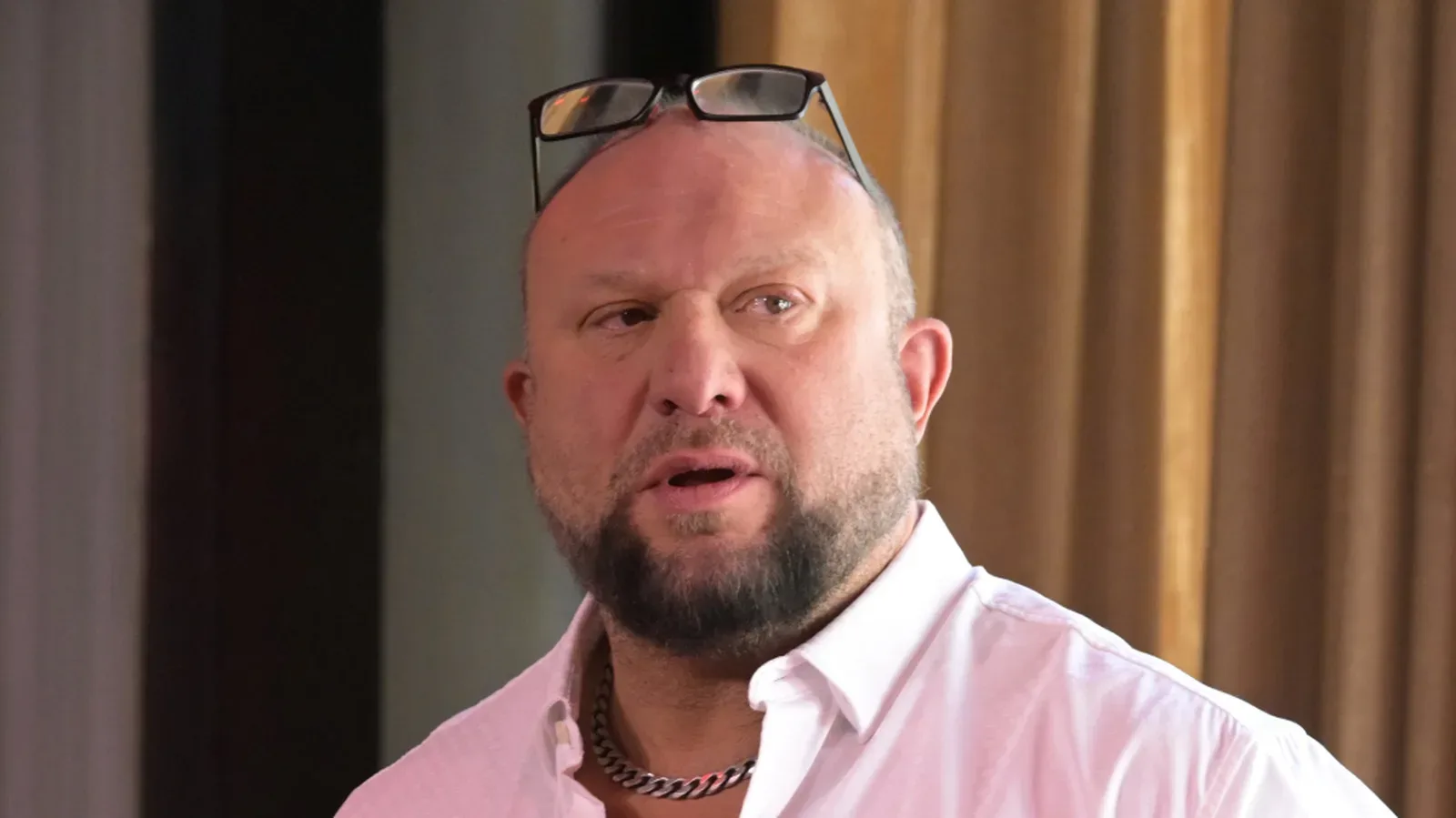
The segment was clearly designed to move the issue between Green and Morgan forward before Crown Jewel. But Bully Ray did not see the need for Green, as the reigning champion, to be the wrestler who absorbed the loss on television. During a discussion on Busted Open Radio, he repeatedly questioned the creative choice and argued that WWE undercut Green at a moment when it had an opportunity to reinforce her credibility.
Green was defeated by Perez in the middle of the show before Perez, Morgan, and Rodriguez continued the attack after the bell. The angle gave Morgan and her allies a numbers advantage and established additional tension going into Green’s upcoming title-related confrontation with Morgan. Yet the combination of the match result and the beatdown was what left Bully unconvinced.
“Can you help me make sense of it?” Bully Ray said on Busted Open Radio. “I’m legitimately asking you this question. This is not for radio entertainment. I don’t know why they brought Chelsea over last night. I don’t know why Chelsea had to lose in the middle to Roxanne last night.”
For more background on this topic, read WWE Files Trademark for ‘WWE: Deadman’s Tour’ in Video Game Category.
A Champion’s Loss Takes Center Stage
Champions losing non-title matches has long been a familiar tool in WWE storytelling. A defeat can give a challenger momentum, create doubt around a titleholder, or set up a rematch with higher stakes. It can also allow several stories to be advanced at once, particularly when multiple wrestlers are involved in a division-wide rivalry.
In this case, Green’s loss to Perez did more than simply add another wrinkle to the Crown Jewel build. It also positioned Perez as a wrestler capable of beating the Women’s Champion while Morgan and Rodriguez were attached to the aftermath. That can be viewed as valuable exposure for Perez and as a way to make Green’s opponents feel threatening.
However, Bully’s issue was centered on the balance of that presentation. In his view, the sequence ultimately placed too much of the burden on Green. She lost the match, then remained vulnerable during a three-on-one attack. Rather than making the champion look resilient in the face of adversity, Bully felt the segment risked making her look like she had been decisively overwhelmed.
Dave LaGreca offered arguments for why the booking could serve WWE’s larger direction, including the fact that the finish was not a completely clean, straightforward loss. Bully nevertheless maintained that the overall visual was difficult to justify, particularly for a champion WWE is preparing to feature against Morgan.
“For the most part, I got that there was a pretty definitive victory for Roxanne, and then the beat down afterwards,” Bully said. “I just didn’t know why they had to beat Chelsea Green last night.”
That distinction is important. Wrestling finishes are often designed with layers of interference, distraction, outside involvement, or post-match action precisely so a defeated wrestler can retain some protection. But Bully’s point was that viewers can still come away with a strong impression of who won and who was left standing. In his assessment, Perez received the meaningful victory and Green was then further diminished by the assault.
Bully Ray Sees a Familiar Pattern for Green
Bully also connected the Raw result to what he sees as a recurring challenge in Green’s WWE presentation. Green has consistently shown the ability to regain attention and rebuild momentum, whether she is working in a comedic setting, a character-driven storyline, or a more serious match environment. But Bully argued that moments of progress too often come with a corresponding setback.
“It just seems like every time there’s a step forward for Chelsea Green, there’s some kind of a step back,” Bully said. “And then Chelsea finds a way to step forward again.”
Green’s versatility is central to that discussion. She has been prominently associated with the entertainment side of WWE programming, where character work, reactions, and memorable segments can be as important as in-ring wins and losses. That approach can be an asset, as it gives a performer a broad range of ways to connect with the audience. At the same time, it can create a difficult line for creative to manage once that performer is carrying a championship and is expected to project the aura of a division leader.
Bully believed Monday’s match was an especially notable example because WWE gave Green an opportunity to emphasize the athletic, competitive portion of her game. Instead of leaning primarily on a lighter or more exaggerated presentation, Green was put into a conventional wrestling match with Perez. For Bully, that decision made the eventual result more frustrating, not less.
“They went out of their way last night to have Chelsea Green really wrestle a match, didn’t they, to show her wrestling ability,” Bully said on Busted Open Radio. “In Chelsea bringing her best wrestling game to the table last night, in a wrestling match, not climbing a ladder, in a wrestling match, she lost.”
The phrase “not climbing a ladder” referred to the Women’s Money in the Bank match that had taken place days earlier. Bully suggested that, if WWE’s objective was to strongly elevate Perez, the company could have used that setting to give her a major victory. In that scenario, Perez would receive a significant accomplishment without requiring the current Women’s Champion to take a televised defeat in a standard match.
The Roxanne Perez Question
There is another side to the booking decision. A win over a champion is among the clearest ways WWE can communicate that a wrestler matters. Perez defeating Green gives her a result that can be referenced well beyond one night of Raw, and it potentially expands the list of credible threats around the women’s title picture.
That philosophy is especially relevant when a promotion is trying to ensure that a division does not appear to revolve around only one championship program. A protected non-title win can help establish future contenders, create options for later television, and make a champion’s schedule feel less predictable. Perez’s victory may ultimately serve one or more of those purposes.
Still, Bully’s criticism is rooted in timing and hierarchy. Green is the titleholder, and her program with Morgan is heading toward Crown Jewel. If the immediate priority is to convince viewers that Green can withstand Morgan’s challenge, a loss followed by a beatdown may seem at odds with that goal. The champion can certainly enter a major match as an underdog or as someone seeking payback, but that framing has to be weighed against the value of presenting the titleholder as formidable.
That is why the Raw angle has invited debate even though it had a recognizable storyline function. WWE gave Perez a defining win, Morgan’s side gained control of the closing visual, Rodriguez added to the physical threat, and Green was supplied with a reason to seek revenge. The question raised by Bully is whether all of those gains required Green to be pinned first.
Crown Jewel Will Shape the Verdict
The larger answer may depend on what follows. If Green receives a strong response to the attack, regains momentum, and defeats Morgan or otherwise leaves Crown Jewel with her championship standing intact, the Raw setback could function as a temporary obstacle in a successful champion’s story. If it becomes another instance in which Green is presented as vulnerable immediately after gaining traction, Bully’s concerns will carry more weight.
For now, Green enters the Crown Jewel build with an obvious grievance. Morgan was part of the group that attacked her, and Rodriguez’s presence adds another complication around a confrontation that already has considerable stakes for the Women’s Champion. Perez, meanwhile, exits Raw with a victory over Green that can elevate her standing regardless of whether she is directly involved in the Crown Jewel match.
WWE’s women’s division often has to balance the need to protect a champion with the need to give other wrestlers meaningful wins. Monday’s Raw attempted to accomplish both a Perez boost and a Morgan-focused angle in one sequence. Bully Ray’s argument is that the execution came at too high a cost to Green’s champion presentation.
Whether WWE intended the segment to generate sympathy for Green, heat for Morgan’s group, or momentum for Perez, it has accomplished at least one thing: it has made Green’s handling a central point of discussion heading into Crown Jewel.
In pictures


Darryl Polo
Darryl Polo is a passionate wrestling fan covering WWE, AEW, TNA and beyond. He loves great rivalries, breakout stars and the moments that keep fans talking long after the bell. How we work.