
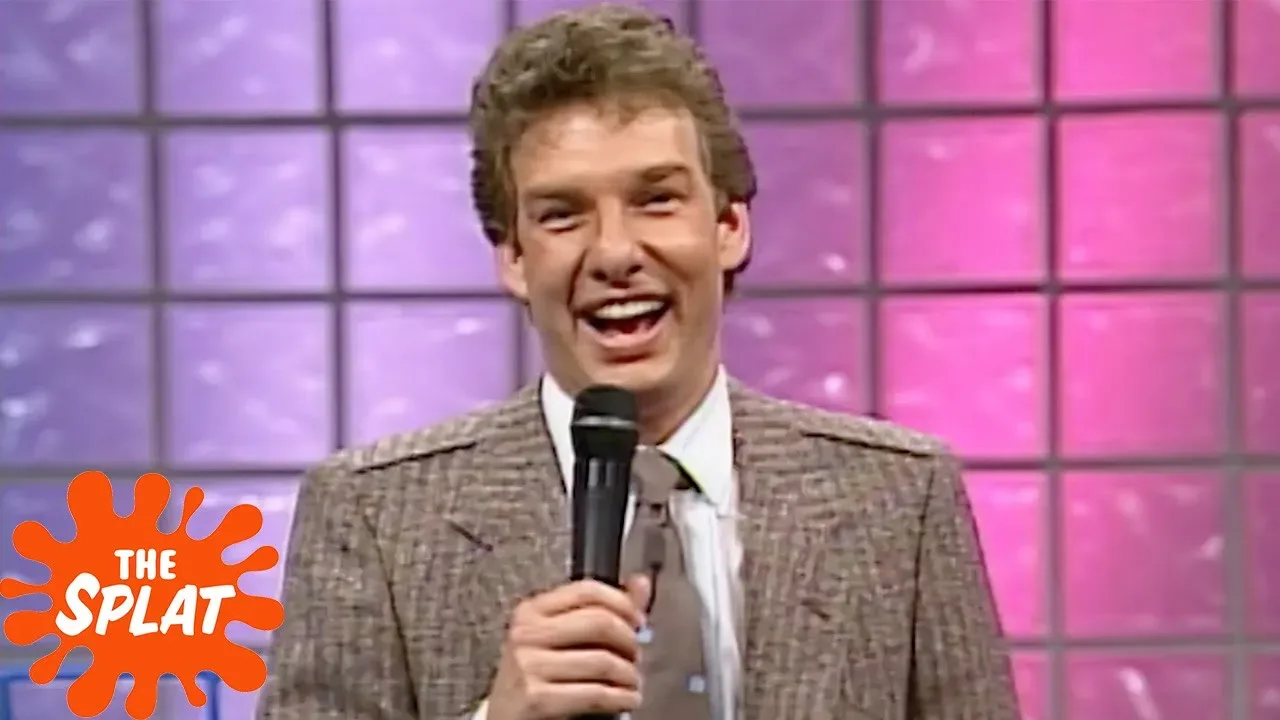
Marc Summers has revealed that WWE once sought to bring him in from Nickelodeon for an on-air announcing role, an opportunity he ultimately turned down because, as he recalled it, the company offered no money for the job.
The veteran television host discussed the long-ago approach while reflecting on his career during a live tour appearance. Summers was asked to name his favorite episode of Double Dare, and he immediately pointed to the wrestling-themed Super SlopAMania 1 installment featuring WWE personalities Gorilla Monsoon and Bobby “The Brain” Heenan.
Summers said professional wrestling was at an enormous level of popularity at the time, and that WWE’s interest in hiring him emerged in that environment. “WWE wanted to hire me from Nickelodeon and put me on as announcer on their show, but they offered me zero money, so I wasn’t going to do it,” Summers said.
View the referenced post on X
A crossover idea from wrestling’s late-1980s boom
The recollection offers a fascinating look at the overlap between wrestling and youth-oriented mainstream television during the late 1980s. Summers had become a familiar face to a generation of viewers through Nickelodeon, particularly as the host of Double Dare. WWE, meanwhile, was expanding far beyond the boundaries of traditional wrestling programming and was one of the most visible entertainment brands in the United States.
For more background on this topic, read WWE Reportedly Covered Hip Replacement Surgery for Psicosis.
An announcer position would have put Summers in a very different type of television role. His work on Double Dare depended on quick reactions, audience interaction, clear explanations of fast-moving games, and an ability to keep energetic performers and contestants moving through a tightly structured program. Those qualities can translate naturally to sports-entertainment broadcasting, where commentators and hosts must guide viewers through action, personality-driven segments, and unpredictable live situations.
Still, Summers made clear that the financial terms ended the conversation from his standpoint. He did not identify the specific WWE program involved, the exact timing of the offer, or which position he would have filled. His account was limited to the fact that WWE wanted to bring him over from Nickelodeon as an announcer and that he declined because there was no compensation attached to the proposal.
It is an especially notable anecdote because Summers already had a direct connection to the wrestling world through the Double Dare episode he remembers most fondly. Rather than simply being a celebrity host brought into a wrestling-adjacent setting, he had worked with two of the defining voices and personalities of their era: Monsoon and Heenan.
Why Super SlopAMania stands out to Summers
When prompted about his favorite Double Dare episode, Summers did not hesitate. “We did Super SlopAMania 1. Gorilla Monsoon vs. Bobby The Brain Heenan,” he said. “Wrestling could not have been bigger.”
The episode featuring Monsoon and Heenan aired in February 1989. The pair’s participation gave the show a recognizable wrestling presence at a point when both men were already strongly associated with WWE television. Monsoon was a trusted authority figure and broadcast voice, while Heenan was one of the industry’s most celebrated managers and antagonistic on-screen personalities. Their contrasting personas made them well suited to a game show built around competition, comedy, physical challenges, and, of course, slime.
For Summers, however, the memory is about more than the episode’s wrestling hook. He spoke warmly about both men as people and described their presence as a major reason the installment remains his personal favorite.
“Nicest guy in the world,” Summers said of Heenan. “Heenan was great.” He then praised Monsoon as “brilliant, fun, and funny,” while noting that Monsoon had two degrees. Summers added, “I don’t even have to think about it, that was my favorite episode.”
That enthusiasm is significant because a host of Summers’ experience has been involved in countless television segments, celebrity appearances, contests, and productions. His immediate answer underscores the impression that Monsoon and Heenan left during their Double Dare appearance. Their respective wrestling personas were memorable in their own right, but Summers’ comments center on their intelligence, warmth, humor, and ability to make the experience enjoyable behind the scenes.
Summers’ early connection with Bobby Heenan
Summers’ relationship with Heenan went back much further than the 1989 Double Dare episode. He recalled meeting Heenan when he was 16 years old while selling refreshments at Starlight Musicals in Indianapolis.
That early meeting remained vivid enough for Summers to bring it up decades later while discussing his favorite television memory. He described Heenan in unequivocally positive terms, calling him the “nicest guy in the world.” The comment adds a personal dimension to the well-known on-screen character Heenan played for wrestling audiences.
Heenan’s public wrestling identity was often built around sharp-tongued arrogance, manipulation, and his role as the spokesman or manager for rule-breaking stars. That was the point of “The Brain” character: he was designed to provoke wrestlers, fans, and broadcast partners. Summers’ recollection instead highlights the distinction people who worked with Heenan often recognized between the entertaining villain on television and the person away from the camera.
Monsoon, too, occupied a distinctive place in wrestling culture. Whether acting as a broadcaster or an on-screen authority figure, he brought a serious but accessible presence to WWE programming. Summers’ description of Monsoon as intelligent, fun, and funny fits the chemistry that made Monsoon and Heenan such memorable television counterparts. They could argue and trade barbs in a wrestling setting while retaining an obvious entertainment rhythm.
WWE’s interest in a recognizable television host
WWE’s approach to Summers, as he tells it, reflects the company’s willingness to pursue familiar faces from outside wrestling during a period of major mainstream exposure. A recognizable Nickelodeon host would have brought an immediate degree of name recognition to any WWE broadcast assignment. Summers was already experienced at speaking directly to a large television audience, controlling the pace of a show, and balancing comedy with a clear sense of presentation.
Nothing in Summers’ comments indicates how far the discussions progressed. He did not say that he attended a tryout, recorded material for WWE, negotiated a detailed contract, or came close to joining a specific announce team. The key point is simply that he was asked to come aboard as an announcer and chose not to accept an unpaid offer.
That decision also preserved the career path for which Summers became best known. His association with Nickelodeon and Double Dare remains central to his television legacy, while Super SlopAMania 1 became a memorable example of how wrestling personalities could thrive outside a conventional ring or arena setting.
In that sense, the episode serves as a snapshot of an era when wrestling’s biggest names were increasingly recognizable across popular culture. Monsoon and Heenan appearing on a children’s game show was not merely a novelty; it was a natural fit for performers whose personalities had already reached a vast audience. Summers’ own story adds another layer: WWE apparently saw enough potential in the connection to consider placing the game-show host behind a wrestling microphone.
A remembered moment rather than a missed career
Summers did not frame his decision as a regret. His telling of the story was matter-of-fact: WWE made the approach, the position came without pay, and he was not interested in taking it. The more affectionate part of his recollection concerned the people he encountered through wrestling, especially Heenan and Monsoon, and the episode they created together.
The February 1989 broadcast remains the centerpiece of that memory. Summers’ praise for both men makes clear why he ranks it above the many other episodes from his time as host. For wrestling fans, it also preserves a charming crossover chapter involving two celebrated WWE figures in an unexpected setting.
Decades later, Summers continues to revisit the moments that shaped his career, and the wrestling connection remains one of the clearest highlights. WWE may not have landed him as an announcer, but its stars made a lasting impression on one of television’s most recognizable hosts.

Darryl Polo
Darryl Polo is a passionate wrestling fan covering WWE, AEW, TNA and beyond. He loves great rivalries, breakout stars and the moments that keep fans talking long after the bell. How we work.