
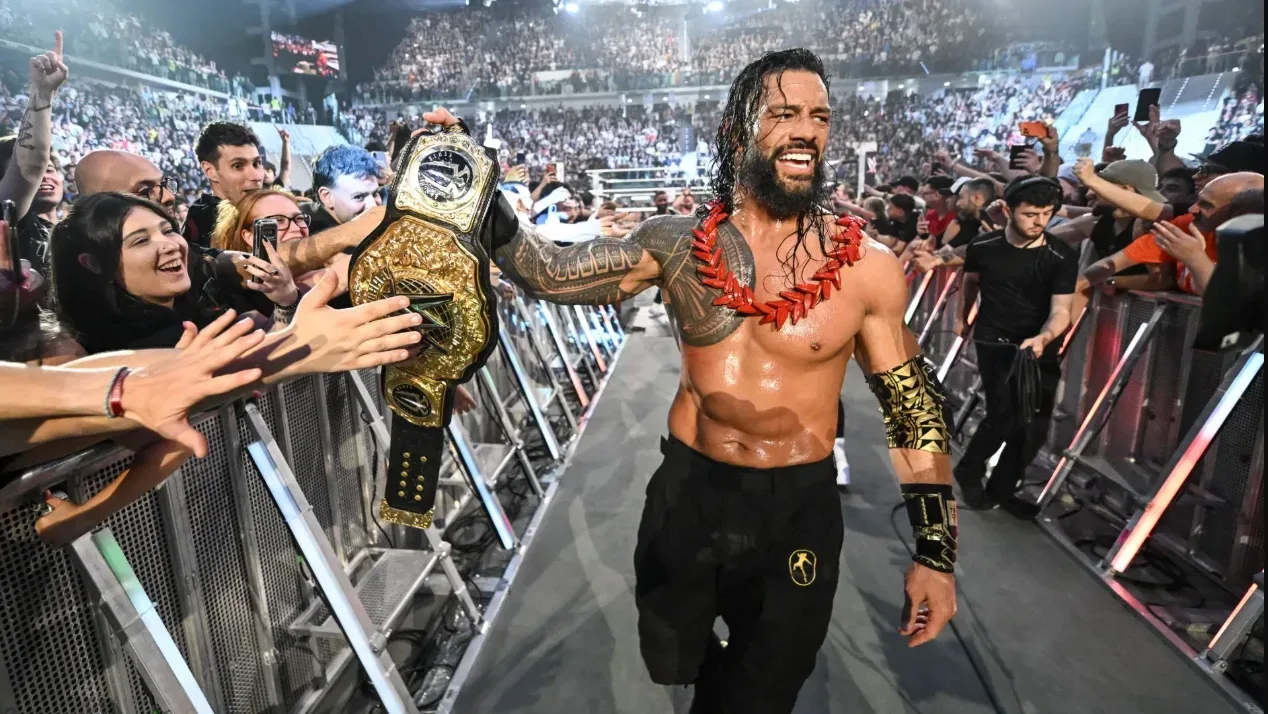
Roman Reigns believes his best physical years may be happening now.
At 41 years old, the current WWE World Heavyweight Champion has said that he feels he is in the physical prime of his life. Reigns addressed the subject during a recent interview with Men’s Health, where he was asked how he views his body in his 40s and whether he misses the way his body responded in his 30s.
Rather than looking back at an earlier stage of his career as his athletic peak, Reigns expressed confidence in where he is today. His answer also offered a candid perspective on the persistent self-criticism that can accompany training, appearance and the effort to stay in elite condition.
“I think I’m in my prime physically,” Reigns said. “I look at my stomach or whatever it may be, that’s a part of that body dysmorphia we’re all struggling with. And it’s one of those deals that I think if you just keep working on it…it’s not done until it’s done.”
For more background on this topic, read Dave Meltzer Believes Vince McMahon Remains Unhappy Away From WWE.
It is a notable assessment from one of WWE’s most recognizable stars, particularly given the physical demands attached to being a top-level champion. Reigns remains in remarkable condition at a point when many wrestlers have already had to substantially adjust their schedules, training methods or in-ring styles. He has also had relatively few injuries in recent years, helping him maintain the powerful presentation that has long been central to his status in WWE.
Reigns’ comments did not frame fitness as a matter of reaching one flawless, permanent destination. Instead, he described it as continued work, including on days when he may not feel entirely satisfied with what he sees. That mindset is especially relevant in an industry where performers are routinely evaluated not just by their matches and promos, but by their physical appearance on television.
Reigns emphasizes patience over perfection
The champion was also asked what he would say to himself on days when he is less confident about his body. His response centered on endurance and maintaining perspective rather than allowing one perceived setback to dictate the larger process.
“It’s a marathon. It’s not over,” Reigns said. “Even if your goal is tomorrow, just extend it. Just keep going. If my look isn’t perfect on Sunday, then I should probably just keep trying to make it a little better. Keep working at it.”
The message is straightforward, but it carries particular weight coming from a wrestler whose look has been a defining part of his presentation. Reigns has spent years positioned as one of WWE’s foremost attractions, and his imposing build, conditioning and presence have helped make him a natural fit for that role. At the same time, his remarks recognize that even someone at that level can deal with uncertainty and an urge to scrutinize perceived imperfections.
By speaking openly about body dysmorphia, Reigns placed the discussion beyond the usual athlete-focused language of lifting heavier, getting leaner or preparing for a specific event. He acknowledged a feeling that can be familiar to many people, regardless of their profession or fitness level: the tendency to focus on what is not yet where they want it to be, even while making meaningful progress.
For Reigns, the answer appears to be sustained effort. A goal on a particular day may create motivation, but it does not represent the end of the process. If the result does not meet his own expectations, he believes the appropriate response is to continue rather than abandon the work.
A veteran presence at the top of WWE
At 41, Reigns is among the older members of WWE’s active roster, yet he continues to occupy one of the company’s most prominent positions as WWE World Heavyweight Champion. The demands of that spot extend beyond bell-to-bell competition. A world champion is expected to carry a major share of the company’s public image, promotional responsibilities and on-screen stakes, all while maintaining the physical credibility needed to make championship matches feel important.
Reigns’ current condition has allowed him to continue meeting that standard. The conversation about being in his prime is not merely about aesthetics; it reflects his belief that his body is capable of performing at the level required by his role. In professional wrestling, where the line between visual presentation and athletic performance is especially close, both elements contribute to how a champion is perceived.
His perspective also challenges a common assumption that an athlete’s best physical period must be tied to youth. Reigns did not suggest that maintaining elite condition becomes easier with age. His emphasis on repeatedly “keep working” pointed in the opposite direction. The work remains ongoing, and satisfaction is not necessarily automatic. Still, he sees the results of that commitment in a positive light.
That distinction matters. Reigns is not presenting his current shape as something achieved without effort or as a standard that should create unrealistic expectations. His comments describe a routine of persistence, self-evaluation and the willingness to continue improving even after a target date has passed.
Fitness and image remain part of the conversation
The physical expectations around professional wrestlers have changed across generations, but appearance remains a major factor in the industry. Wrestlers are performers, athletes and television personalities at once. They work in a medium built around larger-than-life presentation, which can magnify attention on every aspect of someone’s body.
Reigns’ willingness to discuss the less confident side of that experience adds another dimension to his public comments. Even a world champion with an established reputation for elite conditioning can look in the mirror and see room for improvement. His advice to himself is not to chase a perfect moment at all costs, but to make the goal larger than a single deadline.
That approach can apply to more than a photoshoot, a television appearance or a championship defense. It is a philosophy built around continuing forward. Reigns’ use of the word “marathon” suggests that the goal is consistency over time, with progress measured through commitment rather than one isolated result.
There is also an important contrast between the confidence in his opening statement and the vulnerability in the rest of his answer. Reigns says he feels he is in his physical prime, but he does not claim to be immune from the doubts that affect body image. Both ideas can coexist: confidence in the larger direction and occasional dissatisfaction with details along the way.
Reigns also addressed Hollywood physiques
Elsewhere in the same interview, Reigns discussed the physical changes seen in The Rock and John Cena after their respective moves into Hollywood. Both men became major crossover figures beyond WWE, and their transformations have been a frequent subject of discussion among wrestling fans and the broader entertainment audience.
That part of the conversation further places Reigns’ own fitness outlook within a wider discussion of wrestling stars whose careers extend into other forms of entertainment. A wrestler’s body can be central to their identity on television, but Reigns’ remarks make clear that maintaining that image is not a simple matter of reaching a final benchmark.
For now, Reigns sees himself as being in a strong place physically. As WWE World Heavyweight Champion, that belief aligns with the position he currently holds: a veteran at the center of the company, continuing to train and refusing to treat any one date or standard as the final word on his progress.
His message is ultimately one of patience. Whether the goal is tomorrow, Sunday or somewhere further down the road, Reigns believes the work continues. In his view, that is not a sign that the finish line keeps moving. It is the point of the process itself.
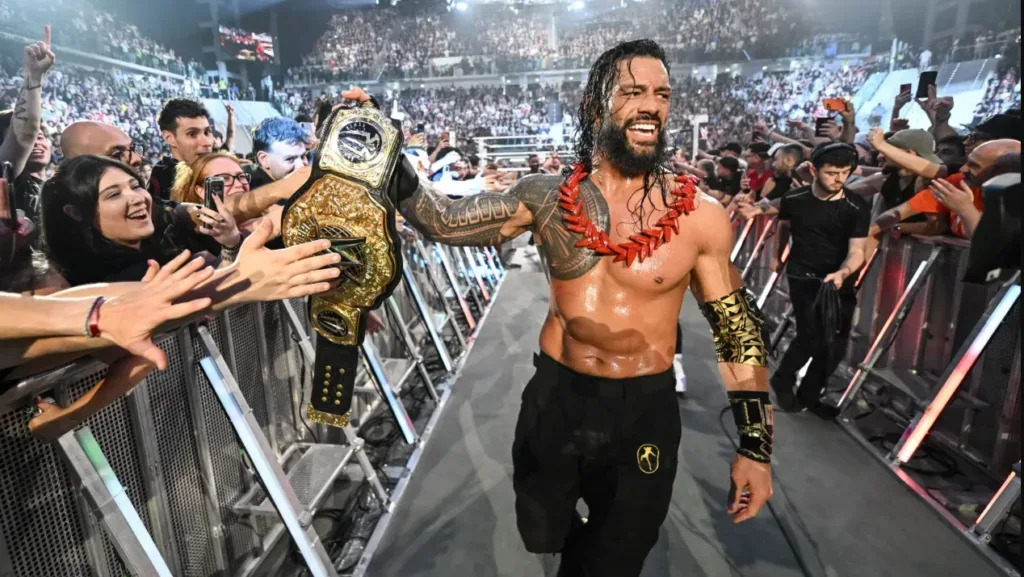
In pictures

Darryl Polo
Darryl Polo is a passionate wrestling fan covering WWE, AEW, TNA and beyond. He loves great rivalries, breakout stars and the moments that keep fans talking long after the bell. How we work.