
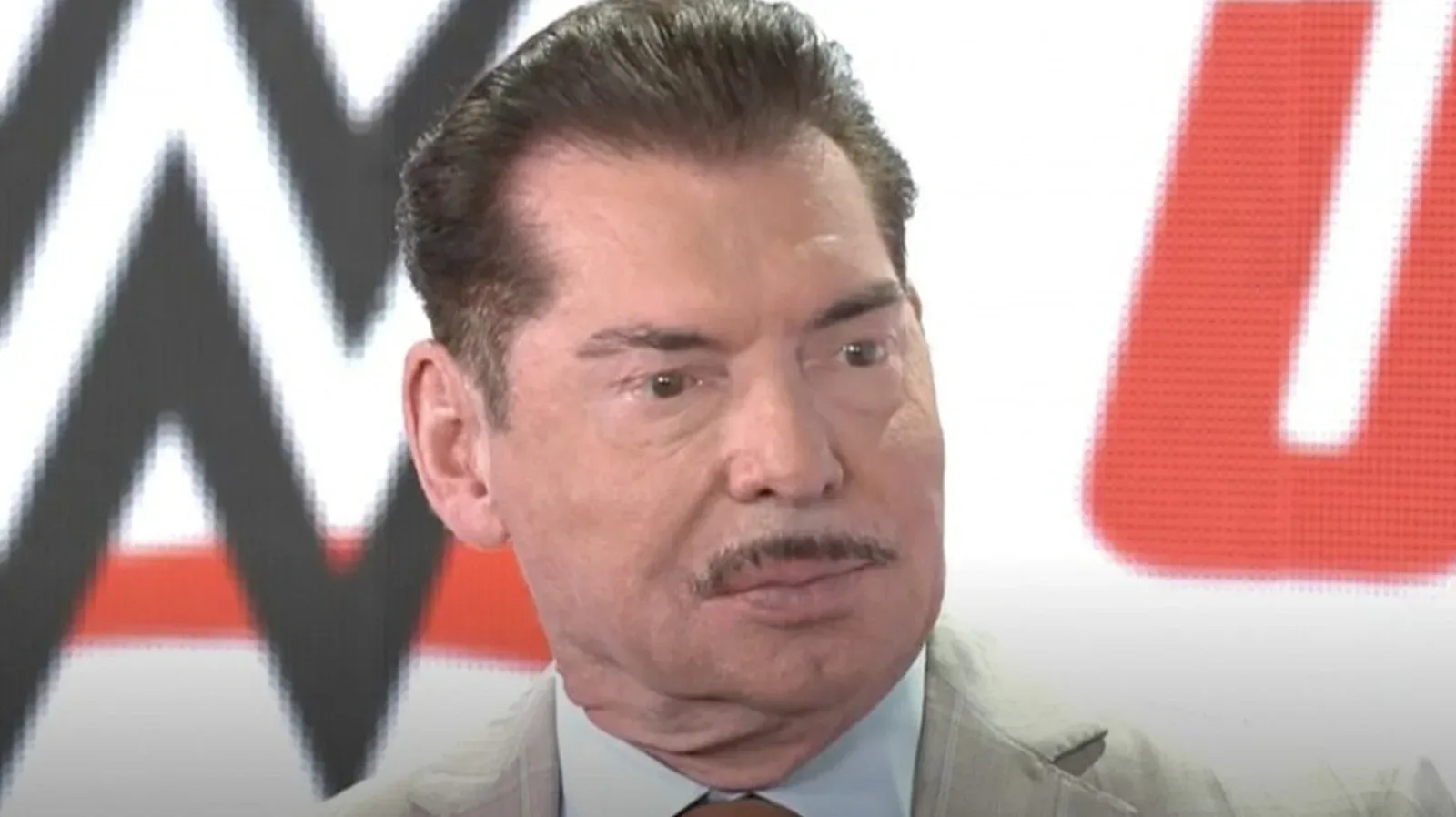
Vince McMahon has remained outside WWE since resigning from both WWE and TKO in January 2024, and Dave Meltzer believes that reality remains profoundly difficult for the former chairman.
Speaking on Wrestling Observer Radio, Meltzer addressed the contrast between McMahon’s financial position following WWE’s sale and his absence from the company that defined nearly all of his professional life. Meltzer’s view was that money has not replaced the authority, routine, and personal identity McMahon had tied to WWE for decades.
“Vince's life was WWE, his whole life, and it was taken away from him. And he absolutely is not happy about it, even though he is probably more wealthy,” Meltzer said. “He wanted to be in charge of his company, you know, forever.”
McMahon’s current distance from WWE is striking given the scale of his historical control. For generations of fans, performers, employees, and business partners, WWE and McMahon were inseparable. He transformed his father’s regional promotion into a national enterprise, then into a global entertainment brand, while maintaining a hands-on role that extended far beyond the traditional responsibilities of a corporate chairman.
For more background on this topic, read Roman Reigns Explains How Hollywood Has Changed John Cena And The Rock’s Training.
Even after WWE became a publicly traded company, McMahon’s voting power and executive influence allowed him to remain the central decision-maker. His involvement was associated with every major part of the operation, from television creative and talent presentation to live events, media negotiations, and larger strategic direction. The prospect of McMahon being permanently disconnected from WWE would once have seemed almost unimaginable.
McMahon’s WWE exits and TKO’s formation
McMahon first stepped away from his leadership positions in 2022 amid reporting concerning alleged hush-money payments. He retired from WWE that July, with Stephanie McMahon taking over as chairwoman and co-CEO alongside Nick Khan. That departure proved temporary. McMahon returned in January 2023, citing the need to participate in strategic alternatives and to help guide the company through a potential sale process.
That return ultimately led to one of the biggest business moves in wrestling history. WWE was combined with UFC under the TKO Group Holdings banner, creating a new publicly traded company under Endeavor’s corporate structure. Ari Emanuel became TKO’s CEO, while McMahon initially held the role of executive chairman.
The transaction dramatically increased McMahon’s personal wealth, but it also changed the structure around WWE. For much of his career, McMahon had operated as the unquestioned power at the top of the company. The TKO arrangement placed WWE within a broader organization alongside UFC and under a leadership group with its own corporate priorities, board structure, and executive authority.
McMahon resigned from TKO and WWE in January 2024 after a lawsuit accused him of sexual assault, emotional abuse, and sex trafficking. McMahon has denied the allegations. The civil case was officially closed in July 2026, but McMahon has not returned to WWE in any official capacity.
That lack of a comeback remains notable because McMahon had previously demonstrated that leaving WWE did not necessarily mean he was finished with the business. His 2023 return came only months after his 2022 retirement. However, the environment surrounding WWE is now fundamentally different from the one McMahon left behind.
A company operating without Vince McMahon
WWE has continued to move forward under TKO, with Paul “Triple H” Levesque overseeing creative as Chief Content Officer and Nick Khan remaining a key corporate leader. The company’s creative process, talent relations approach, media strategy, and international ambitions have all evolved during the post-McMahon period.
For an executive whose reputation was built on control, that evolution may be especially significant. WWE is no longer simply a company McMahon owns and commands. It is part of TKO, a larger combat sports and entertainment organization whose leadership structure does not revolve around him.
Meltzer’s comments do not suggest that McMahon lacks financial security. On the contrary, the WWE sale and formation of TKO left him in a far wealthier position on paper. The distinction, in Meltzer’s assessment, is that financial gain does not carry the same meaning as being able to run WWE. McMahon’s career was not merely an investment in a successful company; it was a lifelong pursuit of building, controlling, and expanding it.
That distinction is central to understanding why his absence remains a subject of discussion. McMahon had been involved in WWE in one form or another for the overwhelming majority of his adult life. He purchased the company from his father in 1982 and spent the following decades reshaping the professional wrestling industry. The national expansion, WrestleMania, the pay-per-view boom, the Monday Night War, the launch of the WWE Network, and WWE’s later media-rights growth all unfolded with McMahon at the center of the organization.
There were periods when he appeared less frequently on television or delegated more responsibilities internally, but he remained synonymous with ultimate authority. Being away from that position is a major shift for someone whose identity was long connected to WWE’s fortunes.
Ari Emanuel reflects on McMahon’s return
Recent comments from Ari Emanuel have also shed light on the conversations that preceded WWE’s sale. In his book, Emanuel revisited his interactions with McMahon following McMahon’s first exit from WWE in 2022.
Emanuel wrote that McMahon told him the allegations against him were false, even as McMahon stepped down and Stephanie McMahon assumed control of the company. McMahon would later return to WWE’s board and push for the exploration of a sale or other major transaction.
Emanuel also stated that he was the person who proposed the concept of merging WWE and UFC. The eventual deal created TKO and delivered a landmark outcome for WWE shareholders, but it also altered McMahon’s place in the business. Rather than being the controlling chairman of WWE, McMahon became one executive figure in a newly assembled corporate entity.
That broader context gives added weight to Meltzer’s point. The merger created enormous value, yet it also put McMahon in a position unlike any he had occupied during his decades atop WWE. His personal wealth could rise while his direct power over the company diminished.
McMahon has not publicly offered a detailed account of his departure, the events surrounding his resignation, or his feelings about WWE’s direction without him. As a result, much of the public discussion has centered on the facts of his separation from TKO and on observations from people familiar with wrestling’s business landscape.
Could McMahon eventually tell his story?
One possibility is that McMahon may eventually address his history in a more comprehensive way. John “Bradshaw” Layfield has said he believes the former WWE chairman will write a book at some point. There has been no public confirmation from McMahon that such a project is underway.
A McMahon memoir, if it ever materializes, would inevitably draw enormous interest. Few individuals have had a larger influence on modern professional wrestling, and McMahon’s perspective on WWE’s expansion, his departure from the company, and the creation of TKO would be closely scrutinized. Still, until McMahon himself announces something, the possibility remains speculation.
For now, WWE continues in a new era, one in which McMahon’s influence is part of the company’s history but not part of its daily leadership. Meltzer’s assessment is that this is not a reality McMahon has embraced. Whatever his financial standing may be, the man who spent decades insisting on control of WWE is no longer in charge of it.
That may be the defining element of McMahon’s present situation. WWE was not simply the source of his fortune. It was the institution around which he built his career, public image, and life. As Meltzer put it, McMahon wanted to lead the company forever, and WWE’s continued operation without him represents a dramatic conclusion to that ambition.
In pictures

Darryl Polo
Darryl Polo is a passionate wrestling fan covering WWE, AEW, TNA and beyond. He loves great rivalries, breakout stars and the moments that keep fans talking long after the bell. How we work.