
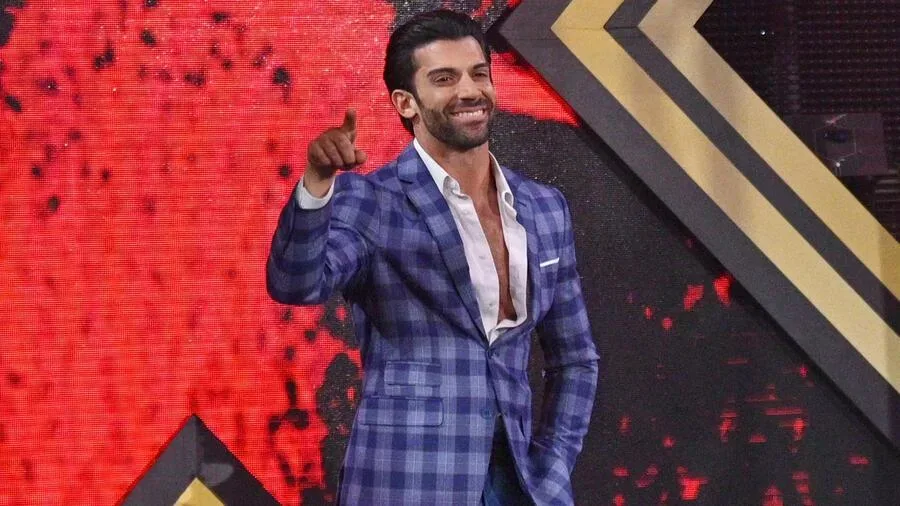
Robert Stone’s path to becoming a full-time professional wrestler was anything but conventional. Long before his work as a WWE on-screen personality, Stone was building his name in TNA Wrestling as Robbie E while also holding down a job as a high school physical education and health teacher.
Stone, who wrestled for TNA under the Robbie E name, enjoyed a notable run with the company that included an X-Division Championship reign. But the road to that national exposure did not immediately mean leaving his day job behind. As he recalled, he had completed college, wrestled independently throughout his studies, earned his degree, and then began teaching in a town close to where he grew up.
His second year in education brought the major professional turning point. Stone received a TNA tryout and was subsequently offered a contract. For a wrestler who had spent nearly a decade pursuing the industry by that point, the opportunity was impossible to pass up, even though the financial reality was not as strong as the salary he was earning in the school system.
“I finished school. I independent wrestled all throughout college. I got my degree. I got hired as a school teacher in a town over from where I grew up, high school phys ed and health, and then going into my second year of teaching, I had a tryout with TNA Wrestling and I got offered a contract,” Stone said. “So, needless to say, at the time, the money was way less than what I was making teaching. But, you know, I had worked almost 10 years at this point in wrestling. I wasn’t going to give up the opportunity.”
For more background on this topic, read Matt Hardy Reflects on Booking TNA Impact and Eyes Possible Future Creative Role.
The decision to chase a TNA contract created an understandable problem. National television wrestling schedules do not naturally fit around a teacher’s weekday responsibilities, and Stone initially believed resigning from his position was the only practical answer. Instead, he found a remarkable degree of support from his school.
Rather than forcing him to choose between the classroom and the ring immediately, the school encouraged Stone to stay on staff. That support allowed him to maintain his teaching income while beginning his first contracted run in wrestling. It was an arrangement that provided important financial stability at a point when many developing wrestlers would be relying solely on the uncertain money available through early national contracts.
“I attempted to resign from school teaching that second year. But they encouraged me to stay, and they said, ‘whenever you can’t be here because of wrestling, that’s okay,’” Stone recalled. “I was like, ‘you’re sure? Like, we have live TV every week. I’m going to miss a lot of days.’ They encouraged me to stay, which was great because I was getting a teacher’s salary at the same time as getting money for my first wrestling contract. So it was a great way to start being a full-time wrestler.”
A Thursday Television Schedule and Friday Classes
For Stone, the arrangement meant a demanding weekly routine. TNA’s live Thursday television schedule could require him to appear on national television at night before flying back the following morning. He would then make arrangements to have his first-period class covered and report to school soon after landing.
The contrast was striking. On Thursday, Stone could be appearing as Robbie E on Spike TV in front of a wrestling audience. By Friday morning, he was back in a school hallway and preparing for a normal day with students. Stone said there were occasions when he arrived still visibly carrying the effects of the previous evening’s wrestling presentation, including hair gel from television.
“But I would be on live TV on a Thursday night on TNA, fly home Friday morning, get someone to cover my first period and come into school the next day still with hair gel in my hair,” Stone said.
That schedule speaks to the level of commitment required from wrestlers trying to turn opportunity into a career. Even with a national contract, Stone was not simply stepping away from all other responsibilities. He was traveling, performing, meeting the demands of live television, returning home, and then immediately resuming his work as an educator.
It also highlights the economic uncertainty that can accompany a wrestler’s first significant contract. Stone made clear that the initial TNA money was lower than his teaching salary. Keeping both roles was not merely a fun story about a teacher moonlighting as a wrestler; it was a meaningful bridge that enabled him to pursue wrestling without abandoning the financial foundation he had established through his education.
Students Followed Robbie E’s TNA Run
The students were not detached observers of Stone’s second profession. They watched his Thursday appearances and then saw the same person in the classroom the next day. Stone said that unique connection made the experience memorable for the students as well as for him.
His championship success gave the school an especially tangible link to what he was accomplishing away from campus. Robbie E captured the X-Division Championship during his TNA tenure, and Stone brought the title belt into school. In doing so, he gave students the chance to see up close a symbol of the televised wrestling program they had watched just hours earlier.
“I won the X Division championship and I brought it in. Like all the students would watch me on Thursday night and then see me in school on Friday. They were fist pumping in the hallways,” Stone said. “It was a wild time because you know, I’m on Spike TV, live TV every Thursday, and then I’m in school during the week.”
For students, the appeal was easy to understand. Their teacher was not discussing wrestling as a distant hobby or a story from years earlier. He was actively participating on a nationally televised show. The immediate turnaround between television and school made it feel real in a way that few students get to experience with an educator.
Stone described that reaction as something special, inviting people to consider the perspective of students watching their teacher perform on television one night and then seeing him at school the next morning. The mix of teaching and wrestling created an unusual form of visibility, with the professional worlds colliding in the hallways.
Years after that period, Stone said former students or people familiar with the experience still occasionally reach out to him through Instagram or X. Those messages offer a reminder that his work as Robbie E had a lasting impression beyond TNA’s audience and beyond the championship accomplishments attached to his in-ring résumé.
Robbie E’s Place in Stone’s Career
Stone’s TNA chapter remains a central part of his wrestling history. The Robbie E character gave him a national platform and produced championship success, including the X-Division title victory he remembers sharing with his students. Just as importantly, it represented the moment when a wrestler who had spent years on the independent circuit was able to begin transitioning toward a full-time career.
His story is also a reminder that the transition to full-time wrestling is not always a clean break. For some performers, a national contract brings an immediate financial leap. For others, the earliest stages involve careful balancing, outside employment, supportive workplaces, and the willingness to endure exhausting travel schedules.
In Stone’s case, the school’s flexibility gave him a rare safety net. He could accept the TNA deal without discarding a stable career in education, while TNA gave him the platform he had worked toward for close to a decade. The result was an unforgettable period in which he was a television wrestler on Thursday nights and a high school teacher on Friday mornings.
That dual identity may have made for long weeks, early flights, and the occasional day at school with television-ready hair still in place. But it also made Stone’s rise uniquely personal. He was able to chase a dream in front of a national audience while showing students in real time what it looked like to pursue a demanding goal without giving up on the responsibilities already in front of him.

Darryl Polo
Darryl Polo is a passionate wrestling fan covering WWE, AEW, TNA and beyond. He loves great rivalries, breakout stars and the moments that keep fans talking long after the bell. How we work.