
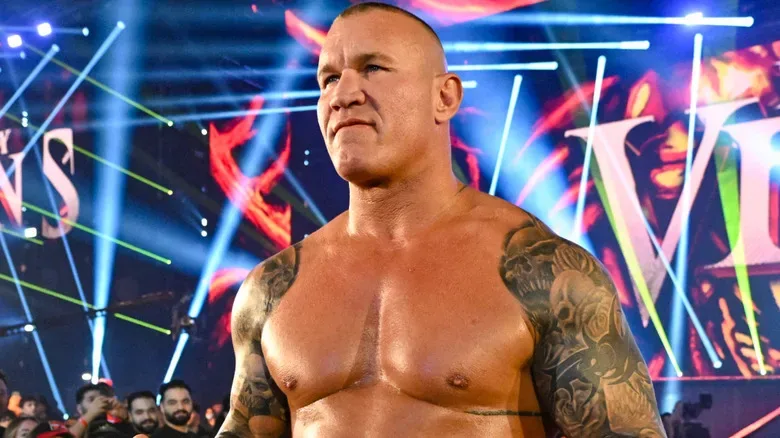
Rob Conway has addressed a memorable story from Randy Orton’s early days in Ohio Valley Wrestling, disputing Orton’s recollection that Conway once walked past him without shaking his hand after the future WWE star was introduced to the locker room.
The anecdote reaches back to the period when OVW served as WWE’s developmental territory and a proving ground for a generation of wrestlers who would go on to become major names on the main roster. Orton arrived with an instantly recognizable wrestling surname, as the son of WWE Hall of Famer “Cowboy” Bob Orton, but he was still at the very beginning of his own journey in the industry.
Conway, who would later become a WWE World Tag Team Champion, remembered knowing who Orton’s father was when he first met Randy. However, he said the version of events attributed to Orton does not sound like something Conway believes he would have done.
“Now the first time I met Randy, I remember I knew his dad was, and stuff like that. We were at a gym, and me and him are still good friends, but he claims that the first time I met him, that I walked in the gym, they said, ‘This is Randy Orton; he just got signed.’ He stuck his hand out, and I looked him up and down, and walked right by him. That would have never happened. That sounds like something he would do, but I don’t know how [that came up].”
For more background on this topic, read Rob Conway Calls La Résistance Theme a ‘Crowd Killer’ Despite Its Lasting WWE Association.
Conway did not claim to have a clear, moment-by-moment recollection of the first introduction. Instead, he directly rejected the idea that he would have deliberately snubbed a newcomer who offered a handshake. In wrestling, particularly in the developmental system and locker-room environments of that era, introductions and the traditional handshake have long carried significance as basic signs of professional respect.
That context makes the disagreement less about a major falling-out and more about two veterans looking back on an old story from different perspectives. Conway made clear that he and Orton remain friends, which is an important part of the exchange. There was no suggestion from Conway that the alleged interaction created lasting animosity between them, nor did he present it as a defining point in either man’s career.
Conway Recalls Orton’s Natural Ability
While Conway questioned the handshake account, he was complimentary when discussing Orton’s ability in the ring. He described Orton as a natural, a description that fits the rapid ascent Orton would make from WWE developmental to becoming one of the company’s most decorated stars.
At the same time, Conway recalled one area in which the young Orton initially needed to improve: conditioning. Conway said that when the two first wrestled, Orton’s cardio was not where it needed to be. His recollection was that Orton became exhausted enough during their match that Conway had to compensate to keep the action moving.
“No, but I can’t imagine me in this lifetime not reaching out and shaking somebody’s hand, but then when I first wrestled him, he’s a natural, but he was not in the best shape. When I wrestled him, he was so tired that I was basically having to pick him up to clothesline myself. The office kind of got on him, and I think the next day, I saw him on the stair climber at the gym, and then within a month he was in fantastic cardio shape.”
The recollection offers a snapshot of the learning curve facing a wrestler entering the system with enormous potential but limited experience at that level. Being a second-generation talent can bring attention and expectations, but it does not eliminate the physical demands of working matches on a regular basis. Conway’s account suggests that Orton responded quickly once his conditioning became an issue that required attention.
Conway specifically remembered seeing Orton on a stair climber the next day after the office addressed the matter. Whether every detail of the early meeting is remembered identically by both men, Conway’s broader point was that Orton made the necessary adjustment with speed. Within a month, Conway said, Orton was in “fantastic cardio shape.”
A Developmental Story With A Familiar WWE Outcome
Orton’s time in OVW remains an important chapter in the story of his career. It was there that he developed before reaching WWE television, ultimately becoming a foundational performer for the company across multiple eras. He has held world championships, headlined major events, and built a career defined by longevity at the top level.
Conway’s comments underline a familiar reality of developmental wrestling: early impressions do not always tell the entire story. A wrestler can arrive with obvious talent while still needing to develop conditioning, consistency, ring experience, or the habits required to thrive under WWE’s expectations. In Conway’s telling, Orton had the natural gifts from the outset, and he also had the ability to take criticism and turn it into visible progress.
The handshake discrepancy, meanwhile, remains a matter of conflicting recollections rather than an established fact. Orton has told the story as an occasion when Conway allegedly looked him over and walked by without acknowledging his offered hand. Conway says that scenario simply does not align with how he sees his own conduct, even though he cannot fully recall the exchange itself.
That distinction is notable. Conway did not insist on a competing detailed version of the meeting. He instead said he could not imagine behaving in the way Orton described. His response leaves room for the reality that memories of brief interactions from decades earlier can differ, while firmly pushing back on the central claim that he intentionally ignored Orton.
Friends Looking Back On OVW
There is also a playful edge to Conway’s response. When he said the alleged behavior “sounds like something he would do,” Conway framed the disagreement in a way that suggested familiarity with Orton’s personality rather than bitterness. That tone aligns with his statement that the two are still good friends.
For fans, stories from OVW often carry special interest because so many future WWE headliners passed through the territory. Those accounts can reveal the contrast between a wrestler’s first months in development and the polished version eventually seen on national television. They can also show how the culture of a developmental locker room shaped performers before their careers reached a wider audience.
Conway’s memory of helping Orton through a physically difficult match is particularly illustrative of that process. The former WWE World Tag Team Champion did not question Orton’s talent. Quite the opposite: he called him a natural. The criticism was focused on a fixable issue, and Conway’s account credits Orton with correcting it quickly.
That response would become a recurring hallmark of Orton’s longevity. The WWE environment has changed dramatically since the OVW era, but conditioning, adaptability, and the ability to perform at a high level over time remain central to success. Conway’s story presents an early example of Orton recognizing a weakness and addressing it.
Orton Remains In The WWE Spotlight
The discussion of Orton’s developmental years arrives while he remains a prominent name in WWE programming. Orton and Cody Rhodes headlined WWE Sunday Night’s Main Event on September 6. The pairing of two wrestlers with deep ties to WWE history also serves as a reminder of how long Orton has remained relevant at the highest level of the industry.
For Conway, the old OVW story appears to be less about revisiting a grievance than setting the record straight on a small but colorful piece of wrestling lore. He does not remember the introduction exactly as Orton has described it, and he rejects the notion that he would ignore someone’s extended hand. Yet he also offered an appreciative account of the young Orton’s ability and work ethic once the need for improved conditioning was made clear.
In the end, Conway’s version adds another perspective to an anecdote that has followed Orton from his earliest WWE developmental days. The two men may not share the same memory of the handshake, but Conway’s comments leave little doubt about his assessment of Orton as a performer: a raw but gifted young wrestler who improved quickly and went on to fulfill the enormous potential that was apparent from the start.
Darryl Polo
Darryl Polo is a passionate wrestling fan covering WWE, AEW, TNA and beyond. He loves great rivalries, breakout stars and the moments that keep fans talking long after the bell. How we work.