
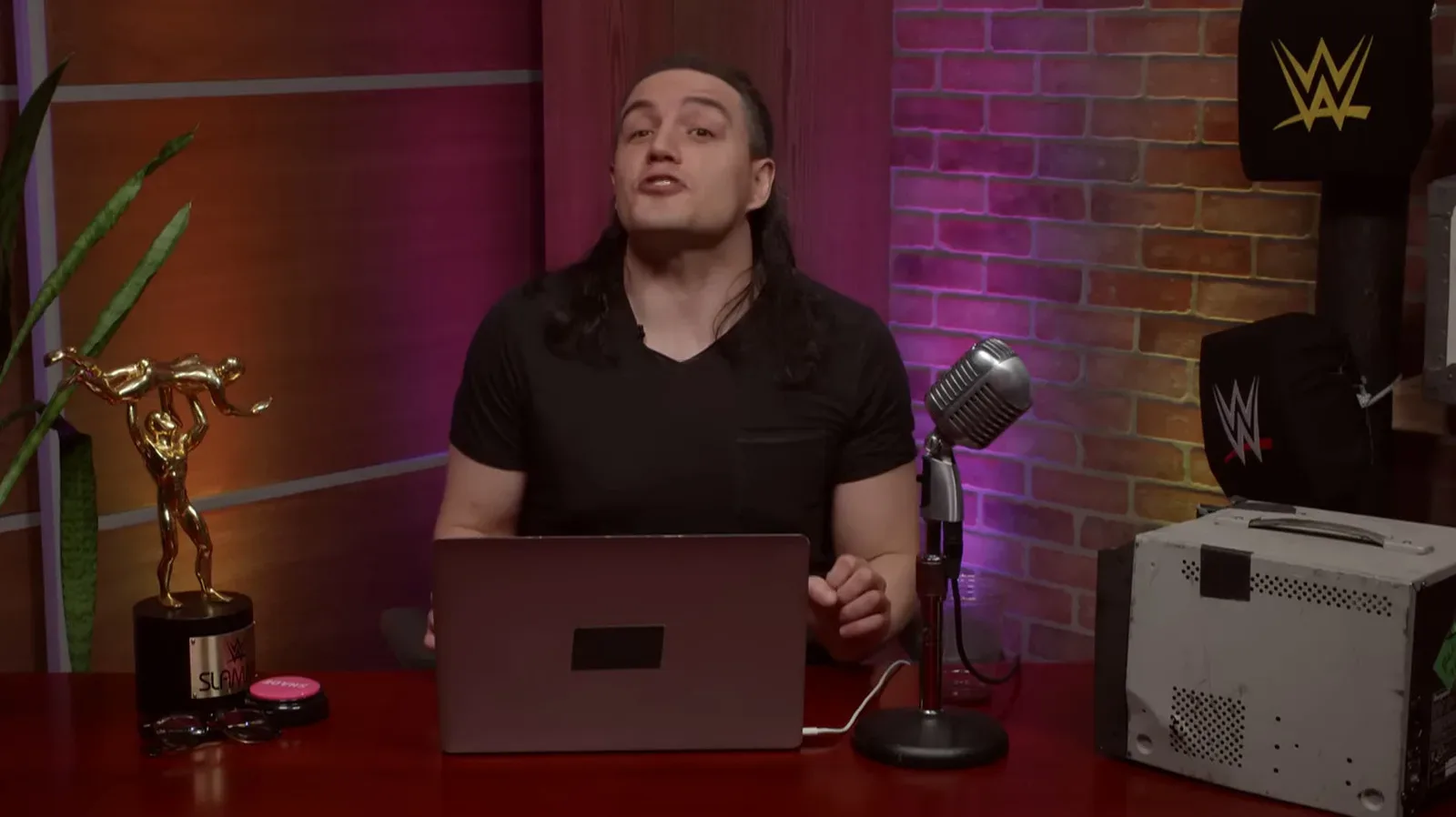
AEW personality RJ City has reflected on the unusual route that briefly took him to WWE during the pandemic, describing a period that began with a celebrity Zoom call involving David Arquette and ended after management changes left him without a place in the company.
City, whose professional wrestling career began in the ring before he increasingly found his voice as a comedic host and interviewer, discussed his WWE experience during an appearance on The Stunner. His account painted the period as one shaped as much by the circumstances of the COVID-19 era as by any traditional hiring process.
For City, the opportunity arrived at a moment when live wrestling and many of the usual avenues for performers had been disrupted. WWE, like much of the entertainment industry, was producing a large amount of material built for digital platforms and remote appearances. That environment created a rare opening for someone with City’s particular mix of wrestling familiarity, improvisational comedy, and comfort in front of a camera.
“I was doing dick in wrestling, as you could imagine, because there was no room for me,” City said. “And during the pandemic, I worked for WWE for a year and a half. David Arquette smuggled me on a celebrity Zoom call. And then they’re like, ‘Well, let’s hire this guy. We need people who can talk at their computers.’ It was only online. The world had to end for me to get some sort of employment.”
For more background on this topic, read Damian Priest Embraces Voice Acting as WWE Star Eyes More Entertainment Opportunities.
An Unconventional WWE Opportunity
City’s description underlined how far removed the arrangement was from a standard WWE developmental signing or an on-screen role built through television appearances. His work was tied to the company’s web programming, with the pandemic’s remote-production demands creating a need for personalities who could communicate naturally through a computer screen.
That setting fit City’s approach. Long before joining AEW, he had developed a distinct persona in wrestling that blended character work, comedy, and a sharp understanding of the conventions performers and fans associate with the industry. Rather than relying solely on the traditional wrestler-to-television pipeline, City’s career had increasingly moved toward roles where his timing and interviewing ability could be the central attraction.
The WWE stint gave him an opportunity to apply those skills in a major-company environment, even if he still viewed the entire situation with understandable disbelief. In his recollection, the circumstances were so improbable that he treated the job as something of a surprise from the beginning rather than a role he ever assumed would be permanent.
City said he was able to take part in several enjoyable projects during his time there, including a comedy special positioned between the two nights of WrestleMania. He characterized the project as another unlikely achievement within a company whose presentation and internal priorities can shift quickly.
“And like all things in WWE, I did a couple good fun things there. I had a comedy special in between WrestleMania nights,” City said. “It was a miracle that I got any of it on. And then, like all things in WWE, random new people take over and they just wash the sand and everything’s gone. I was like, it was a miracle that I was even there. I thought it was hilarious the whole time.”
Management Changes Ended the Run
City’s WWE tenure ultimately concluded after new management arrived with different plans. His experience reflects a reality familiar to many people who have worked in wrestling, particularly in behind-the-scenes, digital, and personality-driven positions: a role can be created for a specific need, only to disappear when the people determining that need change.
He did not present the end of the run as a dramatic dispute. Instead, City spoke about it with the same comedic perspective he applied to getting hired in the first place. In his telling, the unusual nature of the job made its eventual disappearance feel almost inevitable. He had been surprised WWE hired him, and he was able to see the humor in how rapidly the circumstances changed.
The comment about “wash the sand” captured City’s view of a reset in priorities. When new decision-makers take over, projects and talent connected to a prior structure can be removed regardless of the quality of the work or the enjoyment surrounding it. For City, that meant the WWE chapter ended despite the creative opportunities he had received.
Still, the time was significant because it gave him a platform during a period when much of wrestling was adapting on the fly. The pandemic altered how companies produced content, how performers remained visible, and how fans engaged with promotions away from arenas. City’s remote WWE work was one example of the industry finding ways to fill programming needs while operating under extraordinary restrictions.
Tony Khan’s AEW Offer
After his WWE run, City’s next major opportunity came from AEW CEO Tony Khan. Khan reached out after following City’s wrestling career closely and being familiar with the work he had done across the industry. That familiarity proved meaningful, as Khan offered City a deal to join AEW.
The move gave City a new setting for the style of material that had made him stand out. While he had begun in wrestling as an in-ring performer, his comedic interviewing work became an especially recognizable part of his public identity. In AEW, he became associated with Hey! (EW), the offbeat interview series that allowed him to bring wrestlers into a deliberately awkward, playful format far different from a standard sit-down promotional segment.
Hey! (EW) eventually came to an end last year, closing a notable part of City’s AEW output. The series gave him space to lean into the uncomfortable pauses, strange questions, and dry delivery that defined his on-screen style. It also created a different type of platform for AEW talent, one that could reveal personality through comedy rather than through a conventional wrestling promo.
Although the show is no longer running, City remains involved with AEW. His continued presence is a reminder that his role in the company has never been limited to one format. City’s value has come from his ability to occupy a space between wrestling insider, character performer, interviewer, and comedian, all while maintaining a tone that is distinctly his own.
A Career Built Outside the Usual Path
City’s recollection of WWE also highlights the unconventional way some wrestling careers develop. There is no single route to lasting work in the industry. Some performers establish themselves through televised matches, others through announcing, production, writing, digital media, or hosting. City’s path has included elements of several of those worlds, with his experience as a wrestler informing the comedy and interviews that later became his most visible work.
His pandemic-era WWE job came about through a chance connection with Arquette, a celebrity call, and a company need created by an unprecedented production environment. The role ended when the structure around it changed. Yet it was followed by an AEW opportunity that placed City in a role better aligned with the unusual comedic voice he had developed over years in wrestling.
That journey is why City’s WWE memories are less about disappointment than absurdity. He openly acknowledged how strange it was that a global shutdown helped create an opening for him, and he viewed the brief nature of the run with the same sense of humor.
For City, the WWE period was a temporary but memorable stop. The work included web shows and a WrestleMania-weekend comedy special, while its conclusion came with a familiar wrestling-business reality: changing leadership can swiftly change the creative landscape. From there, Khan’s interest in his body of work opened the door to AEW, where City has continued to contribute even after the end of Hey! (EW).
In pictures

Darryl Polo
Darryl Polo is a passionate wrestling fan covering WWE, AEW, TNA and beyond. He loves great rivalries, breakout stars and the moments that keep fans talking long after the bell. How we work.