
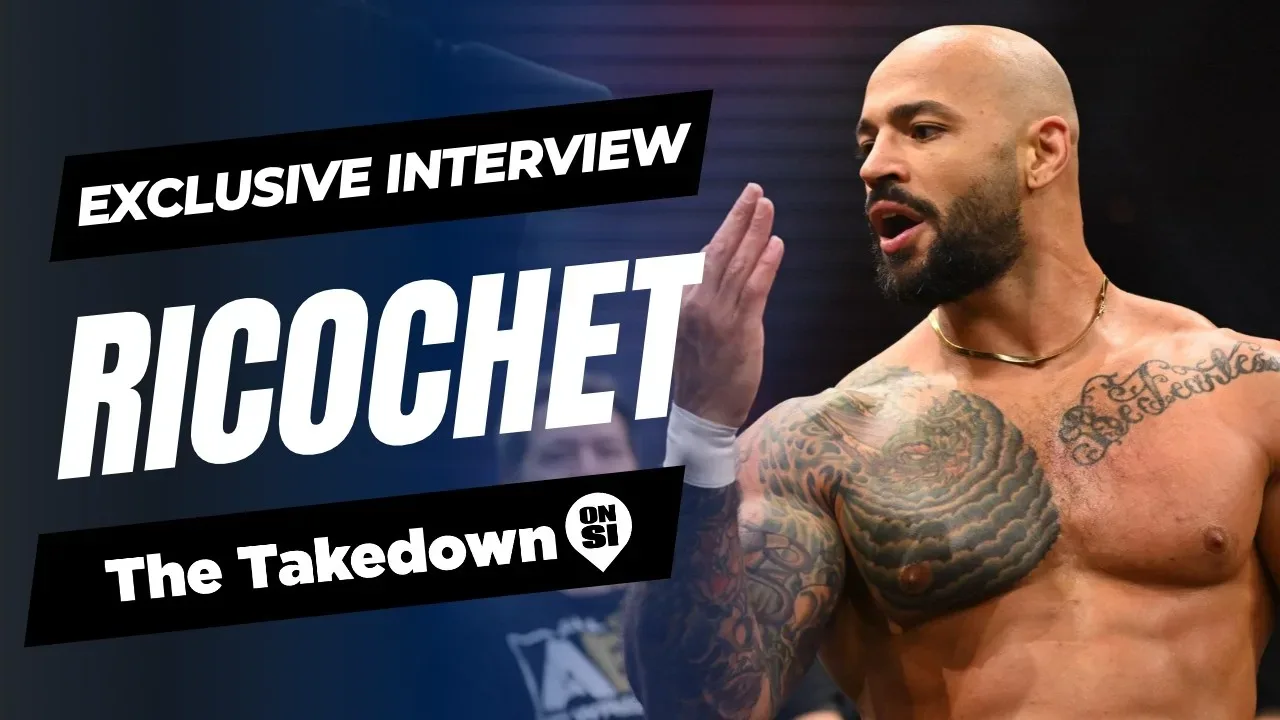
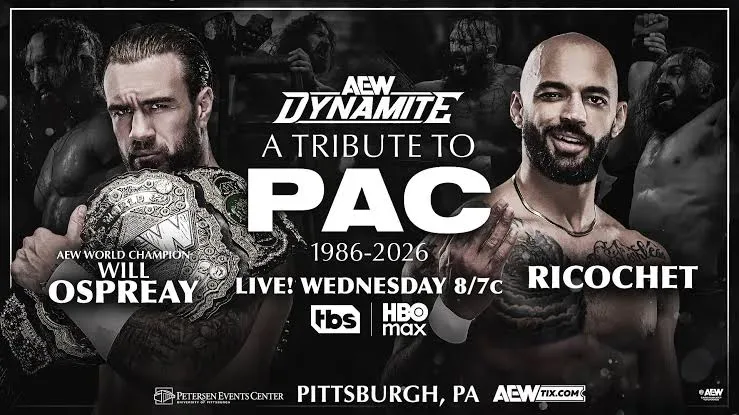
Ricochet has offered a revealing look at how his emotionally charged match with Will Ospreay came together on the September 30 edition of AEW Dynamite.
The bout was presented as a tribute to PAC, bringing together two wrestlers whose careers have repeatedly intersected with the former AEW International Champion. Ricochet and Ospreay have also built a significant rivalry of their own over the years, and that familiarity was evident in a match that drew widespread praise from fans. For Ricochet, however, the night was about more than the athletic spectacle or the response it generated.
Speaking about the experience, Ricochet explained that the match gave him and Ospreay something demanding to focus on amid an otherwise difficult day. In his view, the preparation and the need to remain mentally sharp in the ring helped provide a necessary outlet for the emotions surrounding the tribute.
“Honestly, the match kind of helps you,” Ricochet said. “The match helps the day go by, because not being able to think about your match, you’re stuck thinking about sad times basically. So at least for me specifically, having something that I could put my mind towards and kind of, not turn off my emotions but you have to focus on this otherwise you’re going to get hurt.”
For more background on this topic, read Max Caster Says He Is Turning Down Wrestling Bookings During Hiatus.
That is an important distinction in Ricochet’s description of the situation. He was not suggesting that competing erased the emotion of the occasion. Instead, he viewed the work as something that required complete attention. The physical stakes of a high-level singles match do not disappear because the night carries added meaning, and a performer cannot afford to lose focus during a bout with Ospreay.
Ricochet said having that responsibility helped him get through the day a little more smoothly, even as the circumstances remained painful.
“Having something like that to focus on for the day, I think that helped,” Ricochet continued. “But at the same time, I think especially with Ospreay and myself, as much as I hate him [laughs], Ben/PAC was so integral to both of our careers — we’ve been around him and we’ve wrestled him so many times that we kind of already had in our mind how we were going to go about it.”
A Shared Connection With PAC
Ricochet’s use of PAC’s real first name, Ben, underscored the personal nature of his comments. Rather than framing the match only around PAC’s accomplishments or reputation, Ricochet emphasized the time he and Ospreay had spent around him and the number of times they had shared a ring.
That shared experience appears to have made the direction of the tribute feel instinctive. Ricochet and Ospreay did not need a lengthy creative process to understand the tone they wanted to strike or the kind of performance that would honor someone who had been so important to both men. Their own backgrounds as fast-paced, inventive wrestlers also made them natural opponents for a match built around execution, trust, and urgency.
In wrestling, emotional matches can sometimes require a great deal of planning because the participants are trying to balance storytelling with the pressure of the moment. Ricochet’s account suggests the September 30 match had a different foundation. The emotional context was already understood, and the professional connection between the two wrestlers supplied the rest.
He said the toughest element was not deciding what the match should be. It was simply walking out and carrying it out.
“The hardest part was going to be to just go out there and do it,” Ricochet said. “It’s funny, it’s kind of criminal how quickly he and I got all that together. It’s kind of criminal how quickly he and I were like, ‘Oh yeah, okay, well I guess that’s it, I’ll see you later.’ Because again, we worked so well together and we just knew Ben so well.”
Why Ricochet And Ospreay Could Work So Quickly
The phrase “criminal” was delivered with humor, but it reflects Ricochet’s surprise at how efficiently the two were able to arrange a match with such emotional weight. Their history as opponents clearly played a major role. When wrestlers have spent enough time working with one another, they can communicate through a familiar rhythm, anticipate movements, and identify what will best serve a particular match without needing every sequence to be painstakingly mapped out.
That kind of chemistry matters in any major bout. It can matter even more in a tribute, where the performers must ensure that the match does not become detached from the reason it is taking place. Ricochet and Ospreay were able to rely on their knowledge of each other, along with their personal and professional connection to PAC, to avoid overcomplicating the assignment.
The result was a performance that fans widely celebrated. Some viewers went as far as calling it one of the strongest matches in AEW history, a reflection of both the in-ring standard associated with Ricochet and Ospreay and the added significance attached to the occasion. Ricochet did not center his comments on rankings or acclaim, though. His focus remained on what it meant to participate and why the match felt possible under the circumstances.
“Yeah, it was just going out there and putting on for the people that we knew were going to be there and appreciate it,” Ricochet said.
A Tribute Built Around the Audience
That final point speaks to the role the live audience played in the match. Tribute matches are not only created for the wrestlers involved; they are also a way for a crowd to collectively acknowledge the person being honored. Ricochet recognized that many in attendance would understand the importance of PAC’s influence on the participants and the significance of seeing Ospreay and Ricochet meet again in that setting.
For performers known for operating at an elite physical level, the temptation in a major match can be to make the conversation entirely about spectacular moments. Ricochet instead described a more grounded purpose. The goal was to deliver something for those who would be present, understand it, and appreciate what it represented.
That does not diminish the quality of the action. If anything, it helps explain why the match resonated so strongly. Ospreay and Ricochet have the ability to produce eye-catching exchanges and sustained intensity, but they also had a clear emotional frame for this particular meeting. The tribute was not an afterthought added onto a showcase; it informed the reason the showcase existed.
Ricochet ultimately said that performing helped him navigate the day, despite the sadness that accompanied it.
“Being able to have the match actually kind of helped the day go by a little smoother as sad as it was,” Ricochet said.
The Lasting Meaning of the September 30 Match
Ricochet’s reflection gives the September 30 AEW Dynamite contest a perspective that goes beyond its reception as a standout wrestling match. The speed with which he and Ospreay assembled the bout was not born from carelessness. By Ricochet’s account, it came from years of familiarity: familiarity with one another as opponents, and familiarity with PAC as someone integral to each man’s career.
That history allowed them to enter the ring with a mutual understanding of what was required. They could concentrate on the work, honor PAC in a way that felt authentic to them, and give the audience a performance worthy of the moment.
For Ricochet, the match also demonstrated one of wrestling’s more complicated truths. The ring can be a place of competition and risk, but it can also provide structure during an emotional moment. Having to focus, execute, and trust an opponent can offer a temporary path through grief and sadness without asking anyone to ignore those feelings.
Ricochet and Ospreay’s latest meeting will remain notable for its acclaim and its place within their ongoing history. But Ricochet’s comments make clear that its greatest importance was rooted in the tribute itself, the person it was meant to honor, and the people in the building who understood exactly why the match mattered.
In pictures

Darryl Polo
Darryl Polo is a passionate wrestling fan covering WWE, AEW, TNA and beyond. He loves great rivalries, breakout stars and the moments that keep fans talking long after the bell. How we work.