
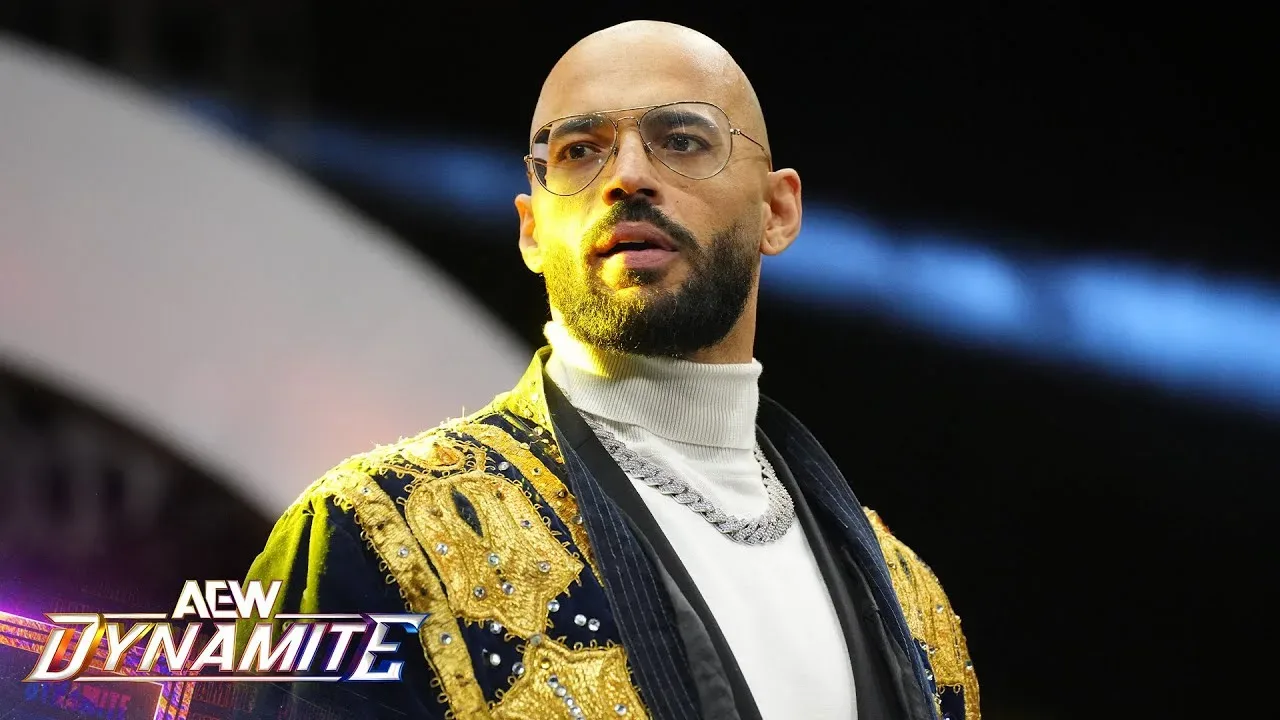
Ricochet has offered a positive assessment of AEW’s locker room, saying the overwhelming majority of talent are willing to put individual ego aside when a larger story or the needs of the company require it.
The former champion, who arrived in AEW in 2024, addressed the atmosphere behind the scenes during a recent interview. His comments came during a difficult period in which members of the wrestling world have reflected publicly on community, support and teamwork following the recent losses of PAC and The Butcher.
While Ricochet acknowledged that every locker room contains different personalities, ambitions and attitudes, he said AEW has developed a culture where the central objective is making the promotion as strong as possible. In his view, that collective mindset has become even clearer over the course of his tenure.
“Honestly, I think it’s kind of bittersweet but at the same time, we have such a good locker room right now,” Ricochet said. “Honestly, since I’ve gotten there in 2024, it’s been awesome. It just reminds me of back in the day ... when we would all travel and everyone was just there to help the show be great.”
For more background on this topic, read Paul Wight Jokes Steven Borden Is ‘So Good Looking, It’s Disgusting’ Ahead Of Blood & Guts.
Ricochet’s remarks frame locker-room harmony not as the absence of competitive personalities, but as an ability to direct that competitiveness into the product. Professional wrestling naturally depends on performers seeking opportunities, building their own characters and protecting the value of their work. At the same time, major storylines require wrestlers to accept shifting roles from week to week, whether that means taking a loss, stepping back from the spotlight or supporting a rival’s moment.
That balance is what Ricochet believes AEW has largely found. He did not claim that every person agrees on everything, but he placed the overwhelming majority of the group on the same page regarding the company’s ambitions.
“Obviously everyone has their egos, everyone has their personalities, everyone has their attitudes, whatever you want to say,” Ricochet said. “But at the end of the day, I think 97% of who we got in our locker room, I think everyone wants to make AEW the best, the biggest that it can be.”
The figure was clearly Ricochet’s personal estimate rather than a formal measurement, but the point behind it was direct: he sees a roster committed to the success of the overall promotion. That is especially meaningful for a company with a large and varied collection of wrestlers, including established stars, younger talent, international names and performers whose roles can change quickly as television stories evolve.
Ricochet also addressed one of the most common narratives surrounding any major wrestling company: the idea that performers’ individual interests inevitably undermine creative plans. He did not deny that egos exist. Instead, he argued that most people in AEW recognize when the story has to come first.
“I think for the most part, most people—despite what you may hear on the dirt sheets or whatever,” Ricochet said with a laugh, “for the most part, people put away their egos for the better of the story.”
For Ricochet, the ability to make that distinction is central to a healthy wrestling environment. A wrestler may have a personal preference about a match, a character direction or a place on a card, but television is built around interconnected arcs. One performer’s rise often depends on another performer providing the right opposition, and a major payoff only works if the audience has been given a reason to care about the journey.
His comments also point to the importance of adaptability during periods when real-life events change the tone of programming. Ricochet said the past three months have sometimes required AEW to place planned stories in the background in order to honor people who helped make the locker room what it is.
“I think now especially with these past three months, sometimes we’ve had to put the story aside to kind of show tribute to those who helped make the locker room so good,” Ricochet said.
That kind of adjustment can be difficult in a promotion built around long-term rivalries and weekly momentum. Yet Ricochet presented it as evidence of the group’s priorities. When circumstances call for the company to recognize and pay respect to important people, he believes the roster understands that the focus must move beyond any one wrestler’s scheduled angle.
He described that awareness as part of an increasingly functional team dynamic. The key, Ricochet suggested, is recognizing that a given day may belong to someone else, to a group, or to a larger purpose rather than to the individual performer.
“For the most part, it’s been great and everyone kind of knows what their job is and they know, today’s not about me, today is about you but today’s not about you, today’s about me or today’s about the group or whatever,” Ricochet said.
That perspective is particularly notable coming from a wrestler whose in-ring style has long made him a standout attraction. Ricochet has built his reputation on elite athleticism, speed and aerial offense, the kind of performances that can easily draw attention to the individual. In AEW, however, he has spoken about his role within the broader presentation and the importance of advancing stories rather than simply trying to create a personal highlight reel.
His current character work has also represented another layer of that evolution. Elsewhere in the interview, Ricochet said he draws inspiration from The Joker for his AEW persona. The reference provides some context for the unpredictability and edge he has brought to his presentation, while also illustrating how a performer can develop a distinct identity within the company’s wider creative landscape.
Ricochet ultimately believes the internal environment has trended upward throughout his time in AEW. He said the improvement has not only been felt backstage, but has become visible to viewers through the product itself.
“I think things like that, it’s only going in the right direction and I feel like the last two years since I’ve been there, it’s just gotten better and better and I feel like the product has shown that as well,” Ricochet said.
That is a significant vote of confidence from someone who has now spent two years inside the company. Rather than presenting AEW as a finished product, Ricochet described a locker room that is continuing to learn, adjust and improve. His assessment leaves room for the normal friction that can exist among driven performers while maintaining that the shared objective is stronger than those differences.
AEW’s ability to sustain that sense of unity will remain important as it moves through changing stories, roster shifts and emotionally challenging moments. For Ricochet, though, the signs are encouraging. He sees a group that understands the demands of collaborative storytelling, supports tributes when they are needed and increasingly knows when to prioritize the bigger picture.
In his view, that willingness to make the story—and the company—more important than any single ego is one of the clearest reasons AEW has continued moving in what he considers the right direction.

Darryl Polo
Darryl Polo is a passionate wrestling fan covering WWE, AEW, TNA and beyond. He loves great rivalries, breakout stars and the moments that keep fans talking long after the bell. How we work.