
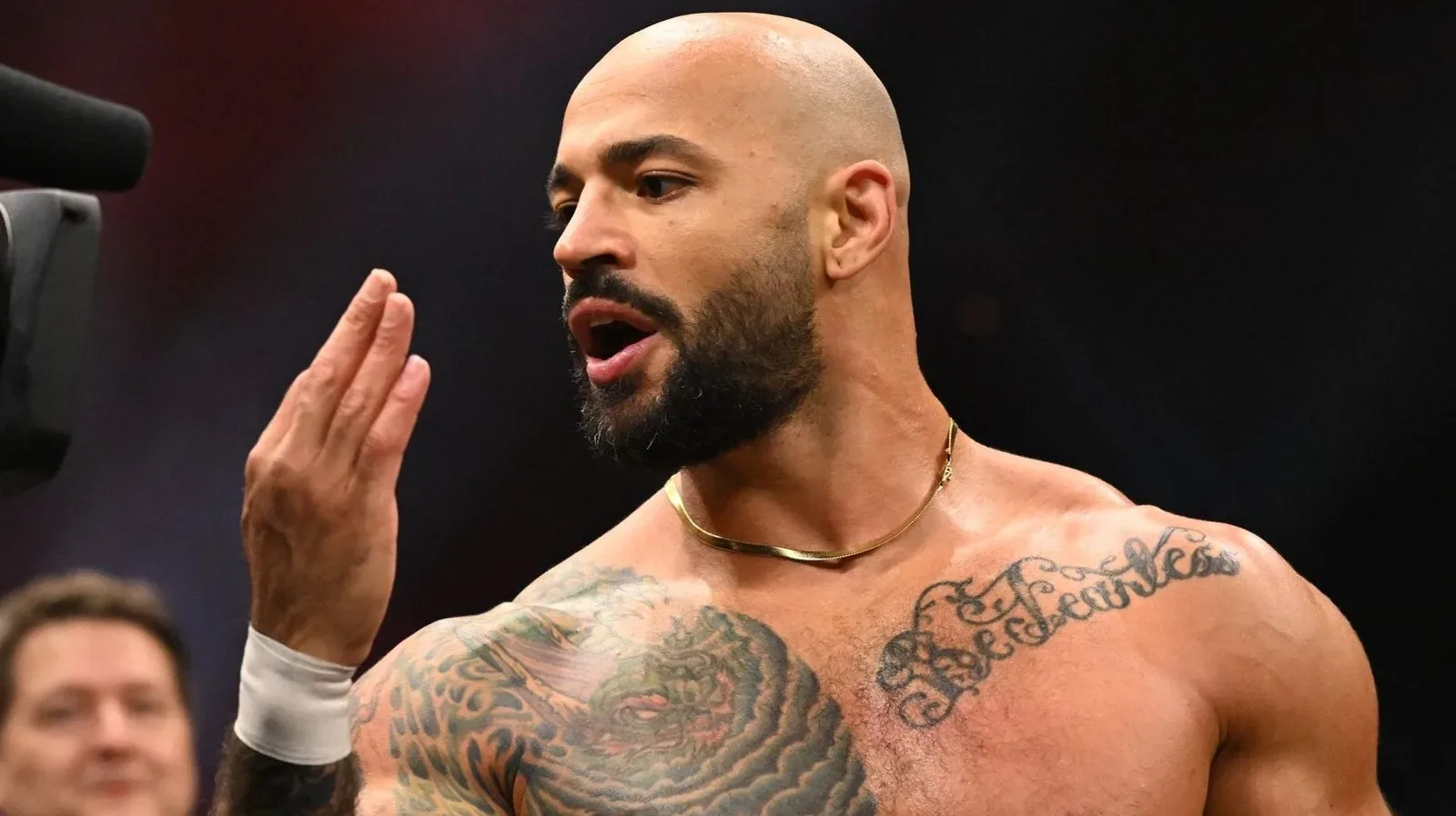
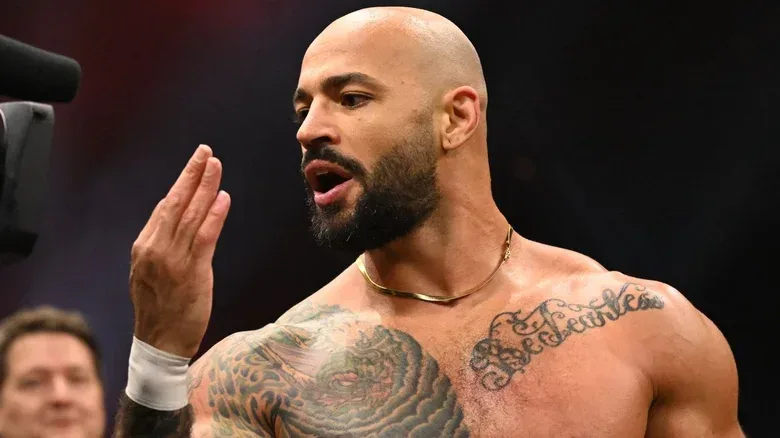
Ricochet has reflected on the difficult but meaningful experience of wrestling Will Ospreay on AEW Dynamite in the days following the unexpected death of Benjamin “Pac” Satterley.
The special Dynamite episode was held as a tribute to Pac, the former AEW World Trios Champion whose influence stretched across multiple generations and promotions. Ricochet and Ospreay were given one of the show’s most personal in-ring assignments: a singles match involving two performers who had each shared important chapters of their careers with Pac.
For Ricochet, the responsibility of preparing for a high-level match amid grief provided a necessary point of focus. He explained that having a match to concentrate on did not remove the sadness surrounding the day, but it required him to direct his attention toward the immediate demands of performing safely and effectively.
“The match helps the day go by because without having to think about your match, you’re stuck thinking about sad times basically,” Ricochet said in a recent interview. “So at least for me specifically, having something that I could put my mind towards and not turn off my emotions, but you have to focus on this otherwise you could get hurt. Having something like that to focus on for the day, I think kind of helped.”
For more background on this topic, read Kenny Omega Calls Uemura vs. Oiwa G1 Climax Final a ‘Beautiful Match’.
The sentiment captures the complicated balance faced by the AEW roster during the tribute event. Wrestling is a live performance built around emotion, athleticism, timing, and trust. On a normal night, those elements are already demanding. On a night dedicated to a departed colleague and friend, the task can become even more difficult. Ricochet’s comments made clear that the match was not an escape from the emotions of the occasion, but a way to channel them.
A Shared Connection To Pac
Ricochet and Ospreay were particularly fitting opponents for the occasion because of their respective histories with Pac. Each man had worked with him extensively at different stages of his career, and each knew the distinctive pace, creativity, and competitiveness he brought into a ring.
Ricochet encountered Pac during his time in Japan with Dragon Gate in 2011 and 2012. Their paths crossed several times during that period, when both athletes were establishing reputations as spectacular high-flyers capable of matching speed with technical precision. One of Ricochet’s notable victories over Pac saw him capture the Open The Brave Gate Championship from him, adding another important layer to their shared history.
Ospreay’s own past with Pac included a major bout at Rev Pro’s High Stakes event in 2019. The contest between Ospreay and “The Bastard” went to a time-limit draw, a result that reflected both men’s standing as elite international performers. They would later share the AEW stage as well, with Pac remaining a significant figure throughout the promotion’s modern era.
Those connections meant Ricochet and Ospreay entered their Dynamite match with more than a standard professional familiarity. Both had wrestled Pac, watched his evolution, and understood the influence he had on audiences and fellow performers. Ricochet said that, despite his on-screen rivalry with Ospreay, the two men had a mutual understanding of what the match needed to represent.
“As much as I hate him, I think Pac was so integral in both of our careers,” Ricochet said. “We’ve been around him and we’ve wrestled him so many times that we kind of already had in our mind how we were going to go about it. We knew what we were going to do. The hardest part was going to be to just go out there and do it.”
That last distinction was significant. Building a match is one challenge; carrying it out in front of a live audience while mourning someone central to its meaning is another. The performers had a plan and a shared purpose, but the emotional weight of executing it remained.
Ospreay Wins With A Pac Tribute
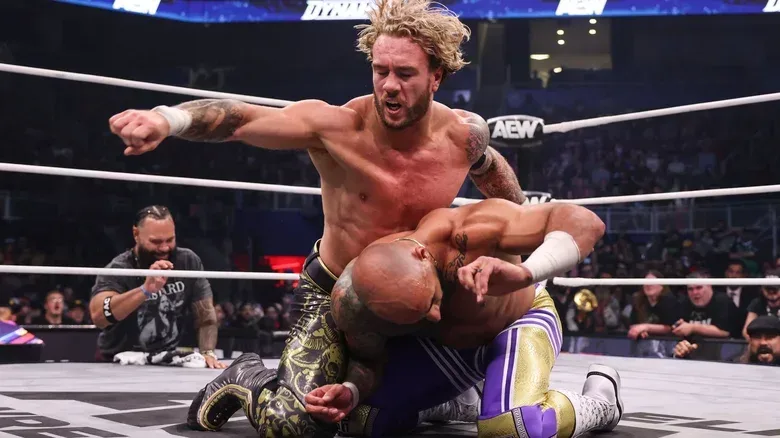
Ricochet and Ospreay wrestled for more than 16 minutes on Dynamite, delivering a match that played to the athletic strengths that have long defined both men. Their familiarity with Pac’s body of work was ultimately reflected in the finish.
Ospreay defeated Ricochet after connecting with the Hidden Blade and then following it with the Black Arrow, Pac’s famous finishing move. The use of the Black Arrow gave the final sequence added emotional significance, turning the match’s conclusion into a direct salute to the man being remembered throughout the night.
The move was not treated casually. Ospreay had revealed that he spent several hours before the doors opened practicing the Black Arrow from a standing position. Yet practicing the maneuver and attempting it from the top rope in front of a live television audience were different matters. Ospreay did not decide he could make the leap until Dynamite was already on the air.
The eventual execution of the Black Arrow served as one of the evening’s clearest expressions of respect. Pac made the maneuver inseparable from his presentation over the years, combining a dramatic top-rope ascent with a striking, corkscrew-style landing. For Ospreay to use it in the closing moments of a match with Ricochet was a decision rooted in the competitors’ collective history with him.
Ricochet later emphasized how naturally the two wrestlers were able to come together under extraordinary circumstances. He described the speed with which they assembled the match as almost unbelievable, crediting their compatibility in the ring and their shared knowledge of Pac.
“It’s kind of criminal how quickly he and I got all that together,” Ricochet said. “We worked so well together, and again, we just knew Ben so well. It was just going out there and putting on for the people who we knew were going to be there and appreciate it.”
His comments speak to a reality familiar to those who have followed Ricochet and Ospreay throughout their careers. The two have long been associated with innovative aerial offense, extraordinary quickness, and a willingness to push the pace of a match. On this occasion, however, their chemistry carried a more personal purpose than simply producing another standout encounter.
A Night Built Around Remembrance
The Ricochet-Ospreay bout was one of several significant moments on the Dynamite tribute broadcast. The card gave AEW’s wrestlers an opportunity to honor Pac through competition, while also bringing together people who had been close to him in and outside the ring.
Jon Moxley opened the show by successfully defending the AEW Continental Championship against Orange Cassidy. In the main event, Pac’s fellow Death Riders teamed with Bryan Danielson to defeat The Don Callis Family. Those matches framed the broadcast around the people and relationships connected to Pac’s time in AEW.
For Ricochet, the evening demonstrated the unusual role wrestling can play during a period of loss. The performance cannot erase grief, and he did not suggest that it could. Instead, the preparation and responsibility of the match gave him something constructive to hold onto while the locker room and fans processed an emotional situation together.
That is why the match’s tribute elements carried such weight. Ricochet and Ospreay were not simply revisiting old spots or referencing a colleague’s move set. Their histories with Pac—from Dragon Gate and Rev Pro to AEW—gave them a foundation to create something that felt connected to him. The Black Arrow at the end was the most visible symbol of that connection, but the larger tribute was found in the effort both men gave under difficult circumstances.
Ricochet’s reflections also underline Pac’s importance to the wider wrestling landscape. His work brought him into the ring with athletes from different eras, regions, and styles. He was a rival to Ricochet in Japan, a defining opponent for Ospreay in the United Kingdom, and a major part of AEW’s identity alongside the Death Riders and across the promotion’s history.
On a night shaped by sadness, Ricochet and Ospreay found a way to honor that legacy through the thing all three men knew best: an intense professional wrestling match. The result was a deeply personal contest, completed not because the emotion was absent, but because both competitors carried it with them into the ring.
In pictures

Darryl Polo
Darryl Polo is a passionate wrestling fan covering WWE, AEW, TNA and beyond. He loves great rivalries, breakout stars and the moments that keep fans talking long after the bell. How we work.