
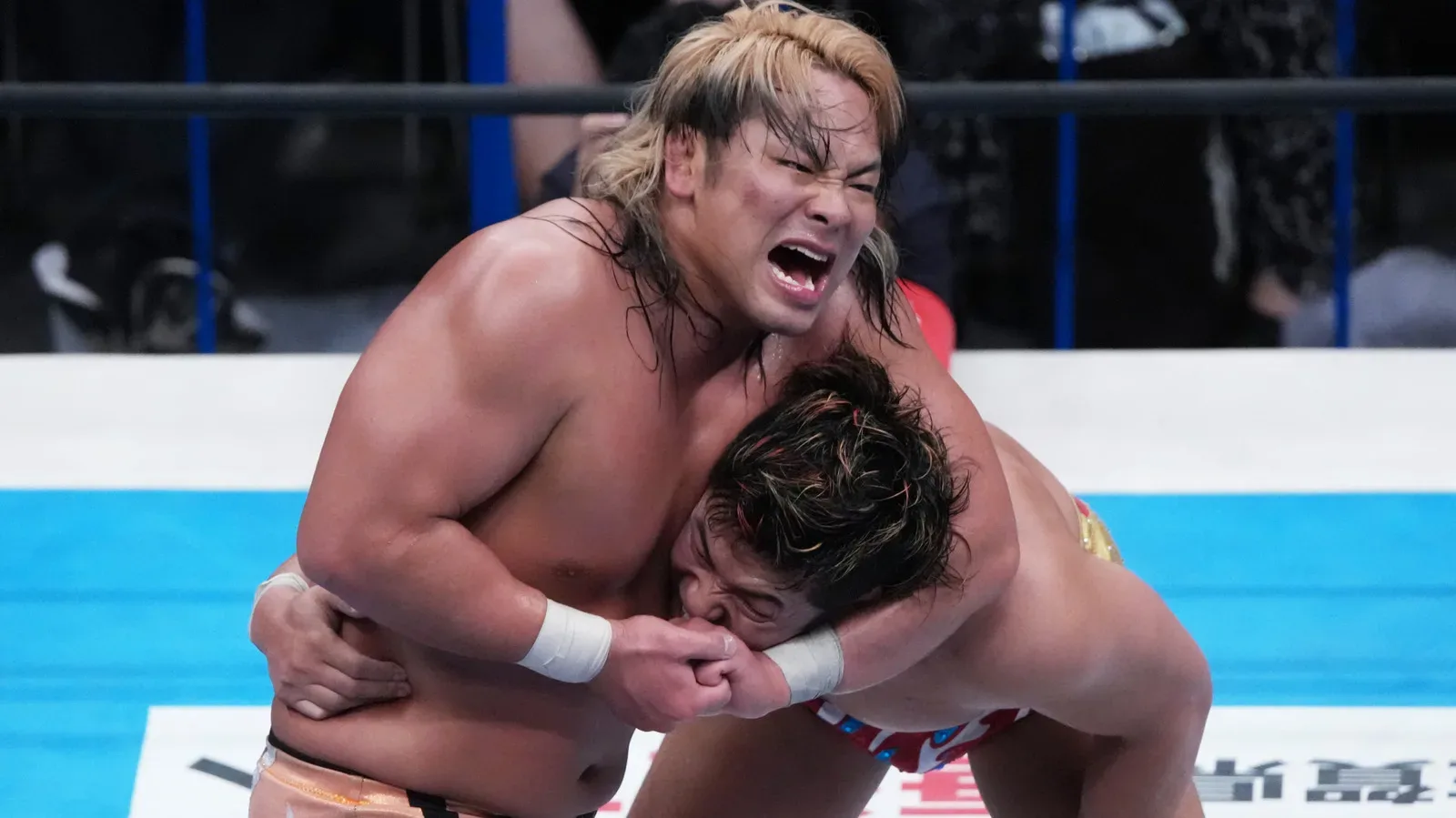
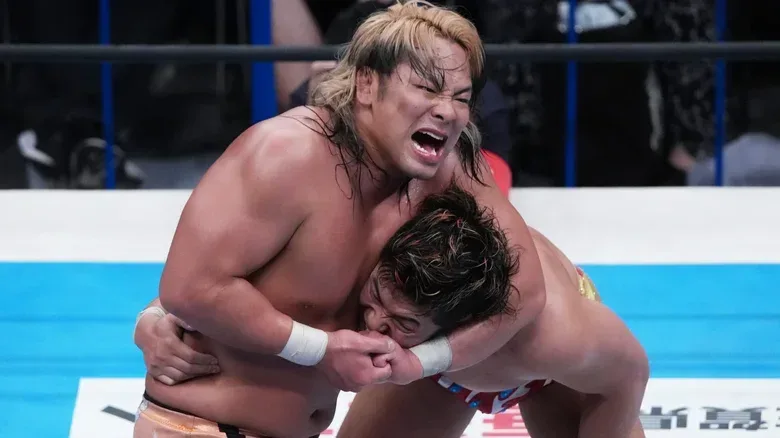
Kenny Omega has offered emphatic praise for the New Japan Pro-Wrestling G1 Climax final between Yuya Uemura and Ryohei Oiwa, describing the bout as a “beautiful match” that succeeded by trusting the foundational elements of professional wrestling.
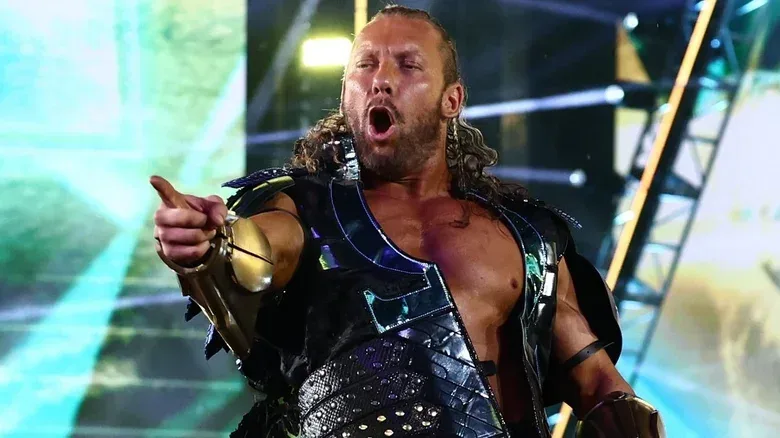
Omega is preparing for a major return to the Tokyo Dome stage at Wrestle Kingdom 21 on January 4, where he will challenge Yota Tsuji for the IWGP Heavyweight Championship. While discussing the present state of NJPW, the former AEW World Champion addressed the 2026 G1 Climax final and the response it generated among viewers and wrestlers alike.
Uemura and Oiwa’s match became a major point of discussion because of its emphasis on technique, pacing, struggle, and emotional investment rather than an effort to overwhelm audiences with increasingly elaborate spectacle. For Omega, that approach was not a limitation. It was the exact reason the match stood apart.
“I didn’t watch the final live, but once it became a hot topic on social media, I thought to myself, I have to sit down and watch it and see what the fuss is about,” Omega said.
For more background on this topic, read Andrade El Idolo Details How His AEW Character Found Its Voice.
After watching the contest, Omega said Uemura and Oiwa found a way to create a powerful connection with the audience through their own identities rather than by attempting to replicate the work of wrestlers who came before them. In his view, their ability to build drama from basic holds, exchanges, and fighting spirit made the match feel distinct within the current wrestling environment.
“Oiwa and Uemura were able to draw so much emotion from those basic techniques,” Omega said. “They didn’t try to imitate anybody, they went in with their styles and it was something that stood out from any wrestling we’ve seen in the last ten, 20 years. It was a beautiful match.”
Why the G1 Climax Final Connected
The G1 Climax has long been one of NJPW’s defining annual tournaments, with its final traditionally representing both the culmination of a grueling schedule and a chance to establish the next central figure in the promotion. That setting naturally creates enormous pressure for the wrestlers involved. Uemura and Oiwa entered the final with the task of delivering a match worthy of the tournament’s history while also making a statement about their own places in New Japan’s future.
Omega’s comments suggest that the match’s impact came from the wrestlers’ refusal to chase a particular trend. Wrestling audiences have more access than ever to styles from around the world, and performers are capable of athletic feats that would have seemed unimaginable in previous generations. Yet Uemura and Oiwa were able to command attention through the building blocks of the craft: physical targeting, positional exchanges, escalating urgency, and the emotional consequences of every movement.
That type of match requires as much precision as any high-risk performance. The audience has to understand what is at stake in each exchange, why a wrestler is trying to gain an advantage, and how each response changes the momentum. When that structure is in place, a relatively simple technique can carry enormous weight. Omega believed Uemura and Oiwa demonstrated exactly that principle.
He also took encouragement from the audience response. To Omega, the investment shown by fans was evidence that fundamental technical wrestling can still thrive at the highest level, even at a time when many viewers have become accustomed to matches built around faster pacing and greater danger.
“I was happy as well that the fans were able to be so invested in it,” Omega said. “It gave me hope, you know, that rather than pushing the envelope, we can have technical, fundamental wrestling succeed.”
That observation is especially notable coming from Omega. Throughout his career, he has been recognized as one of wrestling’s most versatile in-ring performers, capable of working different tempos and structures across multiple promotions. His biggest NJPW matches helped define a modern era of major-event wrestling, while his work in AEW has ranged from technical contests and dramatic title defenses to some of the company’s most chaotic stipulation matches.
Omega Reflects on AEW’s Increasingly Violent Style
Omega’s praise for the G1 final also led him to consider the differences between NJPW’s current standout match and the environment in AEW. As an AEW executive vice president and one of the promotion’s most prominent wrestlers since its launch, Omega has played a key role in building its identity. Still, he expressed the belief that he has not always had the opportunity to show every aspect of his wrestling ability there.
Omega said he has consistently wanted to prove he could adapt to any setting and meet the demands of any promotion. However, he feels AEW’s in-ring style has increasingly moved toward violence and danger, making it harder for him to display the fundamentals that he values in matches such as Uemura versus Oiwa.
“When I’ve wrestled from promotion to promotion, I’ve always wanted to show that I’m an all rounder, but I haven’t been able to show that aspect of the fundamentals in AEW yet, because the style has evolved into something quite violent,” Omega said.
He continued by noting that AEW has performers willing to put their bodies on the line in every appearance, but he questioned whether the pursuit of bigger risks can pull the product away from the basic elements that make wrestling effective as an art form.
“What I noticed was that, we have guys in AEW who are willing to risk life and limb every match and things are getting more and more violent and dangerous, and drifting away from the basics of wrestling that make pro-wrestling this beautiful art form.”
The comments are not a dismissal of AEW’s performers or of the types of matches Omega himself has taken part in. In fact, Omega’s own AEW résumé includes several of the promotion’s most violent and memorable spectacles. His long-running rivalry with Jon Moxley has repeatedly placed both men in environments designed to test the limits of endurance and punishment.
Omega and Moxley first met in an Unsanctioned Lights Out match, before later battling in an Exploding Barbed Wire Death Match and a Steel Cage match. They have also been on opposing sides in Blood and Guts, as well as two Anarchy in the Arena matches. Across those encounters, weapons and hazards including mouse traps, broken glass, and barbed wire nets have contributed to the chaos.
Those experiences underline why Omega’s perspective carries particular weight. He is not criticizing violent wrestling from a distance. He has helped deliver some of its most prominent modern examples. Instead, his reflection on Uemura and Oiwa points to the value of range. A major match does not need to become more extreme than the one before it to matter, and technical wrestling does not need to be treated as a lesser alternative to dangerous spectacle.
A Tokyo Dome Test Against Yota Tsuji
Omega’s upcoming bout with Tsuji at Wrestle Kingdom 21 provides a compelling setting for those ideas to come together. The IWGP Heavyweight Championship match will put Omega in the Tokyo Dome against one of NJPW’s leading stars, with the stakes and scale expected of the company’s biggest annual event.
Tsuji brings a physical, forceful presence to the championship picture, while Omega’s career has been built on adapting to opponents and elevating the importance of the occasion. Omega’s recent remarks make clear that he sees value in all kinds of professional wrestling, but he remains particularly energized by a contest that earns its drama through clean execution and emotional clarity.
Whether his match with Tsuji ultimately leans toward a technical struggle, a hard-hitting championship fight, or something that combines both approaches remains to be seen. Omega’s praise for Uemura and Oiwa, though, offers a clear indication of what he believes can make a wrestling match timeless.
For Uemura and Oiwa, receiving such praise from Omega further emphasizes the significance of their G1 Climax final. Their match was not celebrated because it tried to resemble a previous classic or because it relied on danger alone. It drew attention because two wrestlers committed to their own styles and made the fundamentals feel urgent, personal, and vital. In Omega’s eyes, that is a reminder of professional wrestling at its most beautiful.
In pictures

Darryl Polo
Darryl Polo is a passionate wrestling fan covering WWE, AEW, TNA and beyond. He loves great rivalries, breakout stars and the moments that keep fans talking long after the bell. How we work.