
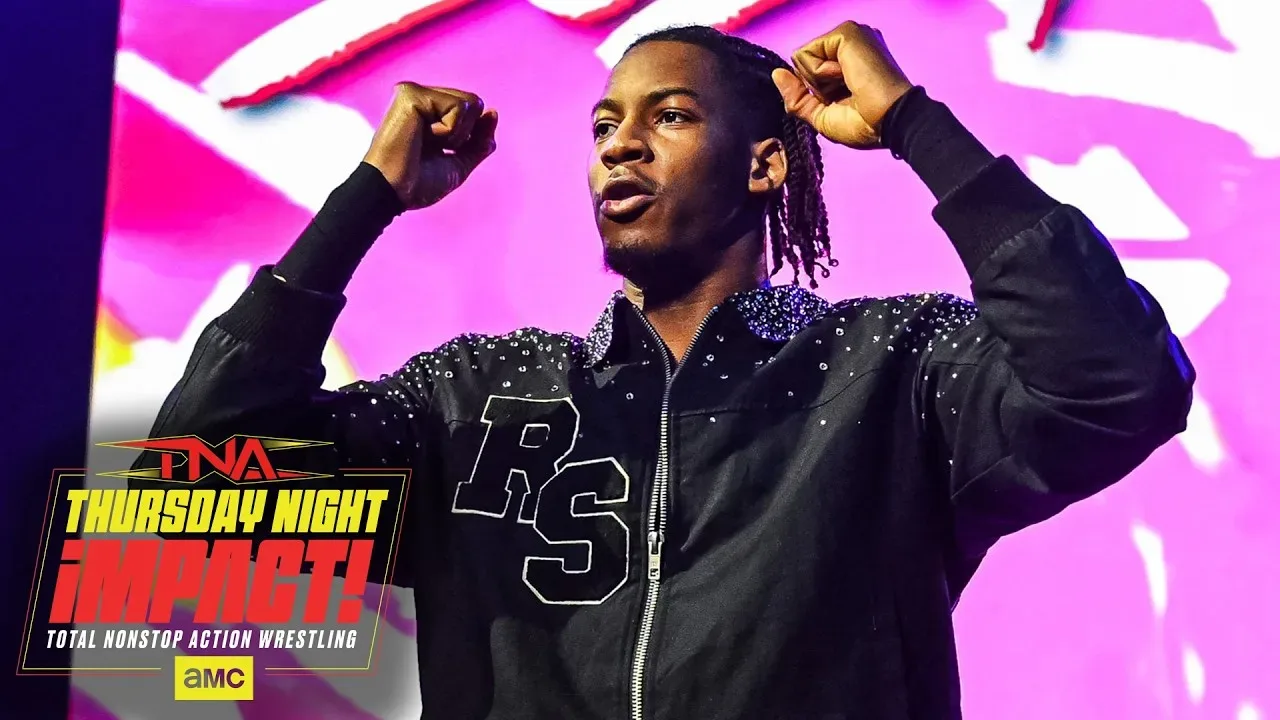
Ricky Sosa’s “Bang Bang Sosa Sosa” entrance has become a major calling card, bringing attention to a performer who later signed with TNA Wrestling. For Sosa, however, the early response to that viral presentation came with an understandable concern: whether the entrance was becoming bigger than the wrestler behind it.
Sosa discussed the situation during a recent interview, explaining that fans regularly recognized him first as “the bang bang Sosa guy.” While that level of instant recognition is valuable in professional wrestling, he admitted that he initially felt the attention was taking focus away from the work he wanted audiences to notice once the bell rang.
“I feel like, yeah, because, especially when I meet fans, they’re like, ‘Oh, he’s the bang bang Sosa guy.’ So I feel like that kind of overshadowed my wrestling abilities,” Sosa said.
The concern reflects a challenge that follows many wrestlers whose presentation catches fire quickly. An entrance, catchphrase, theme, look, or viral moment can create a fast connection with crowds. It can also set a particular first impression that a wrestler may feel compelled to expand beyond. In Sosa’s case, the response to “Bang Bang Sosa Sosa” gave people an easy way to identify him, but he was worried that it might lead some fans to presume the entrance was the entirety of his appeal.
For more background on this topic, read AJ Styles Makes Surprise Indie Appearance to Aid Son Avery Styles After GWC Title Match.
That was not an insignificant worry for someone seeking to establish himself within a major promotion. A memorable entrance can bring a crowd to life before a match begins, but the in-ring performance is what gives a wrestler the chance to turn that initial reaction into long-term support. Sosa said he was frustrated by the possibility that his wrestling abilities might be overlooked.
“But, not gonna lie, in the beginning, I was kind of mad about it,” Sosa said.
His outlook changed after speaking with other wrestlers, who framed the reaction from fans as an opportunity rather than a limitation. Their perspective was that visibility is difficult to obtain in a crowded industry, especially when many talented performers are trying to make an impression at the same time. Sosa was advised that his ability to stand out before a match was a strength, not something to reject.
“Once I get into asking other guys who are like, ‘Man, this is great because some wrestlers, they can wrestle. They don’t have the appearance and you have it,’ so, now I’m kind of happy about it,” Sosa explained.
That distinction appears to be central to how Sosa now views his entrance. He is not presenting it as a substitute for the technical and physical elements of his game. Instead, he sees it as part of an overall package: something that grabs attention, gives fans a memorable association, and helps set the stage for what follows in the ring.
Professional wrestling has always relied on that combination. Crowds respond to distinctive entrances because they establish atmosphere and personality within seconds. For an athlete trying to build a following, the value of being recognized immediately can be immense. The challenge is then delivering performances that ensure the audience returns for more than the initial spectacle. Sosa believes he has been able to do that.
“That was the thing that I was worried about because I was like, oh, damn, now some fans gonna think I only have my entrance,” Sosa said. “But, I’m glad that I could back it up with the wrestling and the in-ring; every time I wrestle someone, people are like, ‘Oh! You’re doing well,’ so I’m happy about that.”
Sosa’s comments show a performer who has become more comfortable with the route that brought him greater attention. Rather than separating the viral entrance from his identity as a wrestler, he has embraced the fact that both can work together. The entrance may be what first draws a fan’s eye, but Sosa’s stated goal is clear: make sure that fan leaves the match recognizing what he can do between the ropes.
Bound For Glory Provides a Major Singles Opportunity
Sosa will have another opportunity to make that case at TNA’s Bound For Glory pay-per-view on October 11, where he is scheduled to face Eddie Edwards in singles competition.
The match gives Sosa a high-profile stage and places him opposite an experienced opponent in Edwards. On a card built around one of TNA Wrestling’s biggest annual events, singles matches can carry particular importance for wrestlers looking to sharpen their standing with the audience. For Sosa, the bout represents a chance to pair the entrance that audiences already know with another performance that reinforces his confidence in his in-ring work.
There is also a natural contrast in the matchup. Sosa has spoken openly about building beyond the perception created by a viral entrance, while Edwards brings a long-established identity and extensive experience to the contest. That does not predetermine the outcome, but it gives Sosa a meaningful opportunity to show how far he has come since the attention around “Bang Bang Sosa Sosa” began accelerating.
In wrestling, a performer’s first hook is often only the beginning of the conversation. Some fans first recognize a wrestler through a signature piece of music, an entrance motion, a line of dialogue, or a moment that spreads across social media. Those elements can be powerful introductions, but maintaining momentum requires more. Sosa’s own comments indicate that he understands that balance and that he has made peace with the role his entrance has played in his rise.
Rather than viewing the “Bang Bang Sosa Sosa” reaction as an obstacle, Sosa now appears to view it as a platform. The recognition gives him a connection with crowds before a match even starts. His responsibility, as he sees it, is to reward that recognition with wrestling that changes the perception of anyone who may have initially known him only for the entrance.
From Frustration to Confidence
Sosa’s shift in perspective is a notable part of the story. His initial frustration was rooted in a desire to be respected as a complete wrestler. That is a reasonable ambition for any performer, particularly one whose popularity rises quickly around a single aspect of their presentation. The advice he received from peers helped him recognize that being memorable is not a negative. It is an asset, provided the performer can make the most of the opening it creates.
His confidence now seems to come from the reaction to his matches. Sosa said that people have told him he is doing well whenever he wrestles, a response he takes as evidence that he can support the attention surrounding his entrance with his work in the ring. That feedback has allowed him to appreciate the viral component of his act without feeling defined exclusively by it.
Bound For Glory will be the next significant moment in that process. Sosa does not need to abandon the presentation that helped introduce him to a broader audience. By his own account, he has learned to value it. At the same time, his October 11 match with Eddie Edwards gives him the chance to continue proving the point he most wants fans to understand: Ricky Sosa is more than an entrance, and he intends for his wrestling to leave an equally lasting impression.

Darryl Polo
Darryl Polo is a passionate wrestling fan covering WWE, AEW, TNA and beyond. He loves great rivalries, breakout stars and the moments that keep fans talking long after the bell. How we work.