
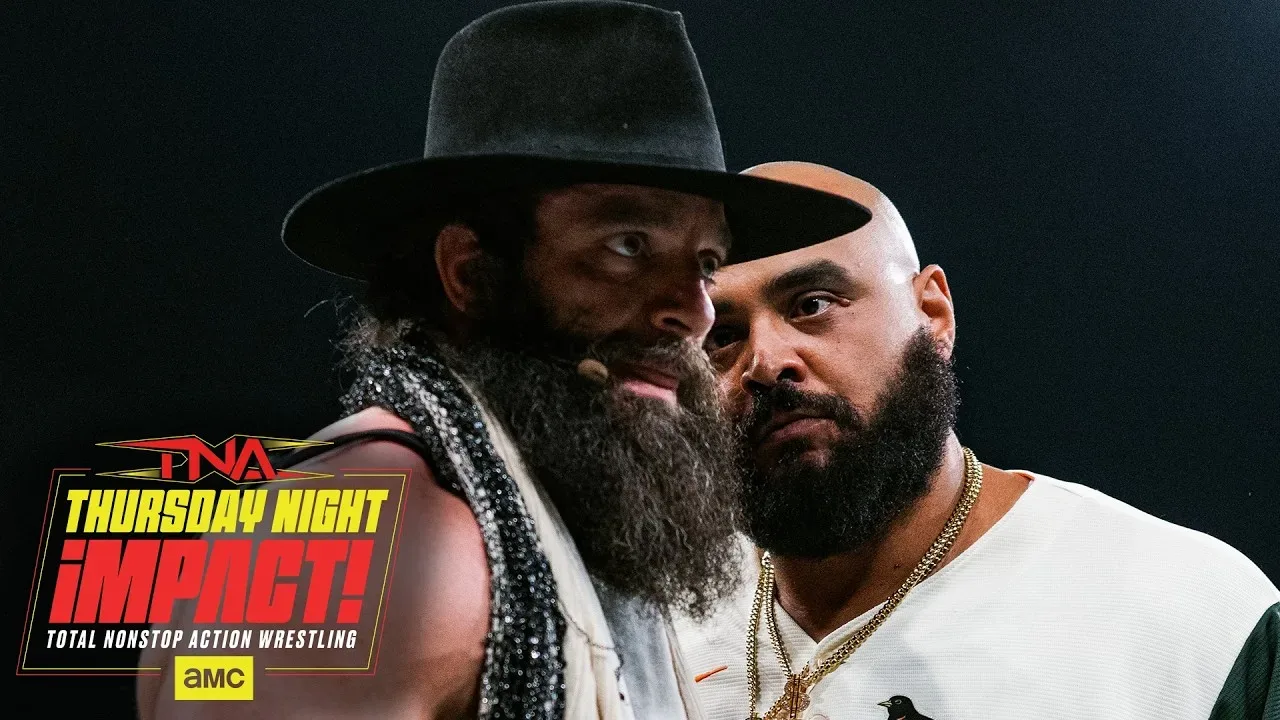
AJ Francis is making a strong case for the rivalry that defined a significant portion of his year in TNA Wrestling. Looking back on his program with Elijah, Francis argued that the storyline’s range, creativity and match quality made it the best wrestling angle of 2026.
The Francis-Elijah feud unfolded over several months, beginning in March and continuing until August. It was not restricted to one style of confrontation or a single major event. The two crossed paths in multiple matches on TNA programming and pay-per-view, while the story itself expanded beyond standard in-ring disputes. By the time it reached its finish at TNA Lockdown, Francis had defeated Elijah in a Steel Cage match, bringing a lengthy and highly personal program to a decisive conclusion.
During an interview with The Wrestling Classic, Francis reflected on the elements that made the rivalry stand out to him. He pointed to the storyline’s willingness to move between unusual creative ideas and physical escalation, including studio material in which Elijah appeared to haunt Francis’ mind, Francis taking Elijah’s name, image and likeness, and the angle involving Expressions, a guitar shot and the Expressions medical fund.
“Just look at the feud I had with Elijah. From the stuff we did in the studio where he’s like haunting my mind to me stealing his name, image, and likeness, to us having the match and me hitting Expressions in the head with a guitar and me getting the Expressions medical fund. Just the opportunity to be creative and do different things.”
For more background on this topic, read Santino Marella Re-Signs With TNA Wrestling Ahead Of Destination X.
Francis’ comments highlight the central identity of the program: it did not rely solely on repeated matches to maintain momentum. The feud had a continuing narrative that allowed both competitors to explore character-driven material while also building toward major bouts. For Francis, that breadth is what separates the rivalry from a typical series of wrestling matches between two opponents.
In modern wrestling, a feud can be evaluated from several angles. Match quality matters, particularly when a promotion presents a rivalry at high-profile events. But the strongest rivalries also give viewers a clear reason to care about each confrontation. They establish a conflict, create consequences, introduce memorable turning points and deliver a finish that feels like the natural endpoint of everything that came before it. Francis believes his work with Elijah checked each of those boxes.
The studio segments were particularly important because they expanded the conflict beyond the familiar setting of an arena confrontation. Elijah haunting Francis’ mind gave the rivalry a psychological component. Meanwhile, the name, image and likeness element brought another layer to their dispute, giving Francis an opportunity to portray the conflict in a more unconventional way. The angle with Expressions added another chapter, including Francis striking Expressions with a guitar and subsequently obtaining the Expressions medical fund.
Those details gave the storyline a variety of tones. It could be strange and character-focused in one moment, then turn more aggressive and personal in another. That type of flexibility is difficult to sustain over a months-long feud, especially when the story has to remain clear enough for viewers who are following weekly television while still offering enough developments to make pay-per-view matches feel important.
Francis was emphatic that the program should be judged from its full beginning-to-end arc rather than as a collection of individual segments. In his view, the complete story, from the early stages in March to the Steel Cage conclusion at Lockdown in August, belongs at the very top of the year’s wrestling storytelling discussion.
“That was probably the most — if you start from the beginning of me and Elijah’s storyline to the end of it at Lockdown, I mean that’s probably the best storyline in wrestling this year. It’s the best, most creative storyline in wrestling this year. I stand on that.”
That is a bold declaration in an industry that regularly produces high-stakes championship pursuits, betrayals, faction wars and long-running personal rivalries. Still, Francis’ point is not merely that he and Elijah had a heated program. He is specifically championing the creative construction of the feud. The ability to do material outside of the expected framework appears to be what he values most about the experience.
Creative freedom can be a major asset for performers when it is paired with a clear destination. The Francis-Elijah rivalry had one in Lockdown. Steel Cage matches are often used when a conflict has moved beyond ordinary conditions, as the stipulation conveys that there is no easy way out and no room left for outside distractions. In this case, it served as the final stage for a feud that had included psychological games, identity-based issues and escalating physicality.
Francis winning the cage match gave the story a conclusive result. Not every wrestling rivalry ends with that level of finality, particularly in an environment where performers may be pulled into new programs quickly. The Lockdown result allowed Francis to frame the entire feud as a finished body of work, with a defined launch point, a series of developments and a final winner.
He also stressed that the creative material was accompanied by performances in the ring that he considers among the key strengths of the rivalry. Francis singled out their matches at Slammiversary and Lockdown, describing both contests as major successes.
“Not only that, but we had banger fucking matched at Slammiversary and at Lockdown. It should be up there for feud of the year.”
The reference to Slammiversary and Lockdown is important because it underlines how the feud was presented on TNA’s biggest stages. A storyline can have inventive promos or memorable segments, but the major matches ultimately have to deliver when the stakes are highest. Francis believes the rivalry did exactly that, marrying its extensive narrative build with standout encounters at two prominent events on the TNA calendar.
For Elijah, the program represented a sustained conflict with one of TNA’s most outspoken personalities. For Francis, it was an opportunity to showcase a broader range than simply being an antagonist in the ring. His comments make clear that he sees the rivalry as an example of what can happen when a wrestler is able to take part in a more layered story, one involving presentation, character work, supporting players and significant stipulation matches.
The feud’s March-to-August timeframe also gave it room to breathe. Long-term programs can be difficult to execute because the story must continue evolving without becoming repetitive. The rivalry between Francis and Elijah had to continually provide a new reason for their animosity to deepen. The haunted-mind material, the theft of name, image and likeness, the situation involving Expressions and the medical fund, and the eventual Steel Cage encounter all functioned as distinct developments within the same larger issue.
Whether fans agree with Francis’ assessment that it was the best storyline in wrestling this year will naturally be a matter of opinion. Wrestling audiences often prioritize different things when they assess a feud of the year candidate. Some place the greatest value on match quality, others on emotional investment, consistency, crowd reaction or the strength of the final payoff. Francis’ case for his rivalry with Elijah rests on combining those categories: distinctive storytelling, memorable developments and major matches that he feels delivered.
It is also a reminder that performers closely involved in an angle often view its success through the process as well as the finished product. Francis repeatedly returned to the chance to be creative and attempt ideas that were not limited to a standard match announcement followed by a confrontation. That opportunity clearly left an impression on him, and it is the foundation of his argument that the feud was uniquely effective.
With the Lockdown Steel Cage match now serving as the definitive ending to the Francis-Elijah issue, Francis has placed the rivalry firmly in his personal case for 2026 feud of the year. The story ran for roughly half the year, featured multiple forms of escalation and concluded in a match designed to settle the score. In Francis’ estimation, that complete package was not only among the year’s best programs, but the most creative story wrestling produced.

Darryl Polo
Darryl Polo is a passionate wrestling fan covering WWE, AEW, TNA and beyond. He loves great rivalries, breakout stars and the moments that keep fans talking long after the bell. How we work.