
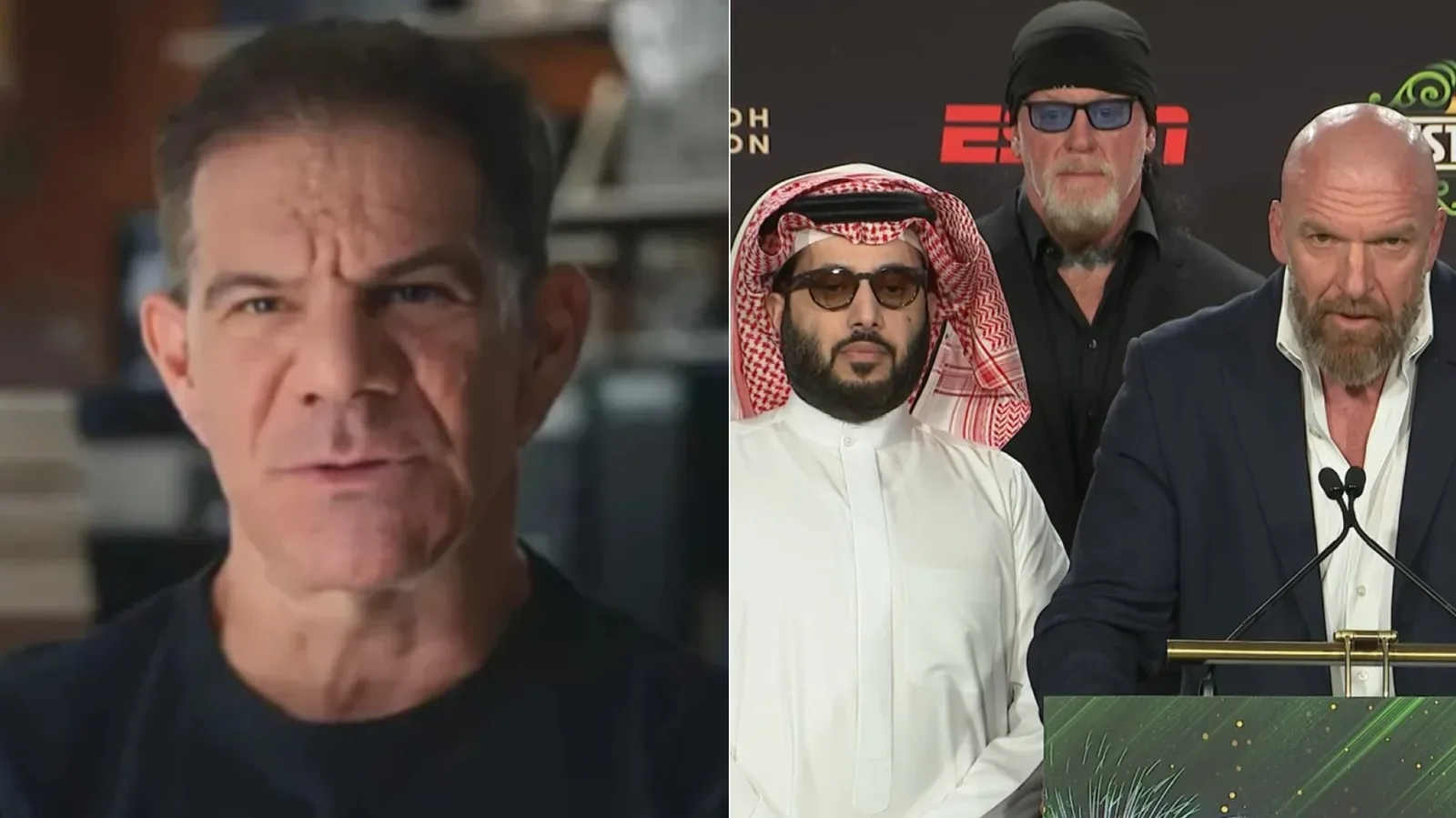
WWE’s Crown Jewel trip to Riyadh took place against an alarming regional backdrop, and further details have emerged regarding the security situation around the company’s arrival and departure from Saudi Arabia.
The event was held on November 7 in Riyadh, with WWE completing its scheduled premium live event at the ANB Arena in the Ar Rahmaniyah District. The show itself was conducted without an apparent disruption. However, the wider circumstances surrounding the trip have drawn significant scrutiny following reports of missile activity in and around the Saudi capital, as well as heightened travel concerns in the region.
Dave Meltzer addressed the situation in the latest Wrestling Observer Newsletter, characterizing WWE’s decision to move forward with the event as a case of “very clearly profits over safety.” WWE was reportedly set to receive between $50 million and $55 million for the Saudi Arabia event, a substantial financial consideration as the company continued with its existing plans.
While the event went ahead as scheduled, it did so as the U.S. State Department had been escalating warnings related to travel in the region. Some U.S. diplomats were eventually withdrawn amid the developing situation. Despite those concerns, there had not appeared to be a serious expectation that WWE would cancel or significantly alter the Crown Jewel event itself.
For more background on this topic, read John Cena Explains Why WWE Talent Should Not Call Him Out After Retirement.
Missile Activity Reported on the Day of Crown Jewel
The most concerning detail from the day of the show involved a cruise missile that was intercepted over Riyadh. The incident underscored the volatile environment in which WWE personnel, production staff, and performers were operating during the Saudi Arabia trip.
Yahya Saree, a spokesperson for the Houthi military, claimed that strikes had been carried out against King Khalid International Airport, Aramco facilities, and a National Guard camp in Najran. The claims placed key locations in Saudi Arabia at the center of the developing conflict and added to the concerns surrounding international travel into and out of the country.
WWE’s travel arrangements were reportedly adjusted on the way into Riyadh. Rather than arriving through King Khalid International Airport, talent flew into Bahrain before taking a five-hour drive to the Saudi capital. That decision meant WWE’s traveling group avoided the Riyadh airport upon arrival, at a time when security questions were already looming.
The precaution was notable because the airport was among the locations referenced in the Houthi claims. WWE did not publicly frame the Bahrain route as a security measure, and the full reasoning behind the travel setup has not been independently detailed. Still, the route allowed talent to enter Saudi Arabia without using King Khalid International Airport at the beginning of the trip.
Departure Took Place Through King Khalid International Airport
The return journey was handled differently. WWE talent departed from King Khalid International Airport the following day, November 8. Meltzer reported that ballistic and cruise missiles were launched toward Riyadh and other areas of Saudi Arabia as the WWE group was leaving.
One intercepted missile reportedly resulted in shrapnel and debris striking the Saudi Aramco administrative tower in Riyadh’s King Abdullah Financial District. Windows across several floors of the building were blown out in the incident. The location is especially relevant to WWE’s Crown Jewel trip because talent were reportedly staying near the Aramco building.
The King Abdullah Financial District, commonly known as KAFD, also has a direct connection to the event’s original venue plans. Riyadh Season Stadium in KAFD had initially been designated as the Crown Jewel site before WWE changed venues and ran the show at the ANB Arena instead. The move to the Ar Rahmaniyah District placed the event away from the financial district, although the reported nearby accommodations meant WWE personnel were still connected to the area affected by the missile debris.
There is an important distinction between the event itself and the reported activity that followed. Crown Jewel was not interrupted, and the available account does not indicate that WWE’s live event was directly affected by an attack. The concern centers on the conditions surrounding the trip, particularly the timing of the company’s travel as missile launches and interceptions were being reported in the area.
Earlier reporting after the November 8 strikes had indicated that WWE talent had departed before those incidents took place. The newer details present a more complicated timeline, stating that missiles were fired as the group was leaving. That does not necessarily mean every member of WWE’s traveling party was exposed to the same conditions or remained in Riyadh at the same time, but it does place the departure closer to the reported escalation than the initial picture suggested.
Bronson Reed Was Among Those Who Remained
Although most of WWE’s talent reportedly left Saudi Arabia, not every member of the group departed immediately. It has emerged that Bronson Reed remained in the country after being hospitalized. A medical official and an international executive also stayed behind.
No additional details about Reed’s hospitalization were provided in the account, including the nature of the medical issue or whether it was connected in any way to the security situation. There is no basis to connect the hospitalization to the missile activity, and the two matters should be treated separately unless WWE or Reed provides further information.
Reed’s continued presence in Saudi Arabia is nevertheless significant given the broader circumstances. While WWE’s main travel group was able to leave, the report indicates that a smaller number of people remained after the event at a time of ongoing regional concern. The presence of a medical official and an international executive suggests Reed was not left without support while hospitalized.
WWE has made Saudi Arabia one of its most important international destinations through its long-running agreement with the Kingdom. Major events in Riyadh and Jeddah have become regular fixtures on the company’s calendar, and Crown Jewel has grown into one of the more prominent premium live event brands connected to that partnership.
That business relationship has long been the subject of debate, with criticism frequently focused on the financial scale of the arrangement and on broader political and human-rights issues tied to Saudi Arabia. This latest situation introduces another layer to the discussion: the practical safety questions facing performers and staff when an event is held amid active regional military tensions.
The Event Was Completed, but Questions Remain
In practical terms, WWE succeeded in staging Crown Jewel and getting the majority of its personnel out of Saudi Arabia. There was no reported disruption to the in-ring portion of the event, no indication that the crowd at the ANB Arena was affected, and no report that a WWE performer was injured by the strikes or missile debris.
At the same time, the reported circumstances offer a stark reminder that event safety involves much more than what happens inside an arena. International shows require travel, hotel accommodations, transportation routes, venue security, medical support, and exit planning. When missile activity is reported in the same city where personnel are staying or departing, those routine logistics become much more consequential.
The decision to fly talent into Bahrain and transport them by road to Riyadh demonstrates that WWE’s trip already involved unusual travel considerations. The decision to use King Khalid International Airport for departures the next day, combined with the timing described in the report, will likely fuel further questions over how risks were assessed and communicated to those on the trip.
There is also a broader question of what lessons WWE and other touring entertainment companies may take from the episode. Crown Jewel’s completion without an on-site incident does not erase the danger implied by intercepted missiles, debris striking a prominent building, or travel warnings issued by the U.S. government. Avoiding a worst-case outcome is not the same as proving that no meaningful risk existed.
For now, the clearest facts are that WWE’s November 7 Crown Jewel event took place in Riyadh, missile activity was reported in the area on the day of the show and again around the company’s departure, and most talent left Saudi Arabia while Bronson Reed remained hospitalized alongside WWE support personnel. Further clarification from WWE could establish a more complete timeline, particularly regarding Reed’s condition and the travel arrangements made for those who were still in the country.
Until then, Crown Jewel will be remembered not only for what occurred in the ring, but also for the serious security concerns that surrounded WWE’s latest Saudi Arabia event.
In pictures

Darryl Polo
Darryl Polo is a passionate wrestling fan covering WWE, AEW, TNA and beyond. He loves great rivalries, breakout stars and the moments that keep fans talking long after the bell. How we work.