
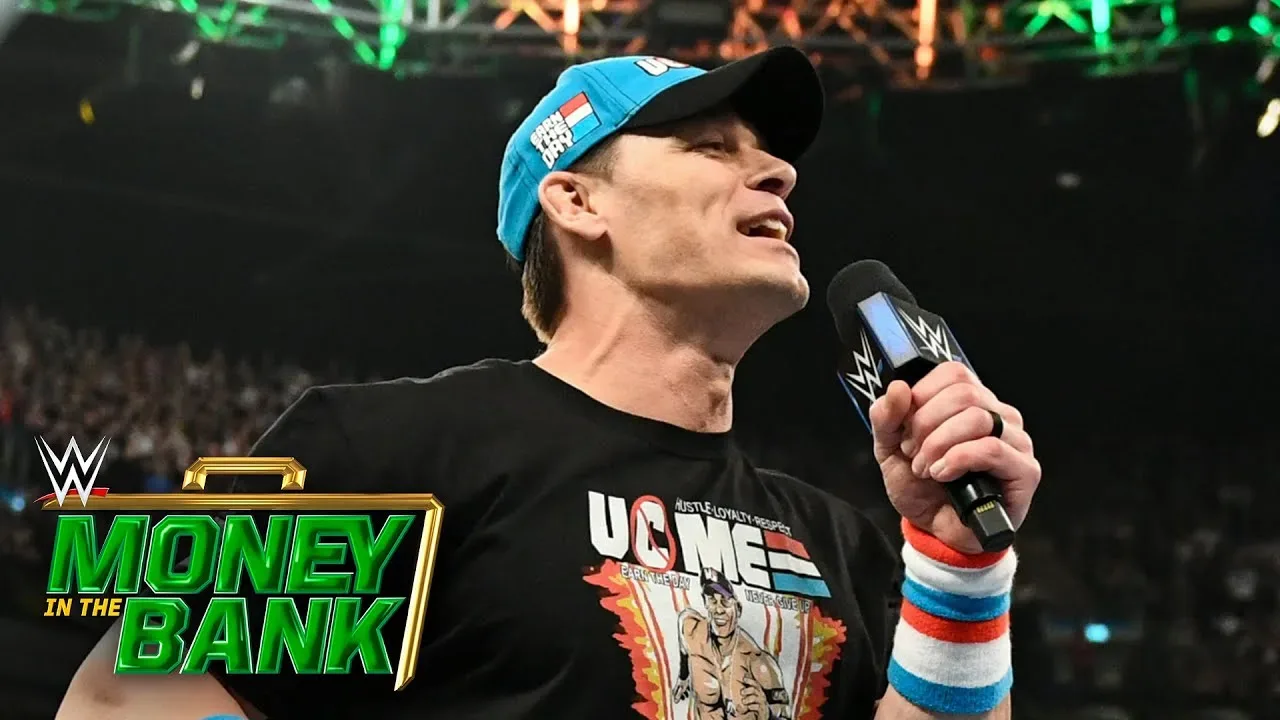
John Cena has drawn a firm line around his role in WWE following his retirement from in-ring competition. The 16-time world champion does not believe active talent should use television time to target him with insults, challenge him to a fight, or otherwise build toward a match that is not going to happen.
Cena retired from wrestling in December 2025, ending one of the most significant in-ring careers in WWE history. While he has continued to appear on WWE programming, his post-retirement presence has been markedly different from the surprise-return formula that defined many of his later active years. He has not positioned himself as a prospective opponent for the current roster. Instead, Cena has used his appearances to elevate performers including Cody Rhodes and Zilla Fatu.
In a recent interview, Cena explained that he views a callout of a retired performer as a promise to the audience. If that promise has no intended conclusion, he believes it does more harm than good for everyone involved.
“The only thing that matters is I control what I do, and if it’s one of those things where a talent is like, ‘Hey, man, maybe I can come out and talk some trash about you.’ Okay, where’s the payoff? Where are we building? You’re wasting your air, you’re wasting space. If you call me out, that’s great. You have a few good zingers about me. Good for you, but you’re building something, and you’re influencing the consumer to something that you’ll never get. We’re never gonna deliver on this. So, use me as a conduit to call somebody else out.”
For more background on this topic, read Spike Dudley Announces WWE Legends Deal.
The message is straightforward: Cena is not interested in creating false hope around one more match. In professional wrestling, a verbal confrontation is rarely just a verbal confrontation. A wrestler confronting another wrestler, particularly a star of Cena’s stature, naturally suggests an eventual physical payoff. Fans are trained to look for the match announcement, the premium live event encounter, or at minimum a televised confrontation that moves a rivalry forward.
That is precisely why Cena does not want WWE talent spending valuable promo time taking shots at him simply for a reaction. A few well-timed jokes may generate a strong crowd response in the moment, but the audience will understandably begin anticipating a match. Cena’s position is that, because he knows he will not be wrestling that opponent, it would be irresponsible to cultivate that expectation.
Cena’s WWE Role Has Changed
For much of his career, Cena was the central figure around whom WWE built major programs. From his rise as the outspoken “Doctor of Thuganomics” to his years as the company’s leading franchise player, Cena was often the destination for a challenger’s ambitions. Calling out Cena meant a wrestler was seeking the biggest possible stage, and it frequently led to a major match.
That history makes his current approach especially notable. The words “John Cena” still carry enormous weight in WWE. A current star can gain immediate attention by invoking him, whether the intention is to praise him, criticize him, or challenge him. Cena recognizes that power, but he is framing it as something that should be used carefully rather than as an easy route to a temporary reaction.
His suggested alternative is revealing. Rather than having a performer call out Cena for a match that will never be delivered, he believes the performer should use him as part of a larger argument against somebody on the active roster. A wrestler could reference Cena’s legacy, compare themselves to him, or say that another current WWE name falls short of his standard. That approach can still capitalize on Cena’s history without misleading viewers about his availability.
It is a philosophy rooted in the basic structure of wrestling storytelling. Promos are not merely speeches; they are tools used to establish stakes, define characters, and direct viewers toward the next meaningful conflict. Cena’s concern is not that an active wrestler could not produce a memorable line at his expense. His concern is that the line would point the audience toward a destination WWE has no plan to reach.
Protecting the Value of a Callout
Cena’s comments also underline how much a genuine callout can mean when it is used with purpose. The industry is built on anticipation, and a major verbal challenge works best when fans believe it could produce a match. When a promotion repeatedly signals a showdown that is never intended to occur, the device loses some of its impact.
In Cena’s view, the issue is not whether WWE performers are capable of generating attention through an exchange with him. It is whether that attention has a productive place to go. He described such a segment as “wasting your air” and “wasting space” when it is not tied to a real payoff. That reflects a disciplined approach to television time, especially in an environment where every wrestler is trying to earn a spotlight and establish a direction.
There is also a practical benefit for the talent involved. A wrestler who spends weeks antagonizing Cena without receiving a match can be left without a satisfying conclusion. The person may have received a momentary boost from interacting with a legend, but the story risks ending abruptly once it becomes clear that Cena is not returning to the ring. Redirecting that heat toward an active rival gives the wrestler a live opponent and an actual story to finish.
That distinction matters for emerging names in particular. WWE can use Cena’s reputation as a reference point, but the ultimate goal should be building the roster members who will be carrying the company forward. Cena has already indicated that he is comfortable using his screen time to help others, as seen through his efforts to put over Rhodes and Fatu. His new comments explain the philosophy behind that choice: he wants his involvement to strengthen an ongoing WWE program, not distract from one with an impossible matchup.
No Hint of an In-Ring Reversal
Fans have long learned to approach wrestling retirements with some caution. The phrase “never say never” is common in an industry where unexpected returns are part of the appeal. Cena, however, was emphatic about the problem with constructing a program that audiences will expect to end in a match when there is no intention to provide one.
His comments do not present a tease of a comeback. If anything, they serve as the opposite. Cena is explaining why he does not want the active roster, or WWE’s storytelling, to create a path toward an encounter that he already knows will not take place. That clarity is consistent with a performer trying to honor the finality of his December 2025 retirement while still retaining a meaningful connection to WWE television.
It also allows Cena to remain part of the WWE world without dominating it. A retired legend can easily become the focus of a segment simply through name recognition. Cena appears determined to avoid making the current product revolve around speculation over whether he will wrestle again. Instead, he wants the active wrestlers to be the ones receiving the central focus, the decisive wins, and the long-term momentum.
What It Means for SmackDown
Cena is set to appear on the November 13 edition of SmackDown. His explanation offers a useful indication of what viewers should and should not expect from his WWE appearances going forward. A Cena segment may still be important, emotional, or influential for the wrestlers involved. It may include references to his incomparable career and his place in company history. But it should not be treated as an invitation for someone to build a one-on-one feud with him.
Any performer sharing the ring with Cena can still benefit from the interaction, particularly if Cena helps direct attention toward a current rivalry. That is the role he is endorsing: not the retired star as an opponent waiting in the wings, but the retired star as a bridge to a meaningful present-day conflict.
For Cena, that is a matter of respecting the audience. He does not want viewers investing emotionally in a showdown that will never arrive. For WWE talent, it is a reminder that the strongest use of Cena’s legacy may be to fuel a story against somebody who can actually answer the challenge in the ring.

Darryl Polo
Darryl Polo is a passionate wrestling fan covering WWE, AEW, TNA and beyond. He loves great rivalries, breakout stars and the moments that keep fans talking long after the bell. How we work.