
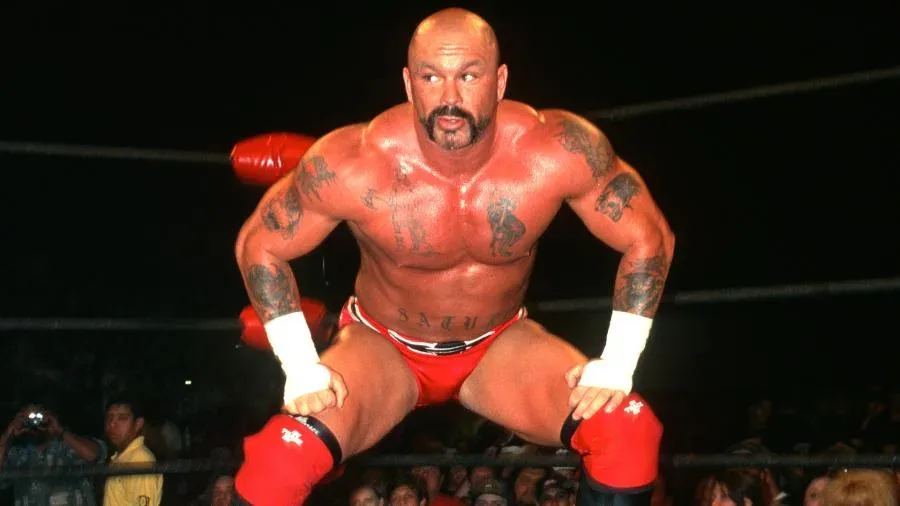
Perry Saturn has spoken candidly about one of the most difficult periods of his life, recalling that he experienced homelessness within months of leaving WWE and acknowledging the role addiction played in the abrupt decline that followed his time with the company.
In a recent interview with Chris Van Vliet, Saturn reflected on how his perception of homelessness changed when he found himself living through it. The former WWE and WCW performer said he once struggled to understand how somebody could lose stability so quickly. His own experience, he explained, showed him that circumstances can change far faster than many people realize.
“I remember thinking when I was wrestling, I didn’t know how people became homeless,” Saturn said. “I’m thinking that doesn’t happen overnight. Yeah, it kind of does before you know it.”
Saturn said the transition was particularly stark because he had recently been appearing on WWE television. He recalled that roughly eight months after his run on television, he was living on the street and had lost his home and possessions. While describing those events, Saturn did not place responsibility on anyone else.
For more background on this topic, read Jim Johnston Reveals Chyna Inspired Triple H’s ‘My Time’ Theme Concept.
“Nothing that happened to me as an excuse for what I did,” Saturn said. “That was all on me, just being an idiot.”
The comments provide a sobering update from a wrestler whose career included major stops in two of the industry’s most prominent promotions during a consequential era for North American wrestling. Saturn began his career in the late 1980s and made his professional debut in 1990. He eventually reached WCW, where he became recognizable to a national audience and worked alongside several of the most highly regarded in-ring performers of his generation.
In 2000, Saturn left WCW for WWE alongside Eddie Guerrero, Dean Malenko, and Chris Benoit. The four men arrived in WWE during a turbulent period for the company and were immediately presented as a notable group, a reflection of both their shared WCW history and their established reputations as wrestlers. Saturn’s move placed him on one of wrestling’s biggest stages, making the contrast with the circumstances he later described all the more striking.
A Rapid Change After Wrestling Television
Saturn’s remarks centered less on the visibility of his former job than on the speed with which his life unraveled after it. For a performer who had been featured on WWE programming, the idea of losing a home in less than a year is a powerful reminder that public recognition and personal security are not the same thing.
He was careful to frame the story as his own responsibility. That distinction was central to Saturn’s comments. Rather than presenting the loss of housing as something that simply happened to him, he said his own choices were at the heart of the situation. His directness gives the account a different weight: Saturn was not attempting to revise the past or offer a convenient explanation for painful decisions.
His account also challenges a common assumption about homelessness—that it must always be the result of a long, visible decline. Saturn said that before his own experience, he believed such a situation could not happen all at once. He now sees it differently. The loss of routine, income, housing, and support can compound rapidly, even for someone who had recently worked in a high-profile profession.
The exact timing is worth keeping in perspective. Saturn described it as “eight months or something” after his WWE television run, indicating he was speaking from memory rather than attempting to establish a precise timeline. The larger point of his recollection, however, was unmistakable: the distance between being on national wrestling television and being without a home was much shorter than he had ever imagined.
Saturn Addresses the Impact of Addiction
Elsewhere in the conversation, Saturn said drug addiction shortened his wrestling career. That admission adds essential context to his account of the years after WWE, though Saturn did not use addiction as a way to avoid accountability. Instead, his comments connected addiction to the personal decisions and consequences he was discussing.
Wrestling has long produced stories of performers confronting addiction, financial instability, physical pain, and the challenge of adjusting to life after a regular spot in the ring. Saturn’s interview does not offer a broad explanation for every aspect of that larger issue, nor does it need to. His perspective is intensely personal. He spoke about the consequences that he faced and the way his own judgment, by his own description, contributed to them.
That honesty is significant because Saturn’s wrestling career was built around toughness and intensity. Fans who remember his work in WCW and WWE know him as a physical, hard-edged performer, capable of excelling in a variety of styles and programs. The person speaking now is willing to discuss vulnerability, regret, and a period when the image associated with professional wrestling was far removed from his daily reality.
His comments avoid easy answers. Saturn did not suggest that a successful run in major promotions protects a wrestler from destructive behavior or difficult circumstances. Nor did he attempt to portray career success as proof that everything was stable away from the ring. The contrast between those two realities is at the center of the story he shared.
From WCW to WWE
Saturn’s path to WWE had included years of work before he ever appeared on the company’s programming. After making his debut in 1990, he steadily built his career before reaching WCW. By the time he and Guerrero, Malenko, and Benoit left WCW in 2000, each had developed substantial name recognition among wrestling fans.
The move was especially notable because of the collective identity of the four wrestlers. They entered WWE together after leaving a competing national promotion, and the arrival of established WCW talent was a major wrestling story at the time. Saturn’s position in that group underlined the respect he had earned through his in-ring work.
Yet a wrestler’s career is not defined only by televised appearances, championship opportunities, or the promotions listed on a résumé. Saturn’s reflections show the human side of what can follow when a major run ends. His story is not simply about leaving WWE; it is about the personal fallout that he says came afterward and the difficult process of looking back without deflecting blame.
A Personal Account With a Clear Message
During the same interview, Saturn also discussed a shooting incident that took place in 2004. The conversation covered several challenging chapters of his life, with Saturn offering his own recollections of events that extended beyond his wrestling career. The discussion of homelessness and addiction, though, stands out because of how plainly he described the loss of stability after his WWE departure.
There is no attempt in Saturn’s words to turn hardship into a glamorous wrestling story. He did not present homelessness as an inevitable part of the business, nor did he blame the end of his WWE run for every decision that followed. He instead emphasized how quickly his situation changed and accepted responsibility for his part in it.
That perspective may resonate beyond wrestling. Saturn’s comments speak to the danger of believing that homelessness is always distant from people who appear successful, employed, or publicly visible. They also underline the reality that addiction can cut short careers and destabilize lives, regardless of how recognizable someone may be to the public.
For wrestling fans, Saturn remains connected to a memorable period in WCW and WWE history, as well as to a group of immensely influential peers. His recent comments add a much more personal chapter to that history. The central message is not one of excuses. It is a reflection on how quickly life can change, the consequences of addiction, and the responsibility Saturn says he had to confront in the aftermath.
In pictures

Darryl Polo
Darryl Polo is a passionate wrestling fan covering WWE, AEW, TNA and beyond. He loves great rivalries, breakout stars and the moments that keep fans talking long after the bell. How we work.