Nic Nemeth has built much of his reputation on the details of professional wrestling performance, and the reigning TNA World Champion recently offered a detailed appreciation of one of the craft’s most essential elements: selling.
Speaking on Unlikely with Adrian Hernandez, Nemeth discussed the difference between simply reacting to offense and making an audience believe that a match has changed because of it. In doing so, he singled out Brock Lesnar, Roman Reigns and Penta as performers who understand how selling can create emotion, establish stakes and make even the most familiar wrestling scenarios feel significant.
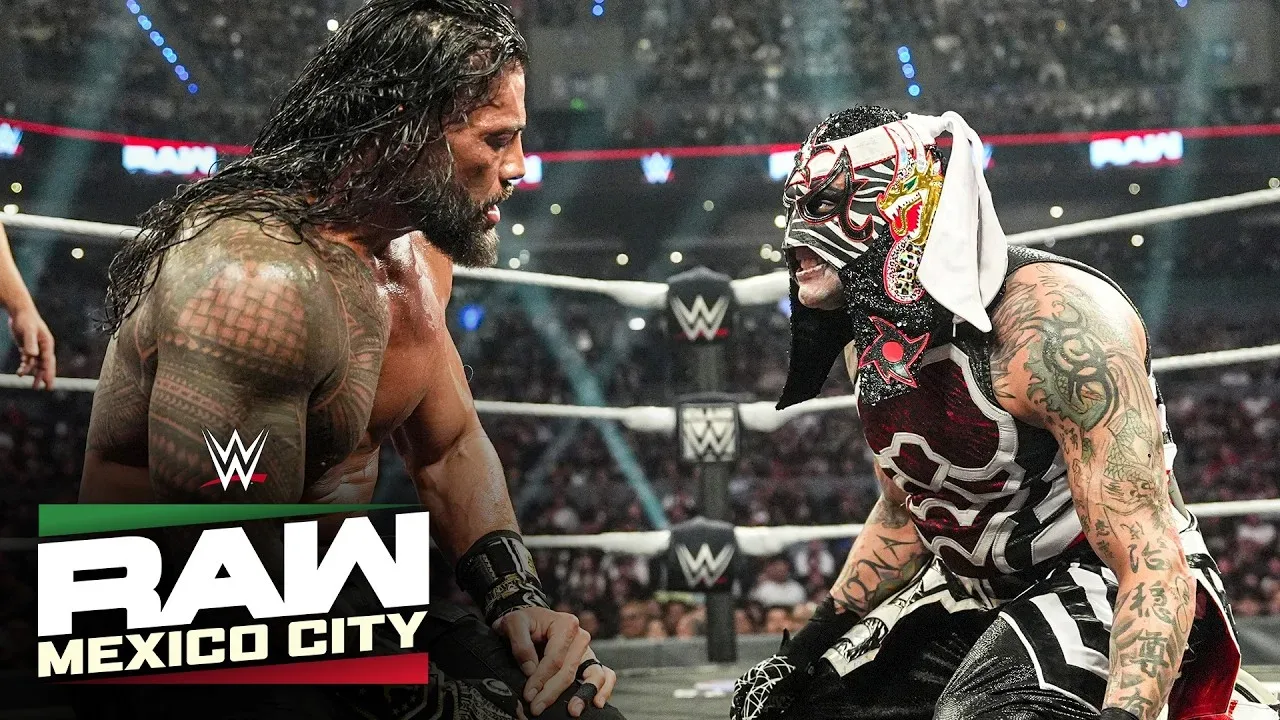
Nemeth’s comments came in the wake of Reigns’ WWE World Championship defense against Penta on an episode of WWE Monday Night RAW in Mexico City. Reigns spent much of the contest portraying damage to his arm following Penta’s targeted offense, while Penta’s own emotional work stood out despite the challenge of performing behind a mask and face paint.
For Nemeth, the key is not merely showing pain after a major move. The real skill is making sure that the effect of an attack remains part of the match’s story, even as the action evolves.
For more background on this topic, read Nic Nemeth Sees Room for More TNA-NXT Crossover After Dusty Classic Omission.
“I am someone who sees it as an art, especially that aspect of it,” Nemeth said. “I’ll catch little holes in my moves and different things that I do that could have been better.”
Why Brock Lesnar’s Selling Stands Out
Nemeth began with Lesnar, a wrestler whose presentation has long been built around extraordinary physical dominance. That persona, Nemeth explained, is precisely why Lesnar’s moments of vulnerability can have such a powerful effect. An audience is conditioned to see Lesnar as a force who is difficult to hurt, difficult to move and even more difficult to intimidate. When that foundation is challenged, the response carries added weight.
“You know who catches everybody off guard a lot is Brock because we don’t see Brock sell too much,” Nemeth said. “When you do, it’s exquisite.”
Lesnar’s value in that role is tied to the equity in his character. He is not routinely portrayed as someone who is overwhelmed by every strike or staggered by every near fall. As a result, when he backpedals, looks uncertain or visibly struggles to recover, those moments announce to the crowd that something unusual is happening.
Nemeth described Lesnar as a “cyborg” and a “non-human being guy,” emphasizing the larger-than-life aura that makes the former WWE Champion’s selling distinctive. If a wrestler with Lesnar’s aura suddenly looks endangered, it does more than create sympathy. It raises the perceived level of the opponent and makes the audience pay closer attention to what could happen next.
That is an important distinction in a medium where wrestlers must balance durability with drama. Selling too much can undermine a performer’s established identity, while selling too little can make an opponent’s offense appear meaningless. Nemeth’s praise for Lesnar centered on the fact that he picks his moments, and that selectiveness makes the reaction matter.
“When you see him in trouble or backpedaling, it’s a thing of beauty because it really stands out,” Nemeth said. “He’s really good at selling when it comes down to it.”
Nemeth also noted that Lesnar’s ability should not be viewed only through the lens of his more recent work with Oba. His broader point was that Lesnar has consistently understood the significance of showing danger at the right time, particularly when a match’s story requires the audience to believe his opponent has found a path to victory.
Roman Reigns and the Importance of Character Detail
Nemeth then turned to Reigns, whose match with Penta in Mexico City gave him a recent example of the layered work he values. Reigns has often been associated with a grand entrance, the presence of The Bloodline and a championship run defined by major-match presentation. Nemeth acknowledged the familiar expectations that can accompany that image, but stressed that Reigns has shown another dimension when a match calls for it.
“Roman’s another one,” Nemeth said. “He just had this incredible match with Penta.”
Reigns’ portrayal of an injured arm was not just a matter of clutching the limb after a move. Nemeth highlighted the facial expressions and character work that gave the injury greater emotional force. In his view, the strongest selling is not confined to a single dramatic moment. It remains present in a wrestler’s decisions, posture and expression as the match continues.
That continued attention is what Nemeth described as different “levels” of performance. A wrestler can make one attack look devastating in the moment, but the story becomes richer when the damage is still visible later—perhaps in the way a wrestler hesitates before using the affected arm, adjusts a familiar move or shows frustration at being unable to execute something normally.
“You can take something incredible that it looks like you got knocked out or your arm broken, and then after that, even if you throw it away, it was pretty good,” Nemeth said. “But then you see it still is in there. It’s still involved, but not quite the same.”
For Reigns, that approach adds another layer to a performance that is already closely connected to character. The former WWE World Champion’s reactions can tell the audience whether he is irritated, confident, rattled or desperate without requiring a word of dialogue. Nemeth pointed to the emotional quality of Reigns’ work against Penta as a major reason the bout connected.
It also reflects why selling is often inseparable from psychology. A limb injury matters most when it changes the tactical choices within the match. A moment of exhaustion matters most when it informs a wrestler’s urgency. The best performances allow viewers to understand the stakes through behavior, not simply through commentary or the scale of the next maneuver.
Penta’s Emotion Behind the Mask
Nemeth’s praise was not reserved for Reigns. He also made a point of highlighting Penta’s role in creating the emotional atmosphere of the championship match.
Penta has one of wrestling’s most recognizable looks, with his mask and paint serving as central parts of his presentation. While a mask can create mystique and make a performer instantly identifiable, it can also place greater importance on body language, eye movement and the intensity behind every gesture. Nemeth believes Penta showed that emotion can still be communicated vividly without an uncovered face.
“Penta, too, let’s not pretend,” Nemeth said. “He has a mask on and paint on the rest of his face, and I saw emotion on him for that entire match that most people who don’t have a covered face and don’t have face paint don’t pull off.”
That observation speaks to the broader nature of wrestling performance. Facial expressions are a major tool, but they are not the only one. Timing, posture, movement, eye contact, breathing and the manner in which a wrestler responds to the crowd all contribute to the story. For a masked wrestler, those physical details can become even more important.
Nemeth felt the Mexico City crowd became part of that exchange. He described the performers as feeding off the audience and the audience responding to what they saw in the ring. That shared energy, he argued, is the point where a match becomes more than an exhibition of athletic ability.
More Than Moves
Nemeth’s central message was that spectacular offense has value, but it is not enough on its own. Signatures and high-impact maneuvers can excite a crowd, establish a wrestler’s identity and provide memorable highlights. Yet the emotional response to those moves depends on whether the audience understands what they mean in the story being told.
“That proves it’s not about moves,” Nemeth said. “The moves are fantastic. The moves are signatures. Everybody has their things. But when you have that raw emotion that you see in their faces and it translates to the crowd’s faces, that’s what pro wrestling is about.”
That philosophy has been a consistent part of how Nemeth approaches the business. Selling is not presented as weakness; it is the mechanism that gives an opponent’s offense consequence. It can make a comeback feel earned, a near fall feel plausible and a rivalry feel personal. It can also reveal the depth of a character, whether that character is an indestructible force like Lesnar, a calculating champion like Reigns or a masked challenger looking to seize a defining opportunity like Penta.
Nemeth is currently preparing for his own TNA World Championship defense against Leon Slater, but his comments offer a clear view of what he values inside the ring. The performers he praised all bring distinct styles and personas to their matches. What links them, in Nemeth’s estimation, is the ability to make viewers feel that the physical and emotional events unfolding in the ring truly matter.

Darryl Polo
Darryl Polo is a passionate wrestling fan covering WWE, AEW, TNA and beyond. He loves great rivalries, breakout stars and the moments that keep fans talking long after the bell. How we work.