
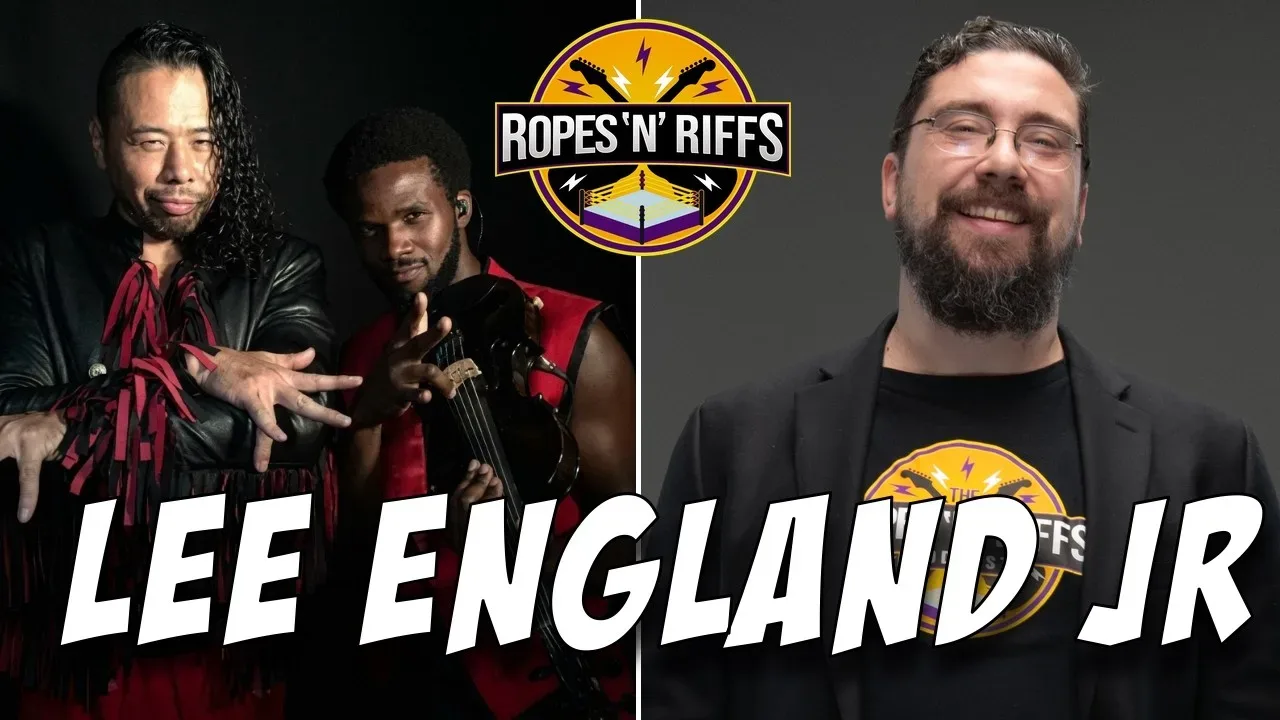
Lee England Jr. has reflected on one of the most distinctive intersections between live music and professional wrestling in recent memory: playing Shinsuke Nakamura to the ring in Japan for Pro Wrestling NOAH.
England, a violinist and vocalist, became familiar to wrestling fans through his work alongside Nakamura during the latter’s acclaimed NXT TakeOver entrances. The performances added another layer to an entrance presentation that was already built around Nakamura’s charisma, his instantly recognizable theme music, and an audience eager to participate in every beat of the spectacle.
That association eventually led to another memorable opportunity. England performed for Nakamura at NOAH The New Year in January 2023, bringing the live violin element to a major wrestling setting in Japan. Looking back on the experience, England described it as an unexpected chance that became even more meaningful after a conversation with Nakamura before the event.
“That was such an unexpected, amazing opportunity… Once I got there, it was the day before we did the press conference, and I was actually able to sit down and talk to him, and he was like, ‘You’re here because you’re talented, bro. You don’t need to do anything extra. You do you, I do me, and it’ll be done.’ That was word for word what he told me.”
For more background on this topic, read JBL Says Jacqueline Would Have Been a Natural Long-Term Fit With the APA.
The message was a simple one, but it spoke to the trust Nakamura placed in England’s ability. Rather than asking the musician to alter his identity or force himself into a role beyond his strengths, Nakamura encouraged him to bring the same skill and presence that earned him the invitation in the first place.
For a performer working in an environment as carefully choreographed and high-pressure as a wrestling entrance, that kind of direction can be especially valuable. Live music can elevate a walk to the ring from a routine introduction into a defining moment, but it also requires chemistry between the wrestler, the musician, the production team, and the crowd. Nakamura’s advice gave England a clear foundation: each performer could focus on what he did best, and the combined presentation would take care of itself.
A Familiar Partnership in a New Setting
England’s history with Nakamura began during the latter’s NXT run, when Nakamura’s entrances became major attractions at TakeOver events. Nakamura had already arrived in WWE with a global reputation, having established himself as one of the most charismatic and acclaimed figures in Japanese professional wrestling before moving to the United States. His entrance style fit naturally with the live-performance atmosphere that NXT TakeOver shows cultivated.
England’s violin supplied a different texture to the presentation. It was not simply a musician appearing beside a wrestler; it was an extension of the mood surrounding Nakamura. The blend of theatricality, timing, and crowd anticipation suited Nakamura’s larger-than-life persona, while England’s performance helped make the entrance feel singular on a card filled with major matches.
The NOAH appearance represented a return to Japan for that collaboration, but it was not just a repeat of the NXT formula. Performing live in Japan brought a different setting, a different audience culture, and the added significance of appearing at a Pro Wrestling NOAH event. England said the soundcheck, which included large taiko drums, made a strong impression on him.
“[T]he soundcheck with the big taiko drums… I did not know the intention and attention of the crowd in Japan and how respectful they are of sound. It was almost like a concert. They’re like listening, on the edge of their seat for every note, every nuance, every subtlety.”
England’s description captures a quality that performers frequently associate with Japanese wrestling audiences: a willingness to listen closely and react to the smallest details as a performance unfolds. Wrestling crowds in Japan can certainly be loud and expressive, but their engagement often includes an intense quiet during moments that demand focus. For a live violin performance, that attentiveness can create a markedly different atmosphere from one in which music serves only as background noise before the action begins.
The Importance of the Entrance
In professional wrestling, an entrance does more than signal that a match is about to begin. It establishes identity, frames the audience’s expectations, and can reveal the scale of a wrestler’s confidence before the bell ever rings. Few modern wrestlers have understood that as instinctively as Nakamura.
Nakamura’s movement, body language, and connection with his music have long been core parts of his presentation. Whether he is entering alone or accompanied by a live performer, the entrance is an opportunity for him to create a mood before stepping between the ropes. England’s role did not replace that formula; it gave Nakamura another instrument with which to build it.
The addition of live violin also changes the sense of risk. Recorded entrance music will play the same way every time. A musician performing in the building brings timing, feel, and human spontaneity to the moment. The wrestler still has to own the walk, and the musician still has to command the performance, but the two can feed from the crowd and the atmosphere around them.
Nakamura’s encouragement to England suggests he understood exactly what was required. There was no need for either man to overthink the occasion. England’s task was to play with the talent that had brought him there. Nakamura’s task was to be Nakamura. In the right arena, with the right crowd, that combination could speak for itself.
Respect for the Craft
England’s comments also offer a revealing perspective on Nakamura as a collaborator. Professional wrestling is often a tightly controlled form of live entertainment, particularly on major events with elaborate production demands. Outside guests may face uncertainty about where they fit within the structure of a wrestling show. Nakamura’s words gave England a direct answer before the performance: he belonged there because of his ability.
That is a meaningful distinction. England was not being treated as a novelty designed merely to attract attention. He was being invited to contribute his craft to a performance with a wrestler whose entrances have always depended on confidence, rhythm, and expression. The advice to avoid doing anything “extra” was not a limitation; it was an endorsement of authenticity.
It also reflects why the pairing worked in the first place. Nakamura has built much of his career around individuality. His in-ring style, mannerisms, presentation, and musical connection are all designed to make him immediately identifiable. England brought a similarly clear artistic voice as a violinist and vocalist. Their collaboration had room to succeed because neither needed to become a version of the other.
Nakamura’s Current SmackDown Presence
Nakamura remains a prominent figure on Friday Night SmackDown, where he currently teams with KYOKI, also known as Hiromu Takahashi. The pairing places Nakamura alongside another wrestler with deep ties to the Japanese scene, adding a different dynamic to his current WWE chapter.
Nakamura and KYOKI were last in action on the November 20 edition of SmackDown. While the present-day team environment is different from the solo entrance setting England recalled, the story serves as another reminder of how many chapters Nakamura’s career has contained. He has moved between individual rivalries, tag team situations, major WWE stages, and appearances that reconnect him to Japan.
For England, the NOAH The New Year performance stands out not merely because it happened in another country, but because of the welcome he received from Nakamura and the response he felt from the audience. His memories of taiko drums, careful soundchecks, and a crowd listening to every detail paint the picture of an experience that went beyond a conventional wrestling entrance.
At its heart, England’s recollection is about confidence in preparation and respect between performers. Nakamura did not need a complicated speech to communicate that. He told England that his talent had earned the opportunity, urged him to remain himself, and trusted that their respective strengths would make the moment work.
That approach produced a fitting continuation of a partnership that had already left an impression on wrestling fans. In an industry built around unforgettable sights and sounds, the collaboration between Nakamura and England demonstrated how live music can become part of the wrestling story rather than simply an accompaniment to it.
In pictures
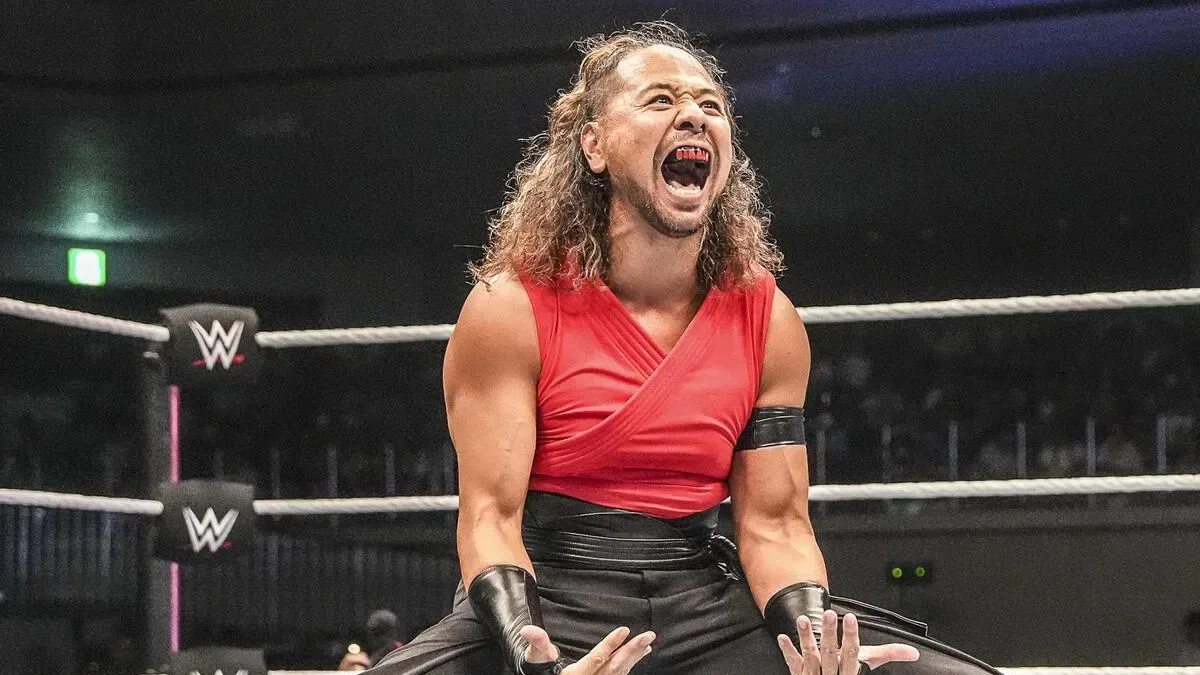

Darryl Polo
Darryl Polo is a passionate wrestling fan covering WWE, AEW, TNA and beyond. He loves great rivalries, breakout stars and the moments that keep fans talking long after the bell. How we work.