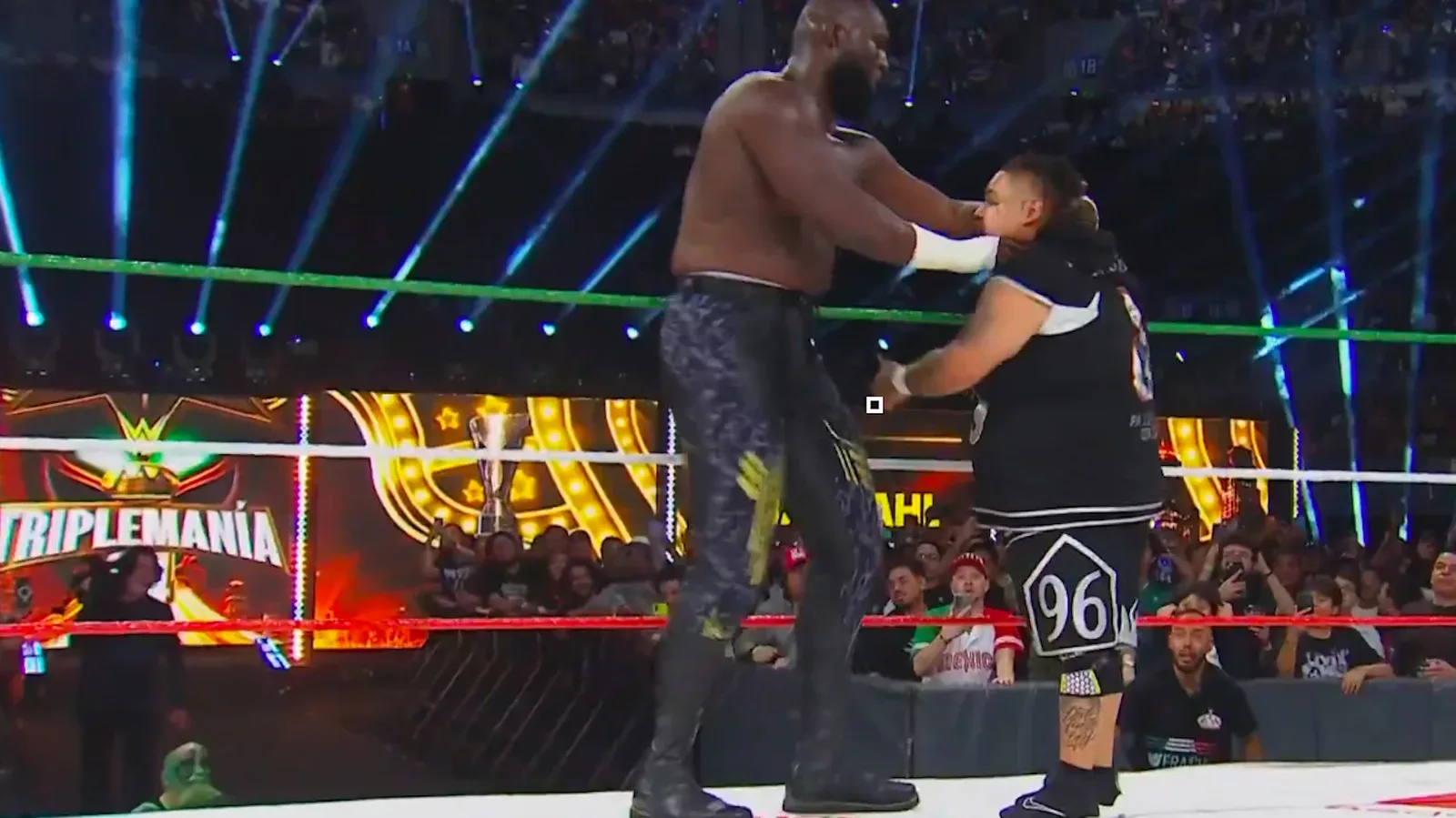
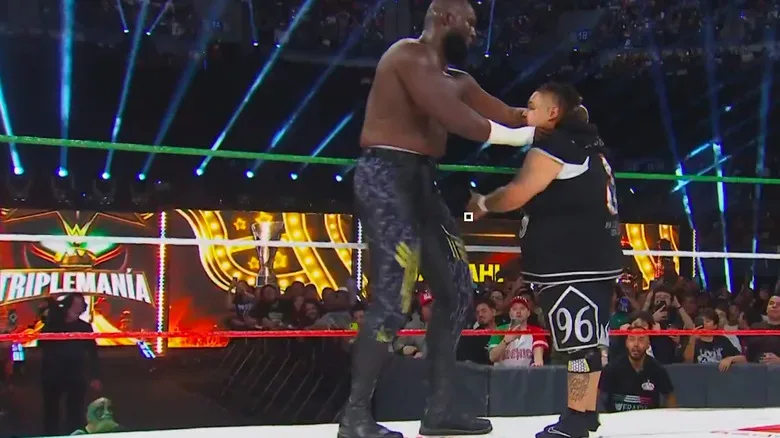
Niño Hamburguesa is back in AAA after a controversial departure earlier this year, making his return during the 15-man Copa Bardahl at TripleMania Night Two. The comeback brought an emphatic response from the live crowd and closed a difficult chapter for one of the promotion's most recognizable personalities.
Hamburguesa had been fired in March following a physical altercation with a fan at an independent wrestling event. Video of the situation circulated widely after the match. The incident reportedly began after a spectator laughed when Hamburguesa slipped and fell. Hamburguesa then sat in the fan's lap and delivered several back elbows. AAA dismissed him eight days later.
His firing was a significant development because Hamburguesa had long been viewed as a popular and dependable member of the AAA roster. He is a former World Mixed Tag Team Champion and has developed a distinctive connection with audiences through his character, crowd-friendly presentation, and consistency as a performer. The removal of a wrestler with that level of familiarity was therefore notable even before considering the circumstances around it.
The Incident Led to a Clear Disciplinary Response
The decision to release Hamburguesa was understood as a response to the seriousness of physical contact with a fan. Wrestling promotions operate in an environment where performers regularly interact closely with audiences, particularly at live events, but there remains an essential line between a crowd reaction and a wrestler engaging a spectator physically. Hamburguesa's actions crossed that line.
For more background on this topic, read Rhino Explains Why He Initially Resisted Using the Gore Before It Became His Signature.
There was reportedly disappointment internally because people in AAA considered him a strong worker and valued what he brought to the company. At the same time, the promotion felt disciplinary action was necessary. The firing served as a message to the roster that striking fans could not be accepted, regardless of the circumstances that led to the confrontation or the wrestler's standing within the company.
That distinction matters in professional wrestling. Performers may face heckling, ridicule, and hostile reactions while portraying their characters, and fan engagement is often part of the atmosphere. Still, promotions must protect spectators, staff, and wrestlers by maintaining firm standards when a live-event interaction turns physical. AAA's handling of Hamburguesa's case reflected that need to establish a consequence publicly and internally.
The situation also arrived during a changing period for AAA, with WWE's acquisition of the Mexican promotion reshaping the larger corporate landscape around the company. There was a belief among those close to the situation that Hamburguesa may not have been fired for the incident before WWE acquired AAA. Even so, the eventual return demonstrates that the dismissal was not necessarily viewed as a permanent end to his relationship with the promotion.
A Popular Name Returns at TripleMania
Hamburguesa's reappearance in the Copa Bardahl at TripleMania Night Two confirmed that he had been welcomed back into the AAA fold. The tournament was a fitting setting for his return. With 15 competitors involved, the match gave the promotion an opportunity to deliver surprises, showcase multiple acts, and measure the audience reaction to a wrestler who had been absent under difficult circumstances.
The response was reportedly extremely positive. Fans reacted loudly to seeing Hamburguesa back, underscoring the goodwill he retains with the AAA audience. That reaction is important beyond one tournament appearance. It suggests that the fan base was ready to see him resume his place in the promotion, even after the controversy and the disciplinary action that followed it.
AAA did not present his return as a lengthy explanation or an extended attempt to revisit the incident inside the ring. Instead, Hamburguesa entered a major match and allowed the moment itself to carry the story. For a wrestler whose appeal has often been tied to his immediate charisma and ability to connect with crowds, that was an effective way to reintroduce him.
The return also gave AAA an opportunity to move forward without erasing what happened. His release had already established the company's position on the fan altercation. Bringing him back later does not change the fact that the earlier conduct prompted discipline. Rather, it indicates that AAA was willing to make room for a return after the message had been delivered and time had passed.
Omos Again Wins the Copa Bardahl
Hamburguesa did not win the Copa Bardahl, however. Omos eliminated him on the way to winning the match for the second consecutive year. The result kept the spotlight on Omos' dominance in the tournament while still allowing Hamburguesa's comeback to be one of the most memorable developments from the match.
For Omos, the repeat victory adds another notable AAA accomplishment. Eliminating a returning crowd favorite is the kind of moment that reinforces his physical advantage in a multi-person match built around survival. His second straight Copa Bardahl win also gives the tournament a measure of continuity, as he has now emerged from the field as the final victor in consecutive editions.
For Hamburguesa, being eliminated by Omos does not diminish the central takeaway from his appearance. The major story was his presence in AAA again, not a tournament triumph. A Copa Bardahl setting naturally allows wrestlers to enter, make an impression, and be removed without necessarily ending their momentum. In this case, the audience response to Hamburguesa may prove more meaningful than how long he lasted in the match.
What the Return Means for AAA
Hamburguesa's reinstatement restores a familiar act to AAA's lineup at a time when the company is operating under new ownership. He brings established name recognition, a history with the promotion, and an audience connection that was clearly evident at TripleMania. Those are valuable qualities for any roster, particularly for a promotion looking to balance recognizable identities with broader changes around its business.
There is also a broader lesson in how the sequence unfolded. AAA imposed a serious punishment after an incident involving a spectator, but the promotion did not necessarily close the door forever on a wrestler who had been appreciated internally and supported by fans. The return presents a form of second opportunity while preserving the importance of the original disciplinary decision.
That does not make the earlier altercation disappear, nor does it remove the responsibility attached to it. The point of the firing was to establish that a performer cannot respond to a fan by using physical force. Hamburguesa's return now places the attention on what comes next: whether he can rebuild momentum as an AAA regular and keep the focus squarely on his in-ring work and connection with the audience.
TripleMania Night Two offered an encouraging first step. The crowd welcomed Niño Hamburguesa back, and his place in the Copa Bardahl made clear that AAA sees value in having him involved again. Omos left with the tournament victory for a second year in a row, but Hamburguesa's comeback was among the event's most consequential moments.
AAA now has a proven crowd favorite available once more, while Hamburguesa has an opportunity to turn a troubled exit into a productive new chapter. His return was met with excitement; maintaining that goodwill will depend on everything that follows.
In pictures
Darryl Polo
Darryl Polo is a passionate wrestling fan covering WWE, AEW, TNA and beyond. He loves great rivalries, breakout stars and the moments that keep fans talking long after the bell. How we work.