
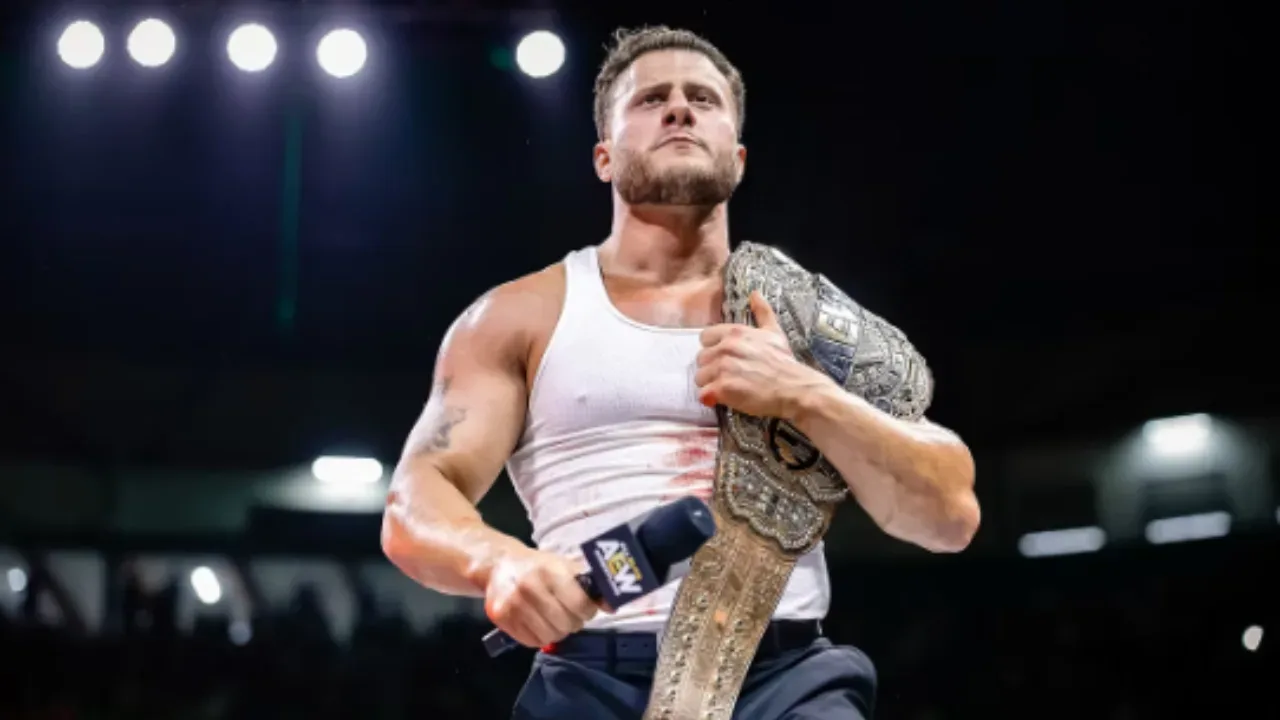
AEW’s MJF has asked wrestling fans to stop turning the response to Bronson Reed’s death into a fight over promotions. Reed’s death at the age of 38 was announced on November 27, 2026, prompting tributes from wrestlers, fans and companies around the world. In a social media post the following morning, MJF directed his frustration at people bringing brand rivalries into the discussion and asked them to show respect for Reed and his family.
WWE paid tribute to Reed following the announcement, as did AEW, TNA and New Japan Pro-Wrestling. The response was already crossing company lines when MJF weighed in. His post took aim at the impulse to treat a moment of mourning as another round in the argument over which promotion fans support.
“Can we not make another young wrestler dying a tribalistic nightmare? Can we respect the person and their family? What the fuck is wrong you people?!?”
View the referenced post on X
The wording was blunt, but the distinction MJF drew was straightforward. Fans could have strong opinions about wrestling companies without bringing those opinions into every discussion about a wrestler. In this case, he asked them to keep the person who had died and the family dealing with that loss at the center of the conversation.
For more background on this topic, read Francesco Akira Says United Empire Should Hold Off on Recruiting.
MJF’s Appeal Was About the Reaction to Reed’s Death
MJF did not name a promotion, point to a specific exchange or single out a fan base in the post. He addressed the people engaging in the behavior, rather than assigning responsibility to supporters of one company. His reference to “another young wrestler dying” framed the problem as something he did not want to see repeated. He did not identify any previous loss or try to draw a comparison between Reed’s death and another wrestler’s.
That matters because the post could easily be pulled into the sort of argument it was criticizing. MJF’s affiliation with AEW is part of the context, but his appeal was not a defense of AEW or a criticism of the way WWE, TNA or NJPW paid tribute. There was no judgment about which company said the right thing, said it first or had more standing to speak. The question he asked was whether fans could leave those divisions aside long enough to respect someone who had died.
The reference to Reed’s family was the most direct part of the message. MJF was not asking people to adopt a particular tribute or to agree on how Reed should be remembered. He was asking them to consider whom the discussion was about and who was living with the loss. An argument among fans may feel like a continuation of a familiar online rivalry to the people taking part in it. It has little to do with what a bereaved family is facing.
Tributes to Bronson Reed Came From Across Wrestling
The tributes following the November 27 announcement offered a different picture of the industry from the one suggested by arguments over company loyalty. WWE, AEW, TNA and NJPW each acknowledged Reed’s death. Fans and wrestlers also paid tribute, making the response broader than the statements from any one organization. Those messages did not need to be coordinated or identical to show that the loss was being felt across wrestling.
There is a practical difference between reporting which companies paid tribute and treating their statements as entries on a scoreboard. The first helps explain the breadth of the response to Reed’s death. The second asks readers to evaluate an act of remembrance primarily by the logo attached to it. MJF’s post challenged the latter approach without disputing anyone’s right to support a favorite promotion.
The company statements were also only one part of the response. A promotion speaks in an official capacity, while a wrestler or fan can speak from a personal perspective. Those are different ways to acknowledge a loss, and one does not invalidate the other. A fan does not have to watch the same shows as someone else to understand why Reed’s death matters to them. The range of people and organizations paying tribute was itself a reason not to reduce the reaction to a dispute between rival audiences.
Keeping the Focus on Reed and His Family
Debating rival promotions is a familiar part of following professional wrestling. Fans compare matches, argue about booking and disagree on which shows they most want to watch. Those conversations have a subject people can reasonably debate. The announcement of a wrestler’s death calls for a different kind of attention. A tribute to Reed is not an argument that another company is better or worse, and acknowledging a message of sympathy does not require anyone to change what they watch.
MJF’s profanity made his frustration clear, but the substance of the post was in the two questions that preceded it. The first asked fans not to make a young wrestler’s death a tribal dispute. The second gave them a straightforward alternative: respect the person and his family. That could mean sharing a memory, letting a tribute stand on its own or simply choosing not to turn someone else’s remembrance into a debate.
There is no need to treat every wrestling fan as part of the problem MJF described. The tributes themselves show that many people were already responding to the news without making it about competing companies. Nor did his post suggest that everyone had to grieve publicly. It addressed what people chose to do when they entered the conversation, particularly when their first instinct was to bring a promotion rivalry with them.
Reed was 38 when he died. In the wake of the November 27 announcement, the wrestling community’s response extended well beyond a single promotion, with messages from companies, wrestlers and fans. MJF’s November 28 post asked those taking part in that response not to lose sight of why it was happening. The tributes gave people across wrestling a chance to remember Bronson Reed. As MJF made clear, there was no reason for that to become a contest.

Darryl Polo
Darryl Polo is a passionate wrestling fan covering WWE, AEW, TNA and beyond. He loves great rivalries, breakout stars and the moments that keep fans talking long after the bell. How we work.