
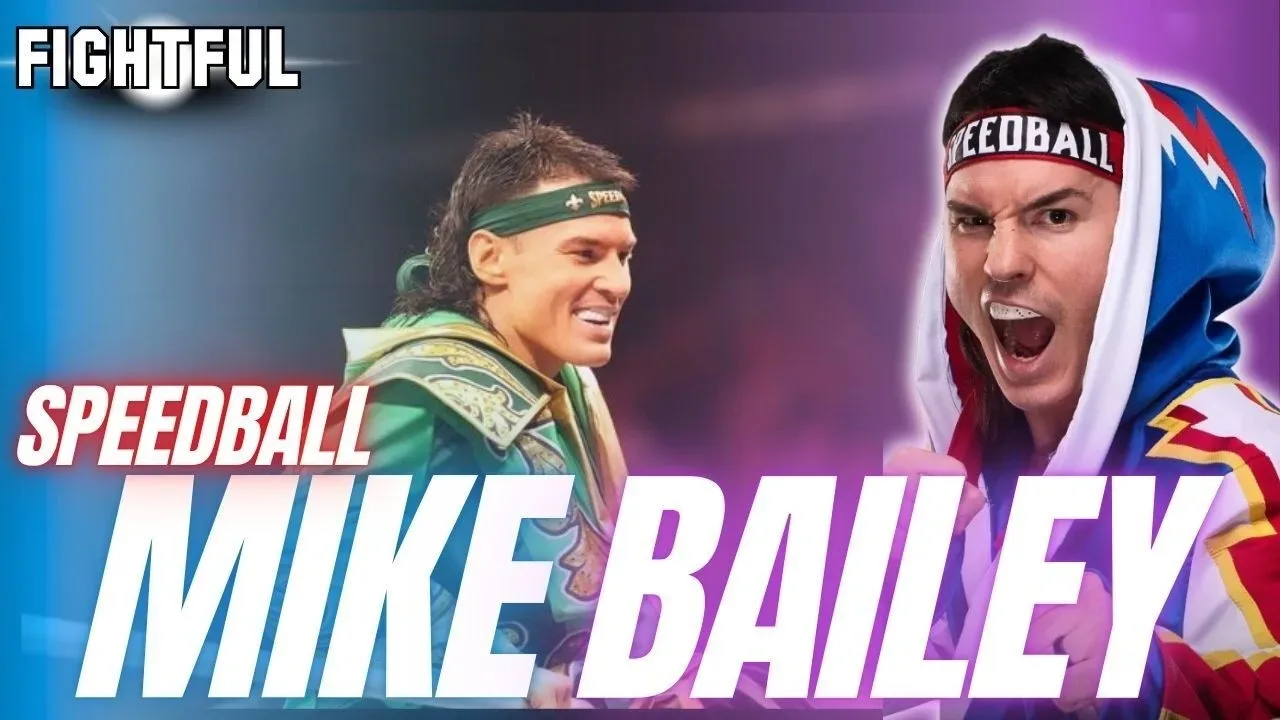
Mike Bailey has made it clear that fans should not expect him to turn a recent on-screen image involving Gabe Kidd into a new commercial venture.
Bailey addressed a photograph taken at a recent episode of AEW Collision in which Gabe Kidd was shown biting down on Bailey’s toes. The image naturally invited a certain kind of response from wrestling fans, particularly given the internet’s tendency to turn unusual match moments and striking visual snapshots into running jokes. But Bailey, who has long embraced an unconventional presentation as “Speedball,” was direct when asked whether there was any money to be made from foot-focused content.
His answer was no.
“So honestly, no, this photo is not worth any real money because I am giving the piggies out for free every week on Dynamite if you’re into this,” Bailey said. “People ask me this, ‘You ever sell like pictures of your feet?’ and no, I can’t. They’re out on national television for free. If I wanted to make money off of foot content, I would have to do some very specific stuff, which I will not.”
For more background on this topic, read AEW Collision Grand Slam France Draws 372,000 Viewers on TNT, 18-49 Rating Falls to 0.04.
The response is very much in line with Bailey’s public personality: humorous, matter-of-fact, and willing to acknowledge the strange corners of wrestling fandom without allowing the conversation to become more serious than it needs to be. He did not leave room for ambiguity on the larger question. Bailey is not planning to sell foot pictures or create the kind of content that would be required to make that a meaningful business.
A Strange Image From AEW Collision
Professional wrestling regularly produces visuals that can take on a life of their own beyond the match or show where they originated. A single camera shot, facial expression, hold, dive, or act of aggression can become a meme, fuel debate, or simply give fans an unexpected talking point. The photo of Kidd biting Bailey’s toes belongs firmly in that category.
It is an unusual image even by the standards of a medium built on eccentric characters and confrontational physicality. Kidd has earned attention for an unpredictable and aggressive style, while Bailey’s in-ring identity has always been distinct from the standard template. The combination of those two performers created a moment that was bound to stand out.
Bailey’s comments suggest he understands exactly why fans would react to it. Rather than treating the question as inappropriate or avoiding it altogether, he answered it with a joke about his feet already being visible on national television. At the same time, he drew a clear boundary between participating in professional wrestling and creating separate content intended for a particular market.
That distinction matters. Wrestlers frequently navigate an environment in which fans have direct access through social media, convention appearances, streaming platforms, and other digital channels. Those interactions can be a valuable way to build an audience and promote a performer’s work. They can also create questions that go well beyond the wrestling ring. Bailey’s answer was a concise statement that he is comfortable joking about the photo but has no interest in taking the idea further.
Bailey Keeps the Focus on His Wrestling Career
For Bailey, the more meaningful discussion remains his work as a wrestler. His athletic style, speed, martial arts-influenced striking, and ability to engage audiences have made him one of the more recognizable performers associated with the “Speedball” name. While the Gabe Kidd image may be the kind of thing that circulates widely among fans, it is not something Bailey views as a separate revenue opportunity.
His phrasing also made the practical side of his position clear. Bailey noted that his feet are already regularly seen on television, specifically joking that viewers get “the piggies” for free on Dynamite. In other words, the novelty value of a standard photograph is limited when the same subject is already part of his normal televised wrestling presentation.
More importantly, Bailey said that making actual money in that space would require “some very specific stuff,” adding that he will not do that. He did not elaborate beyond that remark, and there is no need to read additional detail into it. The message was straightforward: there is a line he does not intend to cross.
That clarity can be useful in wrestling, where performers are often asked to respond to everything from serious career questions to lighthearted fan speculation. Bailey’s remarks handled both aspects at once. He acknowledged the absurdity of the viral-style image, delivered a memorable answer, and left no question about his decision.
Gabe Kidd’s Presence Adds to the Conversation
The fact that Gabe Kidd was involved is also central to why the photograph generated attention. Kidd’s intensity and willingness to bring a chaotic edge to his appearances make him a natural fit for moments that are not easily forgotten. Biting an opponent’s toes is not a conventional piece of wrestling offense, but it certainly fits the kind of unruly visual that can accompany an aggressive confrontation.
For Bailey, the incident became an opportunity to show off his sense of humor rather than a point of conflict. He did not frame the picture as something to be monetized, nor did he suggest it had changed anything about his approach to wrestling or fan interaction. It was an odd moment from a recent episode of Collision, and he treated it accordingly.
That response also reflects a broader truth about modern wrestling coverage and fan culture. The biggest topic surrounding a performer is not always a title pursuit, a win-loss record, or a major announcement. Sometimes it is one image from a television taping. Wrestlers who can address those moments naturally can keep the attention from becoming a distraction. Bailey did exactly that by providing an answer that was funny without inviting further speculation about his intentions.
Clockwork Carnage Remains Ahead
Elsewhere in the same conversation, Bailey discussed the upcoming Clockwork Carnage match. While the foot-content question is likely to draw the most immediate reaction because of its unusual nature, the upcoming match is the more significant competitive issue for Bailey.
Clockwork Carnage carries a name that immediately signals a high-intensity setting, and Bailey’s style has consistently made him well suited to demanding environments. His work is often defined by relentless pace, sharp kicks, and a willingness to absorb punishment in pursuit of a victory. Those traits give any looming marquee match added intrigue, especially when the presentation suggests disorder and physical escalation.
Specifics about the match were not detailed in Bailey’s remarks on the Gabe Kidd photo, but its mention confirms that it remains an active part of the conversation around him. Bailey’s focus, ultimately, is on what comes next in the ring—not on converting a strange television image into a side business.
That is the important takeaway from his comments. Fans may continue to share or joke about the Collision photograph, and Bailey clearly understands why it has become a topic. But he has answered the question of whether he intends to sell foot content with an unequivocal no.
The photo may be memorable. Bailey’s position is even clearer: the feet are already on television, the additional content is not happening, and his attention remains on professional wrestling and the challenges ahead.

Darryl Polo
Darryl Polo is a passionate wrestling fan covering WWE, AEW, TNA and beyond. He loves great rivalries, breakout stars and the moments that keep fans talking long after the bell. How we work.