
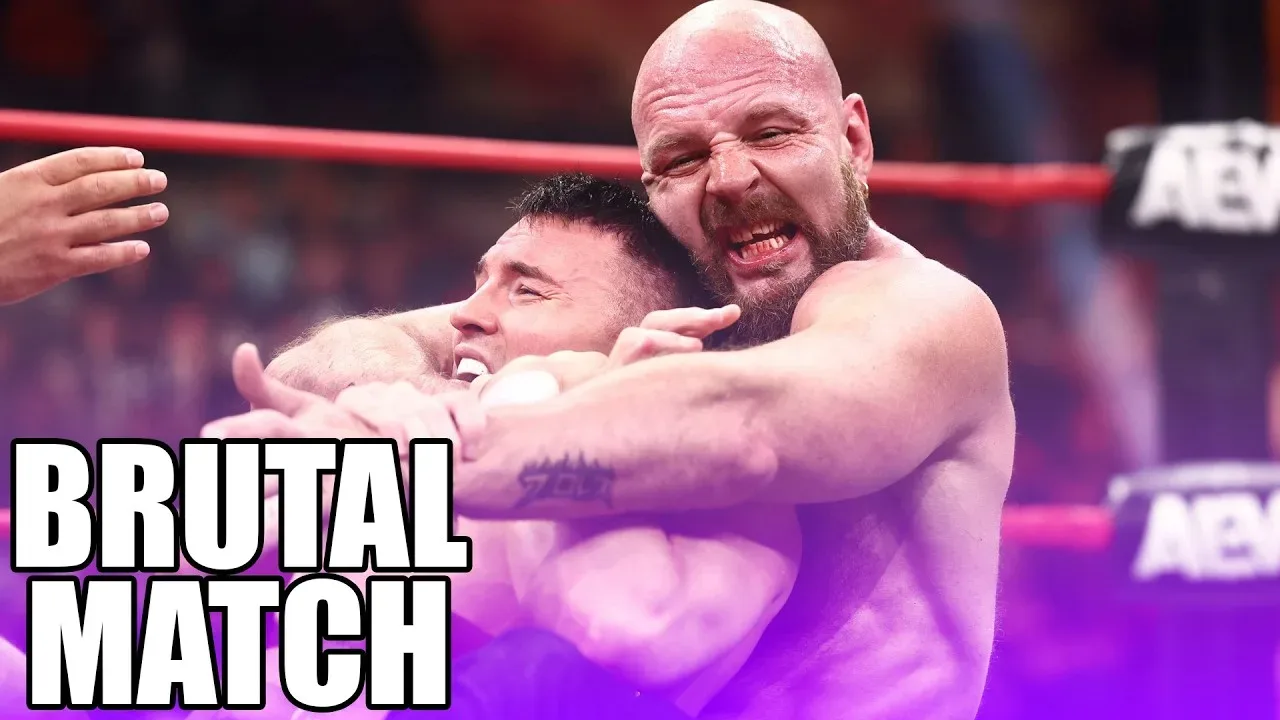
Speedball Mike Bailey has reflected on the emotional moment that closed AEW Collision, when members of the All Elite Wrestling roster gathered on the stage for a tribute to the late Andy Williams, best known in the company as The Butcher.
It was a difficult stretch for the AEW locker room. The company had already presented its “Rebel Heart” edition of AEW Dynamite for Rebel before Collision featured a memorial moment for Williams. At the conclusion of Saturday’s show, talent assembled as a tribute video played, offering the roster an opportunity to stand together amid a week marked by grief.
Speaking on his latest vlog, Bailey said the scene was meaningful not only because of the loss being recognized, but because it reinforced the sense of community shared among wrestlers and everyone who works around the industry.
“So after the show ended, or at the end of Collision, everyone… went out on the stage as they played a tribute to Andy Williams, and it was such a great moment for all of us to be going through this together. Because, friends, it has been a very, very difficult week for all of us.”
For more background on this topic, read Jeff Jarrett Details Last-Minute RevPro Appearance During AEW All In Weekend.
Bailey was candid in acknowledging that he had not spent extensive time with Williams personally. Still, he explained that the impact of a loss can be felt well beyond the people who knew someone most closely. For Bailey, that is an essential part of how professional wrestling functions as a larger community.
“And, you know, I say this as someone who did not spend a lot of time with Andy, I only met him here and there, but I say this very often. The professional wrestling world is a community, right? So anytime there’s any kind of tragedy that happens, we all feel it and we all have to and want to be there for each other.”
That perspective made the post-show gathering especially significant to Bailey. The tribute did not erase the sadness surrounding the week, but it gave those present a collective moment to process it. Rather than leaving the emotion isolated to individuals or separate groups within the company, the roster’s appearance on the stage visibly emphasized mutual support.
“And everyone being together on that stage felt really good. You know, even though we’re all experiencing very, very big sadness because of this. This felt like a nice moment of togetherness.”
A Moment Bigger Than the Match Card
Professional wrestling is built around competition, rivalries, victories, defeats, and the constant push toward the next event. On television, performers are often presented as opponents with deeply personal issues. Behind that presentation, however, wrestlers share locker rooms, travel, training, and the unique pressures of an industry that asks performers to give a great deal of themselves in public.
Bailey’s comments focused on that reality. His point was not that every member of a roster has the same relationship with every colleague. Instead, he described a culture in which a tragedy can affect people across a company, regardless of how often they interacted with the person being remembered.
Williams’ connection to AEW through The Butcher made Saturday’s Collision tribute particularly personal for those in the promotion. The decision for the roster to join one another on stage at the end of the program turned the closing minutes into something beyond a standard sign-off. It was a public acknowledgement of loss from the people who shared the AEW environment with him.
Bailey’s description of the moment as a “nice moment of togetherness” was notably understated, especially considering the emotion he said had surrounded the week. The wording reflects the balance often seen in wrestling after a loss: mourning is personal, but the act of showing up alongside colleagues can provide a measure of support.
Bailey on Wrestling’s Shared Community
The AEW star has regularly spoken with an appreciation for the broader wrestling landscape, and his remarks following Collision fit that outlook. Bailey framed professional wrestling as a community rather than simply a collection of separate promotions, shows, and performers competing for position.
That sense of connection can be especially visible during difficult circumstances. Wrestlers may work different schedules, come from different regions, and have varying degrees of familiarity with one another, but they understand the demands and risks of the profession in ways that few outside it can fully share. Bailey stressed that this is why people “have to and want to be there for each other” when tragedy occurs.
His comments also speak to the importance of a memorial moment being shared by the group. A tribute video can honor a performer’s life and contributions, but the sight of a roster standing together adds another layer. It communicates that the person being remembered had a place within a living, active community—and that the people left behind are confronting the loss together.
For viewers, the final image from Collision served as a reminder that the wrestlers seen in confrontations throughout the night are also colleagues facing real-life emotions. Bailey’s reaction made clear that the gathering carried that meaning for the people on the stage as well.
AEW’s Difficult Week
Bailey referred to the period as “very, very difficult” for AEW. The company’s week included the “Rebel Heart” edition of Dynamite for Rebel, followed by the tribute to Williams on Collision. Those events placed an emotional weight on programming that normally centers on athletic performances and storyline developments.
There is no suggestion in Bailey’s remarks that grief is something the roster can simply move past once the cameras stop rolling. Instead, he spoke about the value of being present for one another while everyone was experiencing “very, very big sadness.” His emphasis remained on collective support rather than attempting to define the loss for others.
That distinction matters. Bailey did not position himself as one of Williams’ closest friends, nor did he attempt to speak for those who were. He instead offered the viewpoint of someone within the locker room who felt the atmosphere of the week and recognized the comfort that came from seeing everyone gather together.
It was a respectful reflection on a moment designed to be respectful in its own right. The conclusion of Collision allowed AEW talent and viewers alike to pause, remember Williams, and acknowledge the human reality behind the show.
Togetherness at the End of Collision
In the end, Bailey’s takeaway from the tribute was simple but resonant: the entire roster being on the stage “felt really good.” The grief did not disappear, and Bailey did not suggest otherwise. What changed in that moment was that the sadness was shared.
For an industry in which performers routinely carry the responsibility of entertaining crowds through demanding circumstances, that kind of unity can be meaningful. Bailey’s comments make clear that the gathering after Collision mattered because it allowed AEW’s wrestlers to be together, not as rivals or characters, but as members of the same wrestling community.
The tribute to Andy Williams closed the show with that message at its center. Bailey’s account offers a look at how the moment was received backstage and on the stage: a painful week, a substantial loss, and a brief but important opportunity for the AEW roster to stand alongside one another.
Darryl Polo
Darryl Polo is a passionate wrestling fan covering WWE, AEW, TNA and beyond. He loves great rivalries, breakout stars and the moments that keep fans talking long after the bell. How we work.