
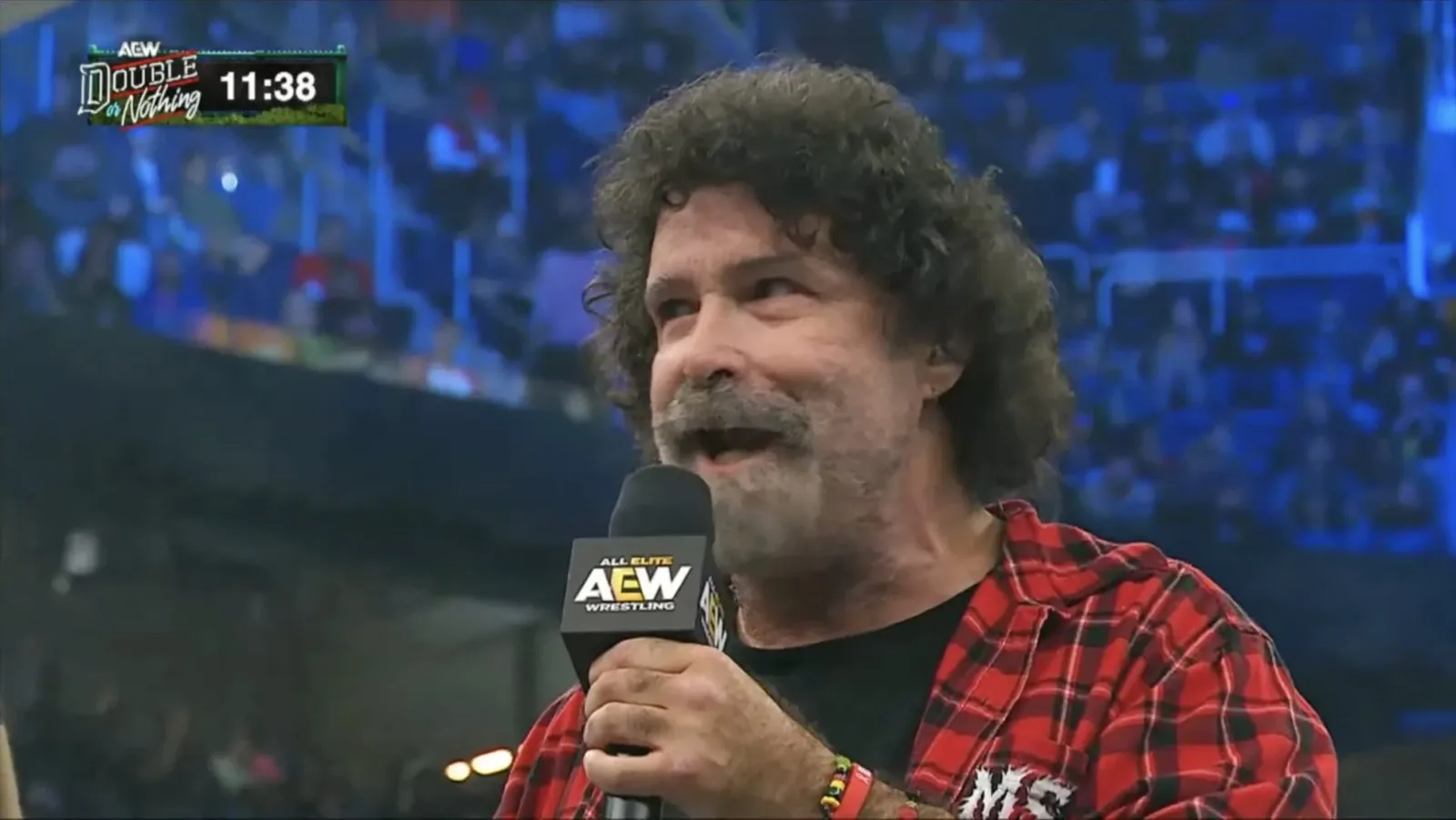
Mick Foley spent more than three decades adhering to a remarkably specific superstition: he wore his left sock inside out.
The WWE Hall of Famer discussed the habit during an appearance on Scaredycast, explaining that it became a consistent part of his life for roughly 30 years. It was not a wrestling move, a training method, or an elaborate locker-room ritual. Instead, it was an everyday detail that Foley maintained with the kind of quiet commitment that many athletes and performers attach to routines they believe bring them comfort or good fortune.
Foley said the streak only ended when his hip issues made the simple process of getting dressed significantly more difficult. Before undergoing hip replacement surgery, he reached a point where crossing one leg over the other was no longer possible, turning the act of putting on socks into an uncomfortable challenge.
“Did you know for about 30 years I wore my left sock inside out, but then Mother Nature decided to mess with me and put me in a situation where I couldn’t cross one leg over the other until I had my hip replacement, and now I can do it,” Foley said. “But for many years, I couldn’t cross my leg more than this, and I found that trying to put my socks on was like almost like trying to like loop it over my leg, and I just stopped wearing socks. But for 30 years, yeah, I wore the left sock inside out.”
For more background on this topic, read Andrade El Idolo Explains Why AEW’s Creative Freedom Fits Him Better Than WWE.
A Small Ritual With a Long Life
Foley’s revelation is the sort of personal detail that fits neatly with the unpredictable, deeply human character that fans have come to know over the years. Across his career, Foley became one of wrestling’s most distinctive figures not because he followed a conventional path, but because he embraced the unusual. Whether appearing as Mankind, Cactus Jack, Dude Love, or simply Mick Foley, he built his legacy around a willingness to be vulnerable, eccentric, fearless, and intensely committed to the moment.
His left-sock routine was obviously separate from the characters that made him famous, but it reflects the same sense of individualism. Superstitions do not need to be logical to become meaningful. For many people, especially those living in high-pressure environments, a repeated routine can offer a sense of familiarity when the circumstances around them are constantly changing.
Professional wrestling is particularly suited to that mindset. Wrestlers regularly travel, work in unfamiliar arenas, adjust to different opponents, and perform in front of demanding crowds. The industry’s schedule can be chaotic, and performers often develop personal habits around preparation, gear, travel, meals, and the moments just before they walk through the curtain.
Foley’s ritual was not presented as something grand or theatrical. That is part of what makes the story memorable. A left sock turned inside out is a tiny detail, but keeping it going for 30 years requires an extraordinary degree of consistency. Even after becoming one of the most recognizable names in wrestling, Foley continued to observe the habit until physical limitations changed what he could comfortably do.
Hip Problems Changed the Routine
The central point in Foley’s story is not merely that he had a superstition. It is that his hip condition ultimately interrupted it. Foley described being unable to cross his leg as he normally would while putting on his socks, making the task feel as though he had to loop the sock over his leg. Eventually, he stopped wearing socks rather than continuing to struggle through the process.
He said that he can cross his leg again following hip replacement surgery, but the longstanding inside-out left sock tradition had already come to an end. The detail offers a candid glimpse into how physical issues can affect ordinary parts of daily life, not just the in-ring actions fans associate with a wrestling career.
Foley’s body of work is inseparable from the punishment he absorbed in the ring. He became renowned for a style built on intensity and risk, creating some of the most enduring images of the 1990s and early 2000s. His reputation was forged through wild brawls, hard-hitting stipulation matches, and performances that frequently pushed beyond conventional limits.
That history makes his description of difficulty putting on socks especially resonant. Wrestling fans often focus on the spectacular physical moments that take place in front of a crowd. The long-term reality can be less dramatic, but no less important: reduced mobility, discomfort, and the need to adjust familiar routines. Foley’s comments do not attempt to dramatize that experience. They simply present it in the plainspoken way that he has often used when discussing life beyond the ring.
Superstitions Have Always Had a Place in Wrestling
From major sports leagues to local gyms and independent wrestling locker rooms, superstitions are a common part of athletic culture. Some performers insist on wearing particular items of gear. Others follow a specific warm-up sequence, eat the same food before competition, listen to a certain song, or avoid changing a routine after a successful performance.
In wrestling, those habits can become even more personal because performers are balancing physical preparation with the mental demands of live entertainment. A match involves athletic execution, timing, crowd awareness, communication, and the responsibility of keeping everyone involved as safe as possible. There is no guarantee that a familiar ritual changes the outcome, but the repetition can still serve as a mental anchor.
Foley’s superstition was especially unusual because it was so understated. There was no suggestion that he ever publicized it as part of his persona or made it a visible feature of his presentation. For decades, it was simply something he did: left sock inside out, right sock apparently worn normally.
That specificity is what makes it feel like a true superstition rather than a fashion preference. The fact that Foley can identify the exact side of the body involved after all those years underscores how firmly the ritual was established. It became second nature, right up until mobility issues forced a change.
Foley Continues to Share Stories From a Singular Career
Foley remains one of wrestling’s most compelling storytellers. His ability to move from major career reflections to small, unexpected personal memories has long been part of his appeal. A conversation about a sock might sound insignificant on paper, yet it reveals something real about the person behind several of wrestling’s most famous identities.
His openness also gives the anecdote a broader perspective. The superstition lasted through enormous personal and professional changes, through different eras of wrestling, and through a career that took Foley from his earliest days to the highest levels of the business. It survived for 30 years, only ending because a physical limitation made a basic daily task too difficult.
Foley also noted during the interview that he recently spoke with Darby Allin about Allin’s wrestling style. The mention connects two performers from very different generations whose careers have both drawn attention for the physicality and danger associated with their approach to the ring. Foley did not elaborate further in these comments, but the reference is notable given his own legacy as an enduring symbol of wrestling’s more extreme side.
For now, the left sock story stands as another distinctive Mick Foley anecdote: strange, funny, candid, and grounded in an honest reality. It is a reminder that behind the masks, catchphrases, and historic matches are personal routines that can last for years without ever becoming part of the public presentation.
In Foley’s case, one of those routines was remarkably simple. For 30 years, the left sock went on inside out. And when his body made that ritual too difficult to continue, even a superstition with decades of history had to give way.

Darryl Polo
Darryl Polo is a passionate wrestling fan covering WWE, AEW, TNA and beyond. He loves great rivalries, breakout stars and the moments that keep fans talking long after the bell. How we work.