
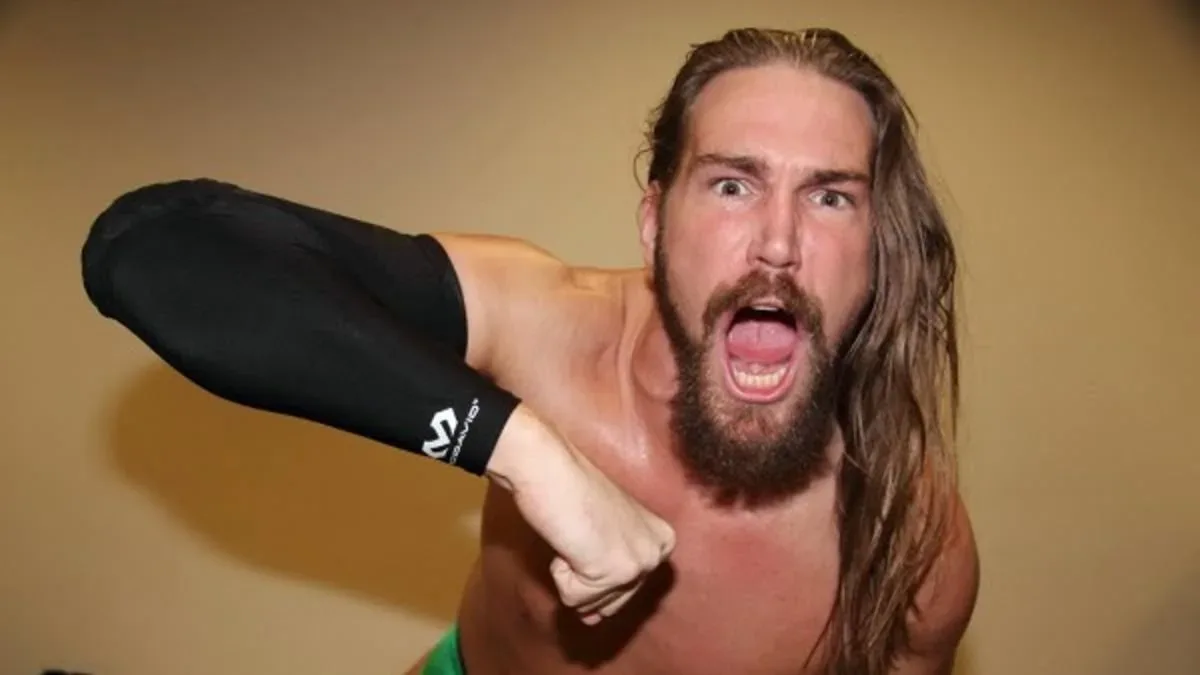
Mick Foley does not appear to be looking toward a behind-the-scenes role as a match producer or agent in AEW, but the hardcore icon made clear that he has enormous respect for the people already doing that work—particularly Chris Hero.
During a recent appearance on Wrestling On The Spectrum, Foley was asked whether he had ever considered producing or agenting matches for AEW. Foley quickly dismissed the idea for himself, explaining that he does not believe he would be as effective in that capacity as the experienced people already contributing behind the scenes.
“No, no, I have not. I know they’ve got great people doing that. I marvel when I see Chris Hero working with talent, and I even said to a friend of mine, I said, ‘now, that guy there, like, you might not be able to tell, he is a wrestling genius; and just a guy who will text me out of nowhere and ask me about a long forgotten match I had, you know, 30 years ago. So I don’t think I could be an effective agent or producer. So I haven’t given that a lot of thought.’”
Foley sees Hero’s value beyond what fans see on television
Foley’s comments underline the often less visible side of professional wrestling. Fans primarily judge a show by what happens in the ring and on camera: the matches, interviews, entrances, finishes, and major storyline turns. The producer or agent role operates in a different space. It involves helping talent organize a match, refine an idea, maintain character consistency, and make sure the action communicates the intended story as clearly as possible.
For more background on this topic, read Mick Foley Reflects on AEW Double Or Nothing Promo With MJF and His Expanding Role.
Foley did not present himself as someone seeking to enter that environment. Instead, he pointed to Hero as an example of the detailed wrestling mind that can excel there. His description of Hero was not limited to praise for a well-known name on the independent scene. Foley specifically emphasized Hero’s engagement with wrestling history and his willingness to revisit matches from decades earlier.
That level of curiosity clearly stands out to Foley. For a wrestler with a career as extensive and distinctive as Foley’s, a message about a match from 30 years ago is not simply a piece of nostalgia. It suggests that the person asking has studied the work, remembers its details, and wants to understand why it happened the way it did. Foley’s assessment of Hero as a “wrestling genius” speaks to that kind of research and analytical interest as much as it does to Hero’s own experience in the ring.
Chris Hero’s wide-ranging wrestling background
Hero is one of the most respected figures to emerge from the independent wrestling scene. He built a reputation through his work outside WWE and became known to many fans for his technical ability, hard-hitting style, and broad knowledge of the craft. Although he did spend time in WWE, his name has remained especially closely associated with his accomplishments beyond the company.
In more recent years, Hero has been connected with AEW as a coach and producer. That transition places him in a position to apply the same wrestling education and attention to detail that Foley praised. A producer’s work may not be directly obvious to the audience, but it can be central to helping a match reach its potential while serving the larger needs of a television show or event.
There is also an important distinction in Foley’s remarks: he was not simply saying that Hero is knowledgeable. He said he marvels at watching Hero work with talent. That is a practical compliment. Knowledge of wrestling history and the ability to perform are valuable, but helping another wrestler turn an idea into a compelling match is a separate skill. It requires communication, patience, and an understanding of what each individual talent can do best.
Foley’s praise suggests he sees Hero as possessing that full package. In an industry where the strongest producers are often those capable of blending historical awareness with a feel for the wrestlers standing in front of them, Foley framed Hero as a particularly capable presence.
Why Foley is not pursuing the role
Foley’s answer was notably modest. He has spent decades in professional wrestling, experienced major success at the highest level, and has been involved in some of the most memorable and physically demanding matches in modern history. Yet he did not use that résumé as a reason to argue that he should be producing matches. Instead, he said the opposite: AEW already has “great people” handling those responsibilities, and he does not believe he could be an effective agent or producer.
That answer highlights the difference between being a legendary performer and wanting to take on a full-time creative and developmental responsibility behind the curtain. A producer or agent must be prepared to offer consistent feedback, help solve problems, and work with a variety of styles and personalities. The job is not merely about recalling great matches or offering a famous name’s perspective. It is a sustained, collaborative role that requires its own set of strengths.
Foley acknowledged that he has not given the possibility much thought. There was no tease of an imminent AEW position and no indication that he is exploring one. His response was a straightforward rejection of the idea, paired with recognition that the company has people like Hero contributing in that area already.
A meaningful endorsement from a singular performer
Foley’s career gives his evaluation particular weight. He became a singular figure in wrestling because of the emotional range he brought to his performances, as well as the intensity and creativity that defined his most famous matches. His work was rarely about athletic spectacle alone. It was about investment, pacing, consequences, and making the audience believe in the moment.
Those are many of the same elements that a producer must consider when working with talent. A strong match is not only a collection of moves. It has a purpose, a rhythm, and an emotional direction. When Foley praises Hero’s work with wrestlers, it is an endorsement from someone who understands how much thought can go into making a bout connect beyond its individual spots.
Foley also made his admiration personal by noting that Hero will contact him unexpectedly to ask about a forgotten match from decades earlier. That detail presents Hero as someone who remains invested in learning from wrestling’s past rather than relying only on his own experiences. It also illustrates why Hero’s expertise may not always be immediately apparent to viewers who know him only from a particular era or role.
As Foley put it, “you might not be able to tell” just how much wrestling knowledge Hero has. For those who have watched Hero’s body of work or followed his coaching and producing contributions, Foley’s comments provide a strong explanation of the regard he holds within the business.
No new role for Foley, continued recognition for AEW’s staff
For now, there is no indication that Foley will become an AEW producer or agent. He was clear that he has not pursued it and does not believe it would be the right fit for him. His comments should not be read as a criticism of the role or a lack of interest in AEW itself. Rather, he expressed confidence in the people doing the job and singled out Hero as a major example of the talent already available behind the scenes.
In a business where much of the discussion centers on wrestlers in front of the camera, Foley’s remarks offer a reminder of the people helping shape the finished product from backstage. Hero’s contribution as a coach and producer may not always be the most visible part of an AEW broadcast, but Foley’s assessment leaves no doubt about the level of respect he has for Hero’s wrestling mind.
Foley may not be planning to take on an agenting role, but his praise of Hero is a significant vote of confidence. From one of wrestling’s most inventive and memorable performers, calling someone a “wrestling genius” is not a casual compliment.

Darryl Polo
Darryl Polo is a passionate wrestling fan covering WWE, AEW, TNA and beyond. He loves great rivalries, breakout stars and the moments that keep fans talking long after the bell. How we work.